
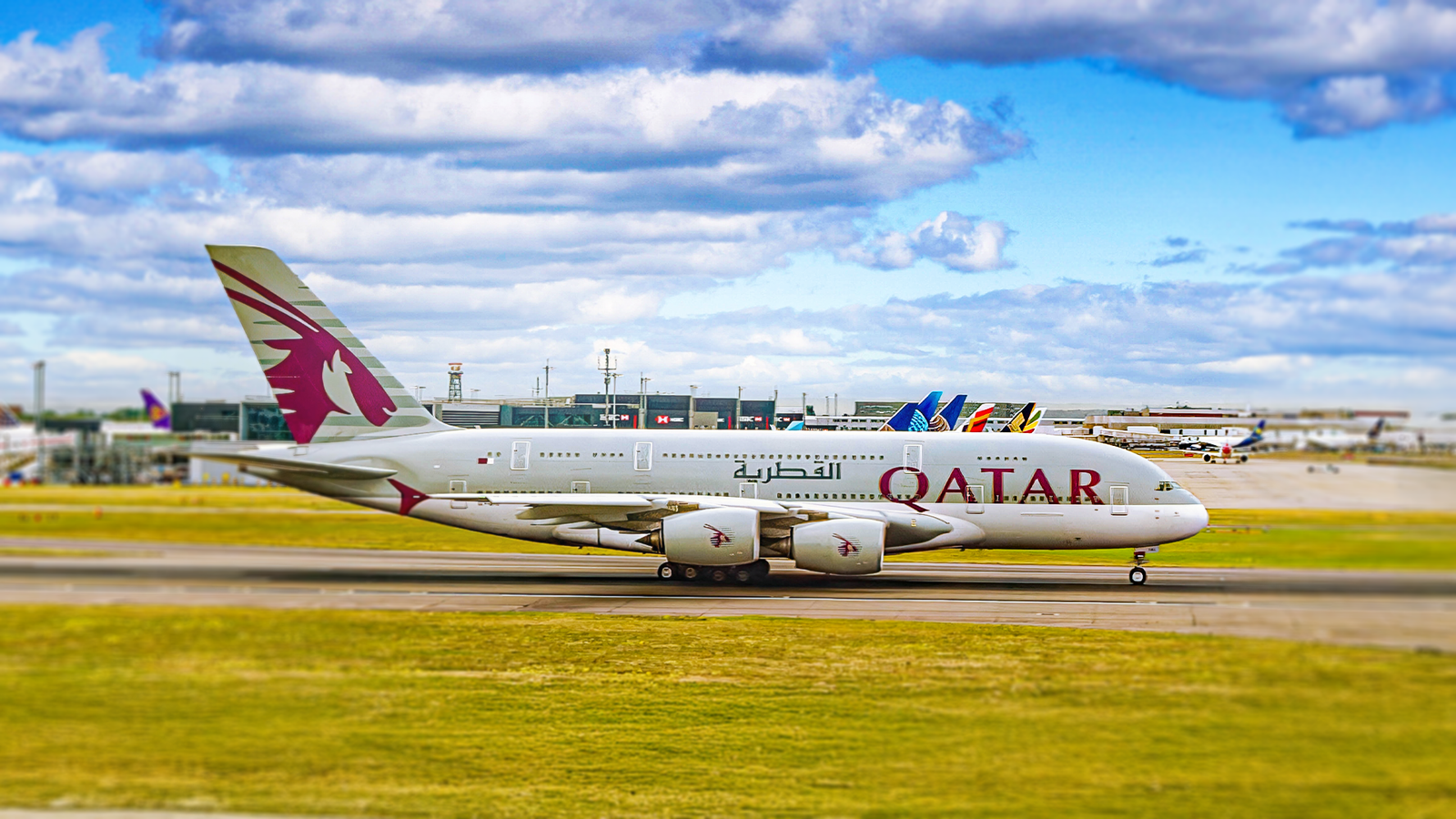
Published Sep 24, 2026, 7:00 PM EDT Prachi is a London-based journalist with extensive experience in the aviation industry. She has worked for several leading industry publications, covering a broad range of topics. Her expertise lies in aircraft maintenance, emerging technologies, and advanced air mobility. She is currently pursuing a PhD in Journalism, focusing on data journalism and its potential to transform conventional aviation reporting. London Heathrow Airport's(LHR) proposed third runway has sparked debate for decades. The airport has been trying to expand its runway capacity for years, but plans for a third runway have faced political debate, legal challenges, and repeated delays. The project is moving forward again after receiving government backing in 2025, with Heathrow now expecting the runway to be operational by 2035. Much of the case for expansion comes down to capacity. Heathrow currently operates close to the limits of its two runways, which leaves little room for airlines to add flights and makes its takeoff and landing slots among the most valuable in the world. Istanbul recently overtook Heathrow as Europe’s busiest airport, which has added pressure on Heathrow to maintain its position among Europe’s leading hubs. At the same time, major airports around the world are expanding their capacity and strengthening their positions in the international aviation market. So, as Heathrow plans its third runway, the question is whether the additional capacity is simply needed to accommodate its own growth or whether it is essential for the airport to keep pace with the major global hubs by 2035. The Two Main Benefits Heathrow Expects From Its Third Runway Credit: Ceri Breeze | Shutterstock Heathrow has long argued that a third runway would deliver two major benefits: significantly increasing the airport’s capacity and generating wider economic benefits for the UK. Indeed, the capacity argument is the more immediate one. As we know, Heathrow currently operates close to its limits, with an annual cap of around 480,000 flights, and recent passenger numbers have already exceeded 84 million. The airport says this leaves little room for airlines to add flights or launch new routes as demand continues to grow. The proposed northwest runway would increase Heathrow’s annual capacity to as many as 756,000 flights and 150 million passengers. That would mean roughly 276,000 additional flights each year, supported by new terminal facilities, including the planned T5X complex, as well as expanded cargo capacity. Heathrow says this additional capacity would allow it to offer at least 30 new routes, give airlines more scope to expand their services and improve operational reliability. The airport also argues that easing the current capacity constraints could increase airline competition and help reduce fares. Heathrow's second argument is that the additional capacity would benefit the wider UK economy. Analysis by Frontier Economics commissioned by the airport estimates that the expansion could add 0.43% to UK GDP by 2050, with around 60% of the benefits felt outside London and the South East. Heathrow currently supports around 80,000 jobs as the UK's largest single-site employer, and says expansion would create tens of thousands more during construction and future operations. In fact, more recent figures from Heathrow put the number of UK jobs supported by the expansion at more than 100,000. The Wider Economic Impact Of Heathrow’s Third Runway Is More Complicated Credit: Ceri Breeze | Shutterstock Heathrow has been putting more emphasis on the wider economic case for its third runway. The UK hub says its privately financed expansion will support more than 108,000 jobs across the country and is presenting the project as national infrastructure rather than an expansion that primarily benefits London and the South East. But is that really the case? Recent Department for Transport modeling suggests that expanding Heathrow could reduce passenger numbers at several regional airports. Birmingham Airport, for instance, is expected to handle around 7.5 million fewer passengers a year by 2050 compared with a scenario in which Heathrow does not build a third runway. This could have an effect on employment at the airport and across its supply chain. The New Economics Foundation estimates that the expansion could displace almost 10,000 jobs in the West Midlands alone, while around 15,200 aviation-related jobs could move from other UK regions to London and the South East by 2050. The figures suggest that Heathrow's expansion could limit growth at some regional airports as more passengers and aviation activity are concentrated at the UK's largest hub. That does not mean the third runway would not deliver economic benefits. The additional capacity could support more connectivity and aviation activity, and both Heathrow and the government continue to argue that the expansion would benefit the wider UK economy. But that is not the main reason Heathrow needs the runway. Heathrow’s Capacity Limits Are Becoming More Pressing Credit: Markus Mainka | Shutterstock Capacity is undoubtedly the main reason for Heathrow’s push for a third runway. The airport handled more than 84 million passengers in 2025. Around 40 million passengers passed through its terminals in the first half of 2026. Heathrow expects to handle around 83.6 million passengers in 2026. The forecast is lower than last year because the airport has been affected by weaker demand on some routes amid the US-Iran conflict in the Middle East. Even so, that would leave Heathrow close to the limit of its existing infrastructure, which can handle around 85 million passengers a year. The airport has also been operating at very high levels of runway utilization, often cited at 99% or near capacity. This leaves little room for airlines to add more flights. At the same time, other major European hubs continue to grow. Istanbul Airport has been a particular example of this. It started in 2026 ahead of the British airport, with 6.9 million passengers in January compared with Heathrow’s 6.5 million. Heathrow regained the lead in the following months, but the difference remained very small. By the end of June, Heathrow had handled 40 million passengers compared with 39.84 million at Istanbul. But Istanbul moved ahead again a month later and took over the title of Europe’s busiest airport. Losing that position has added to the pressure on Heathrow. After Istanbul moved ahead, Heathrow said that “the case for expansion has never been clearer.” Global Airport Expansion Is Putting More Pressure On Heathrow Credit: Dubai Airports The pressure on Heathrow is coming from two directions. The airport is already close to the limits of its existing capacity. At the same time, other major hubs are continuing to expand. Istanbul, for instance, is preparing to open its fourth runway, which is expected to take its annual passenger capacity from 90 million to 120 million. Its long-term plans also target a capacity of up to 200 million passengers a year. Dubai is pursuing an even larger expansion. The new terminal at Al Maktoum International Airport is under construction, and its first major phase is expected to open in the early 2030s. This phase will provide capacity for 150 million passengers a year. The airport is ultimately planned to handle up to 260 million passengers annually. Dubai Airports describes the project as the future hub for the emirate and plans to shift more of its operations away from Dubai International as the new airport develops. Riyadh is also planning a major increase in airport capacity. Saudi Arabia's Public Investment Fund (PIF) is developing King Salman International Airport as part of the country's Vision 2030 plans. The airport will have six runways and is expected to accommodate up to 120 million passengers a year by 2030. That figure is planned to rise to 185 million by 2050. This puts Heathrow under growing pressure to increase its own capacity. It needs to make sure it has enough room to grow if it wants to remain competitive with the world’s major international hubs. Heathrow’s Third Runway Will Increase Capacity By 50% Credit: Heathrow Airport Limited Furthermore, both Heathrow and British Airways have pushed for higher-capacity infrastructure at the airport for more than two decades. The third runway is central to those plans. The government initially received two full-scale proposals for the expansion. Heathrow Airport Holdings (HAL) proposed a $66 billion (£49 billion) project with a full-length 11,483-foot (3,500-meter) northwest runway, a new T5X terminal and major engineering works that would require the M25 motorway to be moved into a tunnel. The other proposal came from the Arora Group and was known as Heathrow West. It was a $33.7 billion (£25 billion) alternative that included a shorter 9,186 feet (2,800 meters) runway and a phased Terminal 6 development. The plan was designed to avoid the high cost and disruption of moving the M25. The government ultimately selected HAL’s proposal in November 2025. The proposed runway would be up to 11,483 feet (3,500 meters) long and would be able to handle aircraft of all sizes, including the Airbus A380. Heathrow says the expansion would increase its annual capacity by 50% to as many as 756,000 flights and 150 million passengers. There is still a long way to go before construction can begin, let alone scheduled airline operations on the new runway. Heathrow expects the project to be completed in the mid-2030s. Heathrow Needs More Capacity As Global Hub Competition Grows Credit: Timmy Frames | Shutterstock To conclude, Heathrow clearly has a capacity problem. Its two existing runways leave little room for further growth, and the airport is already operating close to the limits of its infrastructure. A third runway would give airlines more scope to add flights and allow Heathrow to handle significantly more passengers. Indeed, the competitive side of the argument is harder to ignore as major international hubs continue to add capacity. Heathrow cannot assume that its current position will remain unchanged by 2035. However, that does not mean the airport needs to match the scale of expansion planned elsewhere. Its more immediate challenge is to make sure it has enough capacity to support its own growth and maintain its position as the UK's main international hub. The third runway could therefore serve both purposes. It would address Heathrow's existing capacity constraints and give the airport more room to compete for international traffic in the years ahead. Whether that makes the project essential by 2035 is less straightforward, but the pressure on Heathrow to expand is unlikely to disappear.
Is It True That London Heathrow Needs A 3rd Runway Just To Keep Up With Gulf Mega-Hubs By 2035?
Full Article
Original Source
Read the full article at Simpleflying →KhanList aggregates and links to publicly available news content. We do not host full articles from third-party sources. Always verify important information with original sources.