
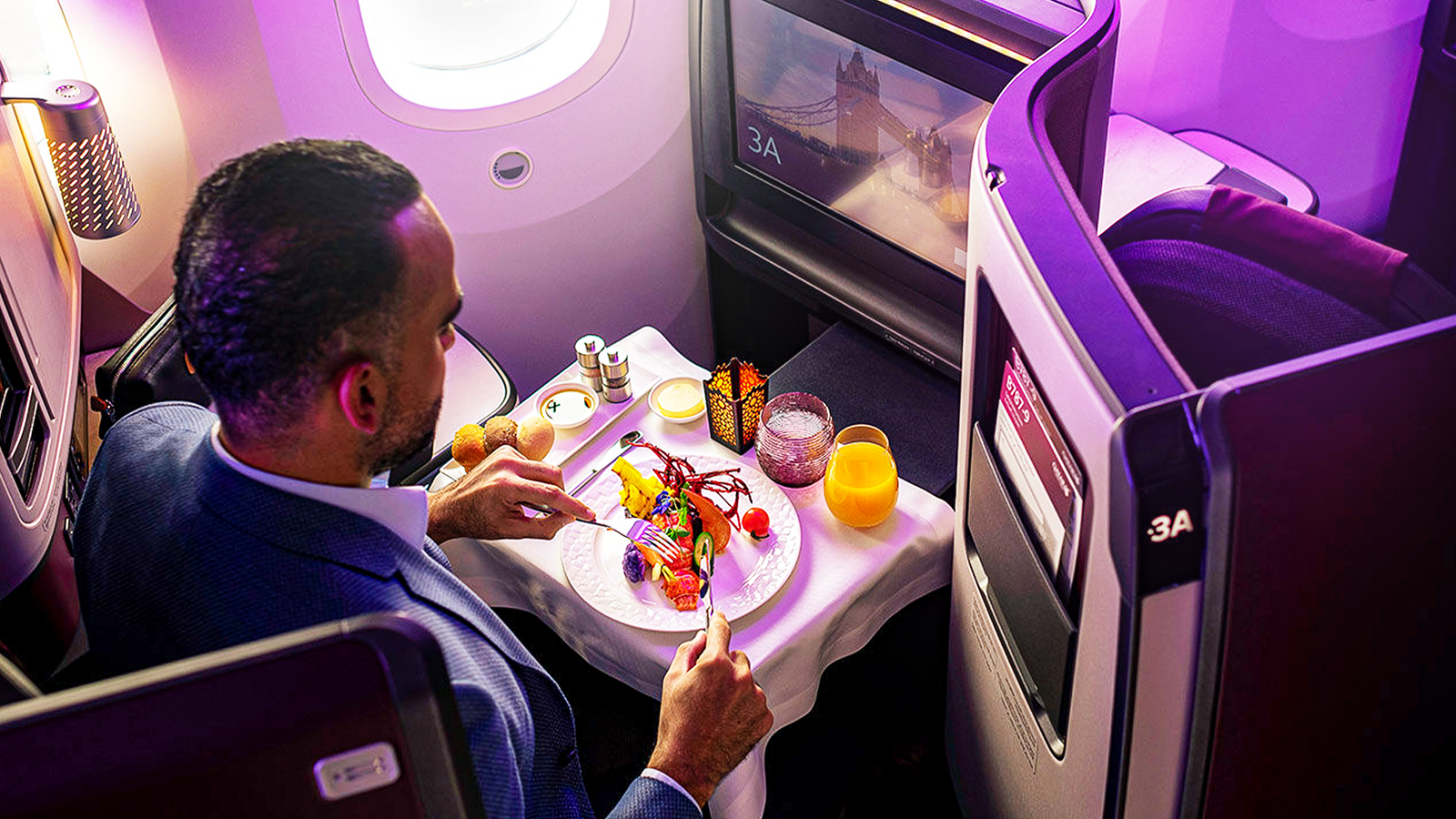
Published Nov 11, 2026, 4:00 AM EST Writer - Patricia joins Simple Flying with over 20 years of experience in aviation. She has served as cabin crew on flights from economy-class through to first-class and on private jets as well as being head of cabin crew and cabin safety focal point. Patricia has a master's level postgraduate diploma in Human Factors in Aviation and has written about aviation since 2010. Based in Dubai/Cyprus. Jet lag has never been easy to deal with and has always been an unexpected side effect of long-haul travel. With new aircraft and upgraded technology, the effects of jet lag can be somewhat diminished. But can airlines fight jet lag with cabin lighting and changing meal times, and does it actually work? In this guide, we'll look at one airline that has been testing this theory. Qantas has spent more than a decade researching how cabin lighting, meal timing, and food can reduce jet lag, though the evidence is still early. Project Sunrise is the codename for Qantas’ initiative to operate the world’s first long-haul nonstop commercial flights from Sydney to London and New York. To mark this milestone, the airline will introduce 12 new Airbus A350-1000ULRs, which were specifically manufactured for these flights. Qantas And Their Research Credit: Qantas Qantas has worked with the University of Sydney's Charles Perkins Centre since 2015, when it started preparing to launch nonstop Perth to London flights, which began in 2018. In 2019, it flew three Project Sunrise research flights from New York and London to Sydney to collect real-world data from passengers, and Monash University researchers also monitored pilots. The researchers traveled with 23 volunteer passengers who were fitted with wearable device technology on 20-hour flights. They followed a specially designed menu and different sequences of lighting, sleep, and movement in comparison to the traditional inflight sequence of eating and sleeping. Passengers experienced differences in food and beverage menus and service timings to help their body clocks adjust to the destination time zone. Specific times were allocated for out-of-seat movement and activities, including a game on an iPad, to gauge attention and reaction time. The findings, released in 2023, suggested that different lighting and sleep schedules, meal times, and specific ingredients like chili and chocolate can help travelers feel better, and that movement and exercise are key factors. Passengers on the optimized flights reported less severe jet lag. The joint research found that it was possible to reduce the impact of jet lag by remolding the inflight experience. The Importance Of Meal Times And Well-Being Credit: James D Morgan | Qantas On those flights, Qantas timed meals to help shift passengers' body clocks, using foods such as fish and chicken with fast-acting carbohydrates to keep people awake, and comfort foods like soup and milk-based desserts to help them sleep. Instead of the usual pattern of serving a meal right after takeoff, dimming the cabin, and serving a second meal before landing, the optimized approach follows the destination's schedule, for example, delaying the first meal to match meal times in the arrival time zone. The aim was to promote the brain’s production of the amino acid tryptophan to help passengers drift off more easily. They looked at meal contents and timing. They suggested a bland meal that is not heavy before sleep, low in fat, and high in protein, according to information at Headforpoints.com. Plant-based meals and snacks also feature on the menu. The A350-1000ULRs will also have a dedicated Wellbeing Zone where passengers can follow guided stretching exercises developed by the Charles Perkins Centre. The Wellbeing Zone is located between the premium and economy class cabins and is available to all passengers. The space features premium self-serve refreshments, a hydration station, plus sculpted surfaces and integrated handles designed to support stretching. Passengers can move through the space at their own pace or follow guided movements on large monitors. The Effect of Lighting on Jet Lag Credit: James D Morgan | Qantas For Project Sunrise's A350-1000ULRs, Qantas, Airbus, the Charles Perkins Centre, and Caon Design spent more than 150 hours testing hundreds of lighting patterns in an A350 cabin mock-up in Hamburg, producing 12 lighting scenes. These are inspired by the colors of the Australian landscape but are also grounded in circadian science, according to an article at aerotime.aero. The University of Sydney says that light plays an important part in controlling our body clocks. By manipulating the cabin lighting, it is possible to help passengers adapt to a destination’s time zone whilst in the air and reduce jet lag. The designs include "Awake," with blue-enriched light to promote alertness; "Sunset," which moves from daylight to a calming night sky; and "Sunrise," modeled on an Australian sunrise that rolls from the front of the cabin to the back. The main cabin will also have ‘Welcome’ and ‘Farewell’ lighting scenes for boarding and disembarking, as well as tailored scenes for taxi, takeoff and landing and for sleep. Qantas International CEO Cam Wallace told aerotime.com that the lighting design was critical to preparing Project Sunrise flights. He said: “One of the things that was clear from the research is the importance of light cycles and brightness in setting the body clock and that was the basis of this testing. Combined with the design of the cabins, specialized meal planning, and the movement program, this unique lighting sequence will help improve our customers’ comfort in the air and minimize their jet lag when they arrive at their destination.” Ongoing Research Credit: James D Morgan | Qantas Peter Cistulli, Professor of Sleep Medicine at the University of Sydney, said while the research was ongoing, there were clear signs that the interventions implemented during the trial flights reduced the impact of ultra-long-haul travel. He said: “The early results are promising, and it’s given us great momentum to look to the next stage of customer research to support Project Sunrise product and service design." Professor Cistulli went on to say: “We have a multi-disciplinary team of more than ten researchers from medicine, science and engineering backgrounds working together on this project. This includes sleep researchers, circadian experts, nutrition and movement experts. No airline has ever done this kind of research before. The early findings have given us optimism that we can make a real difference to the health and wellbeing of international travelers thanks to this partnership with Qantas.” The researchers themselves call the results preliminary. Professor Peter Cistulli said the early results were "promising" and gave momentum to the next stage of research, and the 2023 findings relied partly on passengers' own reports of how jet-lagged they felt. Qantas said passengers kept a daily log for a week before the flight, during the flight, and for two weeks after, noting how they felt throughout the study. Initial Findings Of The Research Credit: Qantas The initial findings showed that passengers on the research flights with the new tailored schedule experienced less severe jet lag, according to the University of Sydney. They also had better inflight sleep quality and better cognitive performance in the two days after the flight. The first non-stop research flight was in 2019 from New York to Sydney and lasted 19 hours and 16 minutes. A series of experiments assessed health and well-being onboard. Tests ranged from monitoring pilot brain waves, melatonin levels, and alertness to exercise classes for passengers. Cabin lighting and in-flight meals were also adjusted in ways that are expected to help reduce jet lag, according to the medical researchers and scientists who have partnered with Qantas. Qantas Group CEO Alan Joyce said: “This is a really significant first for aviation. Hopefully, it’s a preview of a regular service that will speed up how people travel from one side of the globe to the other." The research also created operational changes and crew and pilot adjustments. Based on data showing human alertness drops after 10 hours, Qantas structured rigid alternating pilot and crew shifts, including overhead crew rest areas and specialized rosters, according to an article at Simple Flying. Time Saving And Improved Passenger Experience Credit: aiyoshi597 | Shutterstock Alan Joyce said the national carrier was excited by the prospect of minimizing jet lag and revolutionizing international flying for all travelers. He explained that the customer experience was evolving and that the research and design of the cabin and service was different than usual. “Our A350s will have about 100 fewer seats than most of our competitors, which gives us room for more space in all classes as well as a Wellbeing Zone for Premium Economy and Economy passengers to stretch. People can choose how they spend their time, but we’ll make recommendations based on science around menu choices and best times to eat or rest. That extends to before and after the flight to improve how people feel when they arrive on the other side of the world." Qantas hopes that flying non-stop and following its optimized service pattern will improve passengers' ability to recover from jet lag after crossing nine or more time zones. This would greatly benefit such long flights, in addition to saving around four hours of flight time, and Qantas believes it will be its competitive advantage in the decades to come.
Is It True That Airlines Intentionally Use Cabin Lighting & Meal Timing To Fight Long-Haul Jet Lag?
Full Article
Original Source
Read the full article at Simpleflying →KhanList aggregates and links to publicly available news content. We do not host full articles from third-party sources. Always verify important information with original sources.