
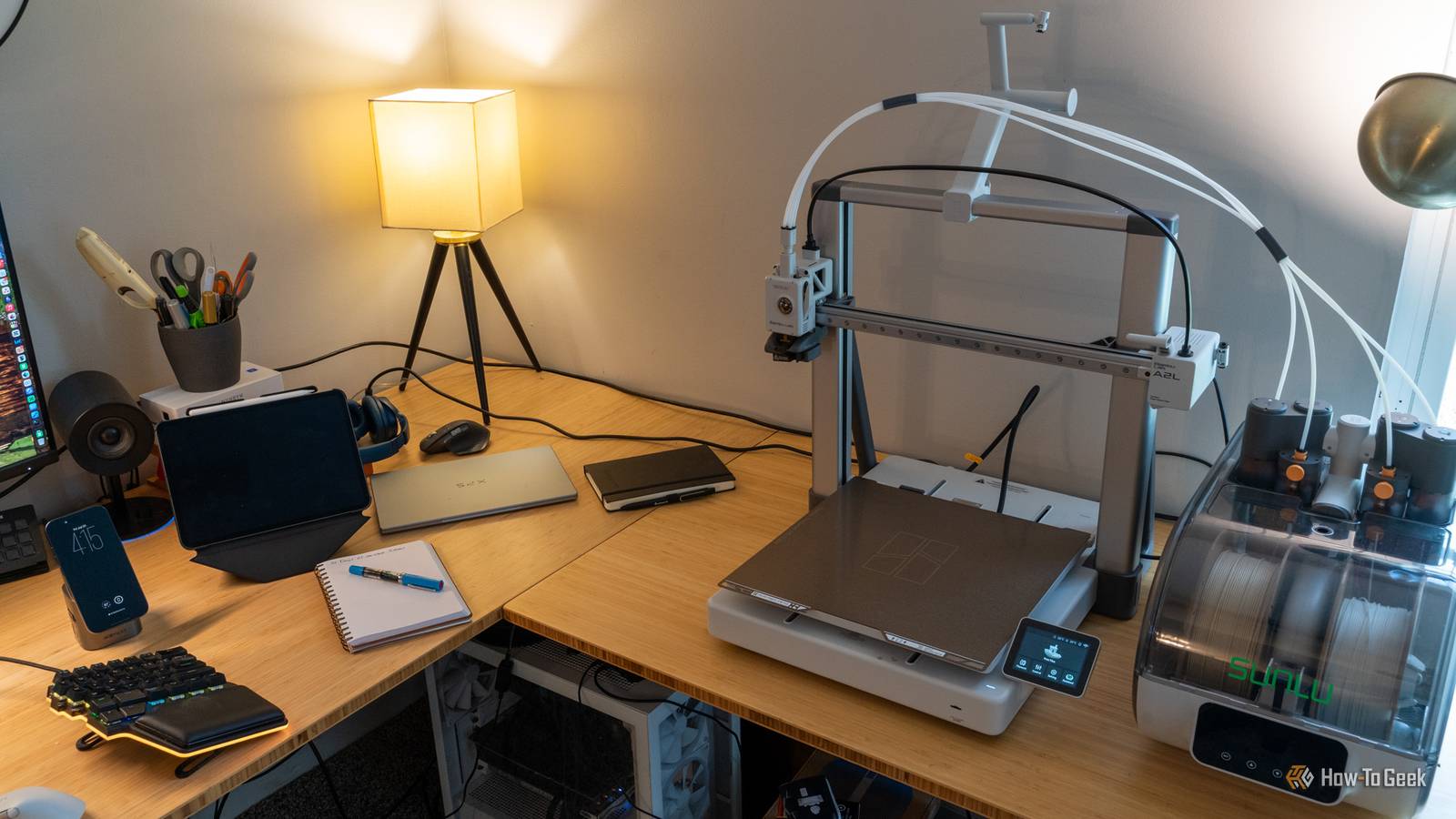
Published Nov 19, 2026, 9:30 AM EST Tim has been covering technology for almost 20 years, in that time spanning a broad range of topics from security to product reviews. He is especially focused on the Apple ecosystem, productivity, and consumer advice. Over the years Tim has written thousands of articles, reviews, and round-ups in addition to producing video content and original photography. A graduate of journalism, he found his footing as a freelancer with a laptop and loves how he is able to work from practically anywhere. Now a Senior Editor for iPhone, Mac, and Smart Home at How-To Geek, Tim still loves to write. He can also be found crafting round-ups and productivity posts for the Zapier blog. Earlier in his career Tim spent nearly a decade as a writer and eventually Apple section editor for MakeUseOf. Tim currently lives in Brisbane, Australia. Outside of work he loves to hike and work out, play video games, and spend quality time with his wonderful partner and two cats Inka and Roger. 3D printers can fabricate real-world items from digital files in your home, a feat that seemed unthinkable to many even a decade ago. With the industry gaining steam at a rapid rate, it’s worth taking a moment to consider the health implications that 3D printing may pose. Most importantly, should you share a living space with your 3D printer, and what are the risks associated with doing so? Long-term effects aren’t yet known 3D Systems’ Cube is widely regarded as the first consumer-grade 3D printer, which made it to market in 2012. In its wake, we’ve seen brands like Prusa, Bambu Lab, and Creality become household names and develop loyal followings among beginners, hobbyists, and enthusiasts alike. Credit: Hannah Stryker / How-To Geek 3D printers are no longer something you’ll only find in workshops; they’re in our homes, offices, and classrooms. While filament printers continue to be the most common choice, resin printers are also within the reach of anyone with a few hundred dollars and a hobby that can benefit. With little more than a decade of use in the home, we don’t know what the long-term effects of spending prolonged periods of time in the same environment as active 3D printers will be. We probably won’t have any concrete answers for many more decades, but there is some early evidence that we can look at to understand and minimize the risks. What does the early research say? One such study published in the National Library of Medicine looks at the effects of 3D printing emissions on pro-inflammatory responses within the epithelial cells found in our airways. Dating back to 2024, the study was conducted in vitro, where cells were cultured in a lab and exposed to emissions generated by a filament deposition modeling (FDM) printer using two materials: PLA and ABS. The results of this particular study suggest that the emissions from both PLA and ABS are harmful to the cells in our airways in different ways. While the test ABS filaments seemed to contain more copper and cobalt, PLA contained more nickel. These different material compositions had different effects on the subjects, but neither is good. PLA emissions were found to be more likely to disrupt the way cells process fats, while ABS emissions were more likely to lead to increased oxidative stress. Credit: Joe Fedewa / How-To Geek ABS appeared to produce significantly more emissions, potentially due to the higher temperatures required to print with this material, while PLA produced a higher concentration of smaller particles. Keep in mind that this study only measured the effects of a three-hour print job over two print runs, with 12 individual samples per group. There are all sorts of variables not accounted for here, such as printer model, which brand of filament was used, and how different types of printers (like multi-head models) could affect the results. The study wasn’t conducted on humans, but on cells in vitro, and didn’t account for volatile organic compounds (VOCs), which themselves can be dangerous for your health. So what can you do about it? The obvious response to potential harm is to avoid sharing too much air with your 3D printer, where possible. If you can put your 3D printer in a separate room, away from your living area, you are far less likely to be exposing yourself to emissions that could lead to poor health outcomes down the line. This means putting your printer in rooms where you don’t spend a lot of time, with adequate ventilation. This is especially true for resin printers, since working with resin requires personal protective equipment (PPE) like gloves and respirators to be handled safely. Enclosed 3D printers are becoming increasingly common, like the Bambu Lab P1S and the Prusa Core One. Such a design may help to limit your exposure to potentially harmful by-products, since it may be easier to vent the emissions using a single exhaust point (rather than an open print bed). The National Institute for Occupational Safety and Health in the U.S. has produced guidance on this very subject, with some of the more practical advice being: choose lower print temperatures, place 3D printers under fume hoods or within ventilated enclosures with an exhaust, fit a HEPA filter where possible, and adequately ventilate the room with six air changes per hour. Credit: Justin Duino / How-To Geek While this sounds like something you’d read on the wall in a science class, it’s important to understand what advice you might be ignoring. You might not be living in a print farm that runs 24/7, but it’s always better to err on the side of caution when it comes to your health. Logic dictates that an air purifier might be a good idea, too. I’m in the process of acquiring a 3D printer, and the potential for harm has definitely influenced my plans on how to safely use it. I’m no longer planning on sharing a desk with it in the living room, and I’m instead giving it a dedicated space with an exhaust fan in a separate part of the house. I’m also going to be monitoring VOC levels in the vicinity with a dedicated air quality monitor.
Is it safe to share your living space with a 3D printer? Here's what the science says
Full Article
Original Source
Read the full article at Howtogeek →KhanList aggregates and links to publicly available news content. We do not host full articles from third-party sources. Always verify important information with original sources.