
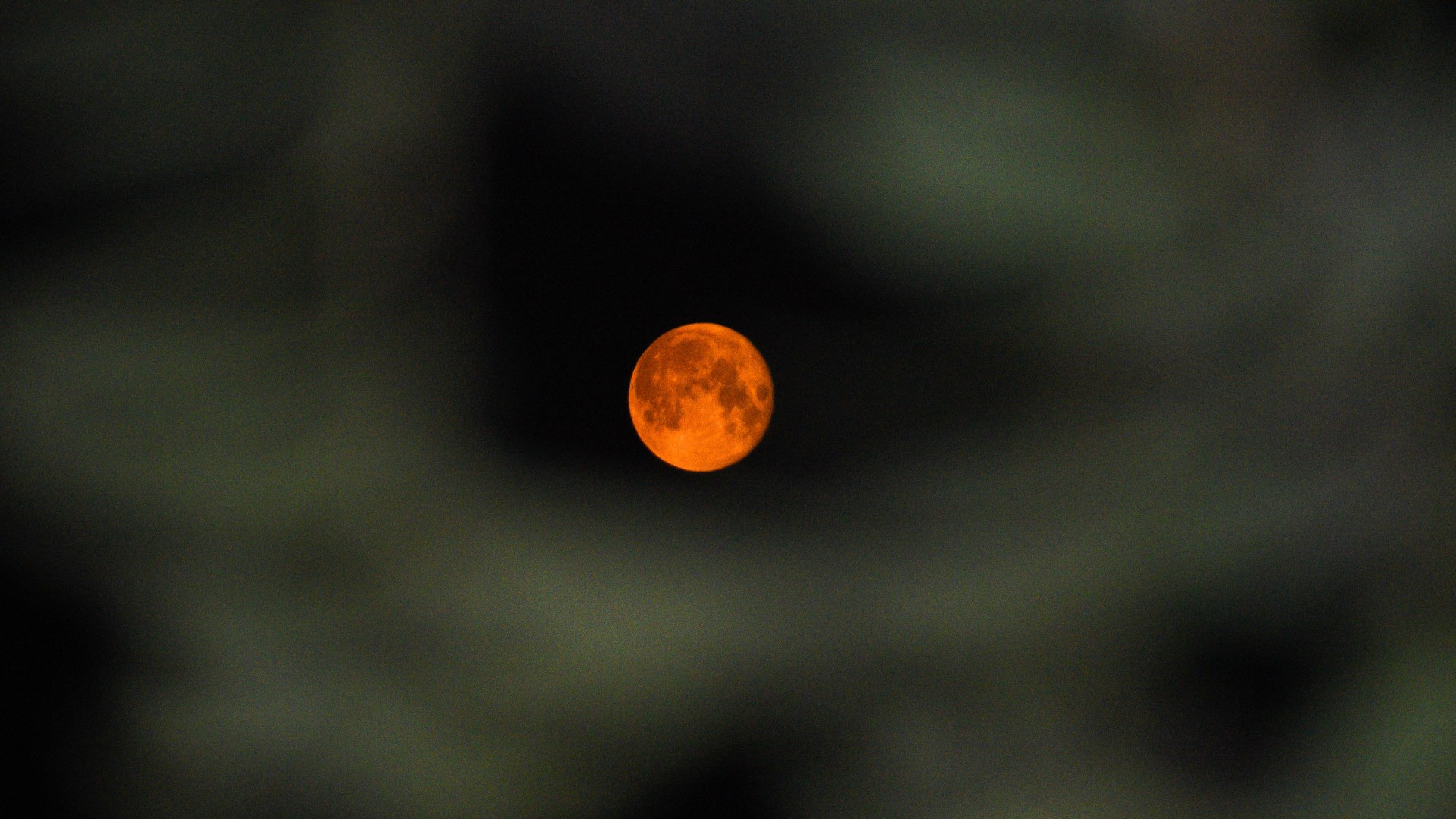
TONIGHT’s sky features August’s full moon, with stargazers across the UK in for a rare late-night treat in the early hours of Friday, August 28. A deep partial “blood moon” lunar eclipse will turn the lunar disc a striking coppery red as Earth’s shadow covers nearly 93% of the Moon. A deep partial ‘Blood Moon’ lunar eclipse will turn the lunar disc a striking coppery red Credit: Getty A full moon, commonly referred to as a ”Blood Moon,” rises during a total lunar eclipse over Guwahati, India, on March 3, 2026. (Photo by David Talukdar/NurPhoto via Getty Images) Credit: Getty It will look almost identical to a total lunar eclipse, and you can even leave the specialist eyewear at home. Is it a full Moon tonight? Yes, tonight (Thursday, August 27) will see the rising of August’s full Moon. Sign up for The Sun newsletter Thank you! Across the UK, the Moon will rise in the east-southeast at around 7.44pm, appearing wide, golden, and fully illuminated just before sunset. It will drift across the night sky until the dramatic partial eclipse kicks off in the early hours of Friday morning. August’s full moon is traditionally known as the Sturgeon Moon. The nickname comes from Native American tribes – particularly the Algonquin people of North America – who named lunar months after key natural milestones. Late August marked the time of year when large lake sturgeon were most abundant and easily caught in rivers and lakes, serving as a vital food supply. When is the best time to see the lunar eclipse? During a lunar eclipse, Earth moves directly between the Sun and the Moon. Most read in The Sun As this is happening, instead of bright, direct rays, the Moon receives only indirect sunlight filtered through Earth’s atmosphere. This atmospheric filtering scatters shorter blue light waves and lets longer red wavelengths pass through, casting a deep crimson or copper glow across the lunar surface – the “Blood Moon” effect. The eclipse itself is an hours-long event, but the action kicks off at 2.23am on Friday, August 28, as Earth’s outer shadow first touches the Moon, causing a subtle dimming. The partial eclipse officially begins at 3.33am, when a distinct dark “bite” will appear across the lunar disc as it enters the Earth’s main shadow. The peak of the eclipse will arrive at 5.12am, when maximum coverage will cause the Moon to glow in dramatic reddish-orange hues – the “Blood Moon” effect. Around 6.15am, the Moon dips below the horizon, wrapping up visibility across the UK. How to get the best views of the eclipse Getting a good view of peak eclipse will require some forward planning, due to how low the Moon will be in the sky – roughly eight degrees above the west-southwest horizon. Your primary goal is securing an unobstructed line of sight. Seek out high ground like a local hilltop, an open park, or a west-facing coastline to ensure tall buildings, trees, or hills don’t block your view. While the red glow of the Moon will be bright enough to spot from suburban back gardens, stepping away from light pollution and city streetlights will make the spectacle more vivid. Unlike the solar eclipse seen earlier this month, you can leave the specialist eyewear in the drawer and look directly at the Moon with the naked eye. You don’t need to bring any special gear, but if you’re lucky enough to own a pair of binoculars or a camera with a zoom lens, you should be able to get a closer look at the crimson-lit craters. Of course, the visibility of anticipated celestial events can also rely on the mercy of the Great British weather… Comment now
Is it a full moon tonight? When the August 2026 Blood Moon lunar eclipse peaks and how to watch in the UK
Full Article
Original Source
Read the full article at Thesun →KhanList aggregates and links to publicly available news content. We do not host full articles from third-party sources. Always verify important information with original sources.