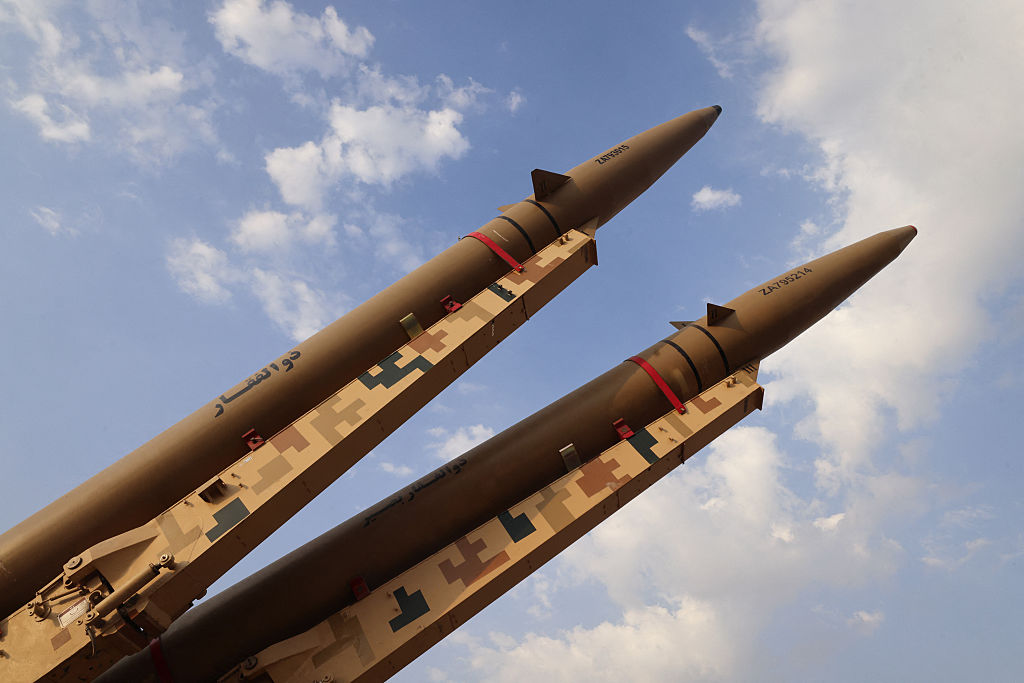
Has Tehran built back better when it comes to its ballistic missile infrastructure? That is the question set to decide how effective Operations Epic Fury and Roaring Lion by the U.S. and Israel, respectively, have been against the Islamic Republic of Iran this spring. The Jerusalem Post recently reported that it had independently confirmed the claims of Iranian officials about their renewed ballistic missile production capacity in the post-war Islamic Republic. Although the Post did not publish any separate evidence to bolster this claim or shed light on its sources and methods for verification, prudence dictates that Washington and Jerusalem at least factor-in such worst-case analyses when assessing the effectiveness of their attacks against Iran’s missile production nodes. This is especially necessary given the centrality of ballistic missiles to Iran’s security strategy as well as its increasingly offensive doctrine and tolerance for escalation. While controversial, the Post’s report should also not be dismissed out of hand because older estimates of damage done to Iran’s missile production capacity from fighting in October 2024 and June 2025 were revised due to Iranian efforts to rebuild and reconstitute their program. Moving the Means of Production Previous reports about Iran’s reconstituted missile program following the 40-Day War rested heavily on the Islamic Republic excavating subterranean missile depots whose entrances the U.S. and Israel had collapsed though bombing. By regaining access to previously entombed weapons caches during lulls in warfighting, the Islamic Republic was reportedly able to claw back its quantitative advantage: the fact that is has long-been home to the largest ballistic missile arsenal in the region. But if recent Iranian braggadocio pertaining to continued drone and missile production during the war and after are to be factored-in, it would mean U.S. and Israeli policy might have to adjust to one of the following scenarios. That either some of Iran’s major above-ground production sites struck during the war, such as Khojir and Shahroud which are tied to the country’s solid-propellant program, are back in action and have been rebuilt, or, that the Islamic Republic has been duplicating its above-ground production capabilities deep underground. While there is no significant publicly available evidence to confirm either, the fact that Islamic Revolutionary Guard Corps officials have on occasion spoken about Iran’s subterranean missile cities as not just bases but production centers is worrisome. Magazine Depth Remains a Problem for Tehran Both during the 12-Day War in 2025 and 40-Day War in 2026, the Islamic Republic showcased real vulnerabilities that rendered its missile program subject to aerial attack. For starters, it possessed a finite number of transporter-erector launchers which would emerge from underground bases to fire ballistic missiles. These platforms were continually targeted due to persistent U.S. and Israeli intelligence, surveillance, and reconnaissance. This capability, coupled with fears over magazine depth due to the targeting of above-ground industrial infrastructure supporting Iranian missile production are likely what led to a diminished rate of fire from Tehran after the first few days of each conflict. While this phenomenon averted the large and sustained volleys that U.S. and allied defense planners feared, Iran continued to fire missiles and drones until the very last hours of each round of fighting. Future analysis of U.S., Israeli, and Arab air and missile defense vulnerabilities will have to better differentiate between an Iranian willingness vs capability to engage in protracted warfighting, as well as how much Iranian statements about having built-back or sustained missile production are part of a larger denial-and-deception strategy. Focus on the Finger on the Trigger That Washington should be aggressively pursuing weapons capable of penetrating subterranean facilities is a given due to the adversaries it faces in Tehran and Pyongyang which have long looked to burrow underground and shield their nuclear and missile programs from aerial attack. This is especially important as survivability has been an unfortunately missing element in some public American intelligence assessments of Iran’s evolving military capabilities. Moreover, in a situation where war is no longer a theoretical probability, the incentive for the adversary to dig deeper and spend limited national resources to rebuild whatever has been damaged due to airstrikes is likely to persist. In order to avoid overlying on military options and continually attack to degrade Iran’s missile infrastructure, U.S. officials should target both the supply and demand side of the equation. This means working to detect and intercept any material Tehran may acquire from Pyongyang, Beijing, Moscow or other third-party cut-outs to bolster domestic missile production in the short-term. But it also requires developing and implementing a long-term strategy to undermine the regime and its hold onto power. Only then will Washington have found a meaningful and long-term solution to Iran’s missile ambitions. Behnam Ben Taleblu is Iran Program Senior Director at the Foundation for Defense of Democracies (FDD) in Washington DC, where he is also a Senior Fellow. He is the author of Arsenal: Assessing the Islamic Republic of Iran’s Ballistic Missile Program.
Is Iran Rebuilding Its Ballistic Missile Production Capacity?
Full Article
Original Source
Read the full article at Fdd →KhanList aggregates and links to publicly available news content. We do not host full articles from third-party sources. Always verify important information with original sources.