
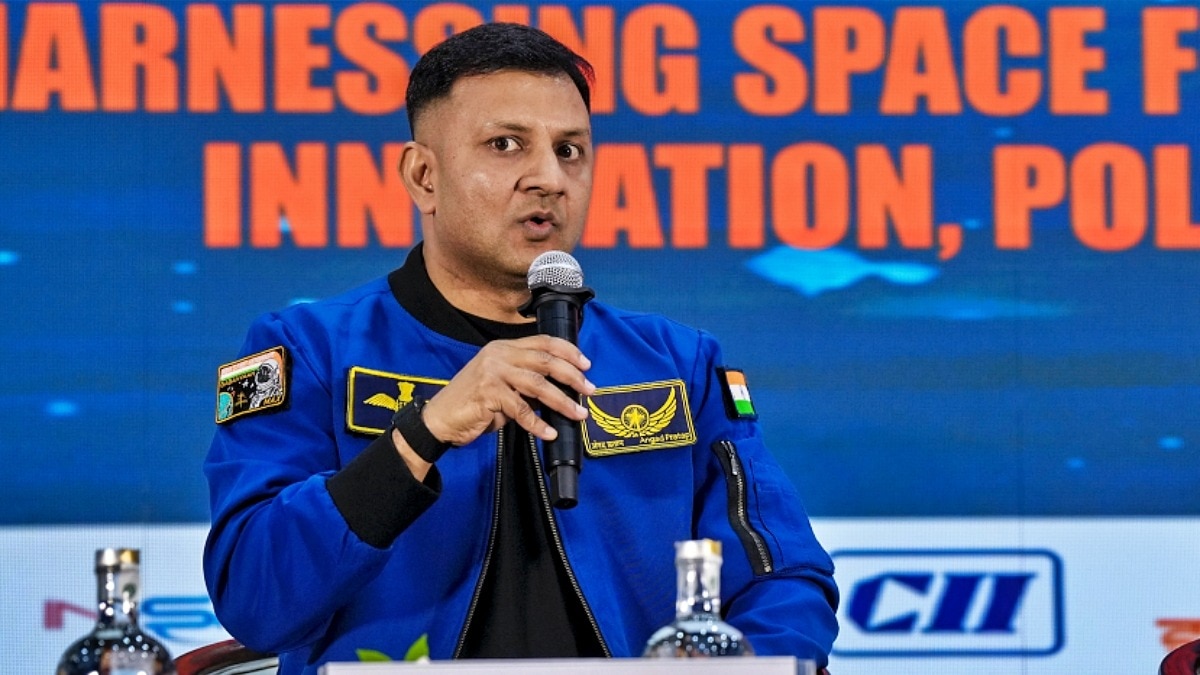
India may be entering the human spaceflight race after countries such as the United States, Russia and China, but this could work to its advantage, according to Group Captain Angad Pratap, one of the astronauts selected for the Gaganyaan mission.Speaking to India Today Digital at the India International Space Conclave 2026, the Indian Air Force officer said India was entering human spaceflight at the right time, as decades of experience, technological advancements and lessons from previous missions were now available to guide its journey.Responding to a question on how India could differentiate itself from established space powers in human spaceflight, Pratap said the country had the advantage of learning from the successes and failures of earlier missions."I'd rather say that this is the right time at which we are entering, because others have done it. We've got a lot of open-domain, open-source information for us as a precedent," he said. He pointed out that India could study accidents and incidents involving previous human spaceflight missions and use those lessons to strengthen the safety and reliability of its own programme.According to Pratap, technological advancements have also made several capabilities more accessible than they were when the early spacefaring nations began their human spaceflight journeys. India, meanwhile, has independently developed several technologies that could support its ambitions. India is preapring for the maiden launch of the Gaganyaan Mission. (Photo: Isro) INDIA MUST COLLABORATE WITH GLOBAL SPACE POWERSHowever, the astronaut, whose callsign is Max, stressed that developing an independent human spaceflight capability should not be seen as an end in itself. International collaboration would eventually become essential as India expands its ambitions in space."Once we acquire the capability to do human spaceflight, ultimately one day or the other, we will have to collaborate with the other space powers, and that is the way forward," he said.He explained that establishing its own human spaceflight capabilities would allow India to participate in global discussions and collaborations on a more equal footing.But he also cautioned against attempting to develop every technology required for human spaceflight independently."It's impossible for a single country to master all technologies related to human spaceflight," Pratap said.Instead, India should identify areas where it has technological strengths, focus on developing those capabilities and contribute them to international space exploration efforts.He said this approach would allow India to become a meaningful contributor to global human spaceflight programmes, rather than simply following the achievements of other countries.GAGANYAAN AND INDIA'S LARGER AMBITIONSIndia's Gaganyaan programme aims to demonstrate the country's capability to send humans into low Earth orbit and safely bring them back.The programme is also expected to lay the foundation for more ambitious projects, including the proposed Bharatiya Antariksh Station, targeted for 2035, and India's long-term human spaceflight ambitions beyond low Earth orbit.Pratap's remarks underline a broader strategy for India: build indigenous capabilities, learn from international experience and eventually become a collaborative partner in humanity's next phase of space exploration.- Ends
Is India too late in the human space race? Indian astronaut answers
Full Article
Original Source
Read the full article at Indiatoday →KhanList aggregates and links to publicly available news content. We do not host full articles from third-party sources. Always verify important information with original sources.