
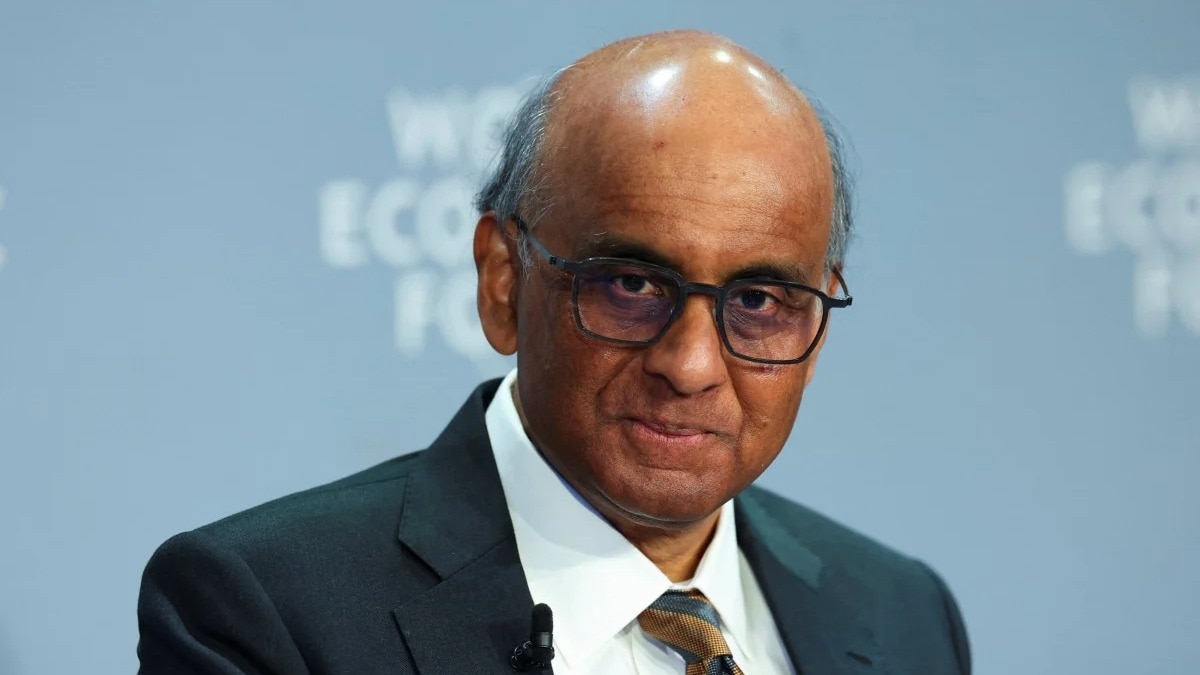
Singapore President Tharman Shanmugaratnam has warned that AI is weakening demand for fresh graduates, particularly in exposed sectors. India's hiring data offers a more complex picture, with fresher recruitment still growing even as employers rethink entry-level skills. Here is what the warning means for graduates entering an increasingly AI-driven job market.Singapore President Tharman Shanmugaratnam has warned that AI is weakening demand for fresh graduates, particularly in exposed sectors. (Photo: Reuters)New Delhi,Oct 12, 2026 14:27 ISTYour degree may still be valuable. But what if the job you expected to land after graduation is disappearing before you even get a chance to apply?That is the concern Singapore President Tharman Shanmugaratnam raised on October 12 at the IMF and World Bank annual meetings in Bangkok, warning that demand for fresh graduates is weakening, particularly in sectors most exposed to artificial intelligence (AI).THE FIRST JOB IS BECOMING THE BIG QUESTION"There is a particular problem that we have to address very soon... and that is that, the first rung in employment, your first job upon graduation, is now seeing less demand," Shanmugaratnam said.He added that the evidence was clearest in sectors most exposed to AI. The warning raises an uncomfortable question for students: if AI can handle tasks once assigned to junior employees, where will graduates get the experience needed to become skilled professionals?The warning echoes concerns already emerging in banking. As reported earlier, Singapore's central bank chief and Goldman Sachs executives have warned that AI could reduce demand for graduates doing routine analysis and preparatory work, while changing how junior bankers learn the business.The concern is not just fewer entry-level jobs, but the loss of the work that once trained future senior professionals.WHAT THIS COULD MEAN FOR INDIAFor Indian graduates, the question is especially relevant as millions enter the job market every year, hoping to start careers in IT, finance, consulting, marketing and other professional fields. Entry-level employees often begin with research, basic coding, data processing, documentation and routine analysis. These are also among the tasks AI tools can increasingly assist with or automate.That does not automatically mean entire jobs will disappear. Companies could hire fewer freshers, expect graduates to handle more complex work from day one, or redesign roles around AI-assisted productivity.AI is already doing a substantial share of entry-level work. A June 2026 study by Cognizant and Pearson, based on a survey of 750 HR leaders across India, the US and the UK, found that AI was performing 37% of entry-level tasks in India, against a global average of 33%.Yet Indian hiring has not simply collapsed. Naukri JobSpeak reported a 15% year-on-year increase in fresher hiring in August 2026. Overall white-collar hiring rose 14%, while banking recruitment increased 10%.The concern, therefore, is not just how many jobs exist, but what graduates will be expected to do in them.WILL GRADUATES STILL GET A CHANCE TO LEARN?Shanmugaratnam also cautioned against AI disruption creating a new divide between advanced and developing economies.The biggest risk is that employers may expect freshers to arrive with skills and judgement that were once developed through their first jobs.For India, the immediate challenge is to establish what is actually changing: fresher hiring numbers, the roles on offer and the skills recruiters now expect.The real test will be whether graduates can still find that first opportunity to learn on the job. Without it, gaining the experience employers demand could become harder for the very people just entering the workforce.For India, the challenge is to ensure that AI makes graduates more productive without removing the opportunities through which they gain experience.The first job may not disappear. But getting one, and learning enough to progress from it, could become a very different proposition.- Ends
Is AI killing the first job? Singapore President warns freshers could be hit hardest
Full Article
Original Source
Read the full article at Indiatoday →KhanList aggregates and links to publicly available news content. We do not host full articles from third-party sources. Always verify important information with original sources.