
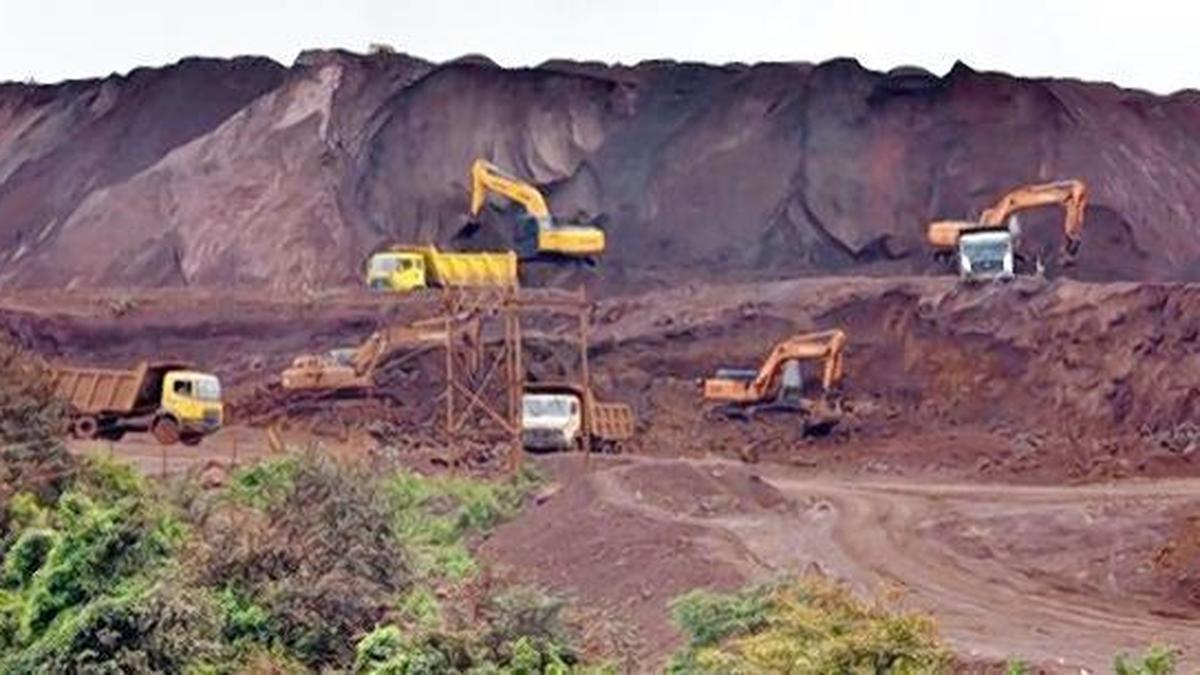
With India’s iron ore demand projected to rise to 772 million tonnes (MT) by 2047, miners in Odisha, the country’s largest iron ore reserve holder, are yet to utilise nearly 40% of their existing capacities, raising concerns over resource wastage and potential revenue losses.The issue has come under judicial scrutiny, with both the Supreme Court earlier this month and the Odisha High Court in January flagging the underutilisation of mining capacities.The Odisha High Court, while agreeing with petitioners who highlighted the sluggish operationalisation of mines despite environmental clearances, observed that the delay had resulted in an average annual revenue loss of ₹4,000 crore to the State.However, industry sources, speaking on condition of anonymity, attributed the delays primarily to prolonged forest clearance procedures, which often exceed the stipulated 18-month timeframe.Odisha’s iron ore conundrumData cited by petitioner Citizens’ Action Forum (Bhubaneswar) show that of the 246 million tonnes per annum (MTPA) of mining capacity granted environmental clearance in FY25, only around 159 MTPA had been operationalised.Separately, data published by mining consultancy BigMint in June 2026 show that Odisha produced 158 MT of iron ore in FY26 against an environmentally cleared capacity of 278 MTPA, indicating capacity utilisation of nearly 60%.The underutilised capacity is particularly significant as it largely involves hematite, the highest-grade variety of iron ore.The shortfall also raises questions over India’s continued dependence on imports. According to the Mines Ministry, the country imported 12.3 MT of iron ore in FY26, incurring an expenditure of ₹11,115 crore.Odisha accounted for more than 50% of India’s domestic iron ore production during FY26. Chhattisgarh contributed around 17.1%, followed by Karnataka at 16.6%. Capacity utilisation in the two states – albeit with significantly lower volumes than Odisha – stood at 62% and 80%, respectively, according to calculations based on BigMint data.What courts saidIn January, the Odisha High Court directed that mining rights be mandatorily transferred to state-owned National Mineral Development Corporation (NMDC) to ensure “optimum utilisation of the mines” and “eradicate any burden on the government exchequer”.However, in its November 4 order, the Supreme Court concurred with the need for optimum utilisation of mineral resources but left the decision on transferring mining rights to the State government’s discretion, rather than making it mandatory. Published - November 14, 2026 09:33 pm IST
Iron ore capacity under-utilisation in major-producing states prompt concerns as India sets 2047 target
Full Article
Original Source
Read the full article at Thehindu →KhanList aggregates and links to publicly available news content. We do not host full articles from third-party sources. Always verify important information with original sources.