
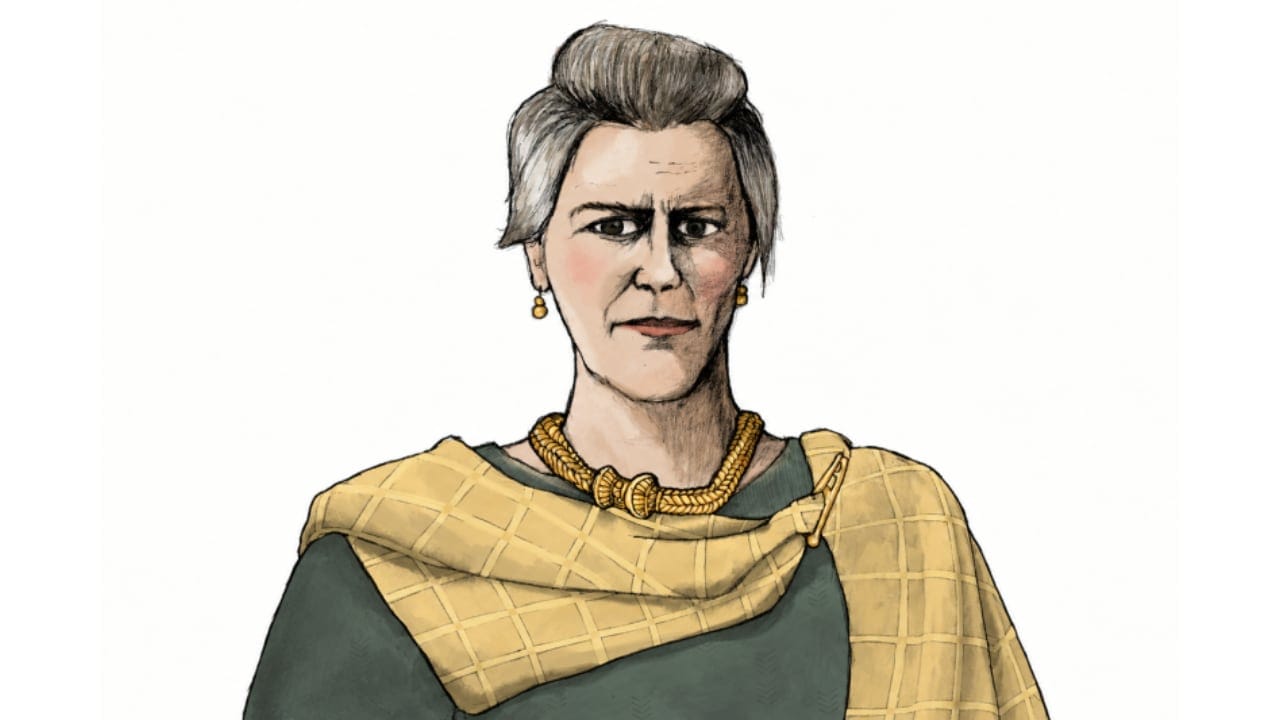
NOVEMBER 28, 2026 09:24The Iron Age British ruler "Verica," who was central to the Roman invasion of Britain 43 CE, may have actually been a woman, new research from Bournemouth University (BU) suggests, rewriting the history of early Roman Britain.Verica was a ruler of the Atrebates, a tribe whose territory covered much of modern-day Hampshire and West Sussex. Around 40 CE , she was ousted and fled Britain, making her way to Emperer Claudius in Rome.Claudius was the fourth emperor of the Roman Empire, ruling from 41 to 54 CE. rising to power after the assassination of Caligula.According to historian Cassius Dio, Rome’s invasion of Britain only happened because Verica persuaded Claudius to cross the channel.“Verica is assumed to have been male because of the patriarchal mindset of 19th century, classical historians, explained Dr. Miles Russell, director of archaeological fieldwork at BU, who led the research. “Verica was not only critical to the special relationship between Britain and Rome in the early first century CE but was indisputably female.”Silver coin of Verica showing a naked, horse-riding female warrior with a spear. (credit: Chris Rudd Ltd./Bournemouth University )Evidence for Verica being a womanOne clue to her gender, points out Russel, is that the name "Verica" ends with a letter ‘a,’ a common trait for female names of the time, as can be seen in Cartimandua, the 1st-century queen of the Celtic Brigantes, and in Boudica, queen of the British Iceni tribe, who led a revolt against the Romans in 60 CE.Though Boudica is more well-known for her exploits, Russell argues that Verica was in fact much more powerful and influential.“People also assume she was a ‘he’ because of the term ‘rex’ on coins, but rex is a non gender specific title, both male and female kings were recognised by Rome, Cleopatra of Egypt being the most famous,” he said, adding that “The use of the Latin title rex on coins shows that Verica ruled with the full authorisation of the emperor.“The theory of Verica’s gender is strengthened by imagery used on coinage minted at the time, in addition to’rex,’ such as that of a a slender, feminine, bare-breasted figure riding on horseback.Verica's role in British history“The story of Claudius committing to something only because a woman told him to fits the trope of this emperor as being submissive and henpecked,” Russell stated. “In effect, Dio was saying that the campaign was undertaken solely because of the whisperings of a barbarian femme fatale. Verica’s role was rather more central to the British expedition. Having her onboard ensured the project was a success as she provided tactical information and support on the ground.“The invasion was Claudius’ great triumph - it being the only chance he had to prove he was a successful military leader. Verica provided the excuse for regime change and the emperor seized it.”He emphasized the need to take archaeological evidence at face value, “and remember Verica as a female-king and one of the earliest and most important of British female leaders.“Had she not been deposed, fleeing to Claudius for military support, Rome may never have invaded Britain in the first place.”The research on Verica, presented in a new book ‘Caratacus: Great king of Britain’, which was published by Bloomsbury in January, is also discussed in the latest edition of Current Archaeology.Follow us on Google
Iron Age ruler who convinced Claudius to invade Britain may have been female, new research argues
Full Article
Original Source
Read the full article at Jpost →KhanList aggregates and links to publicly available news content. We do not host full articles from third-party sources. Always verify important information with original sources.