
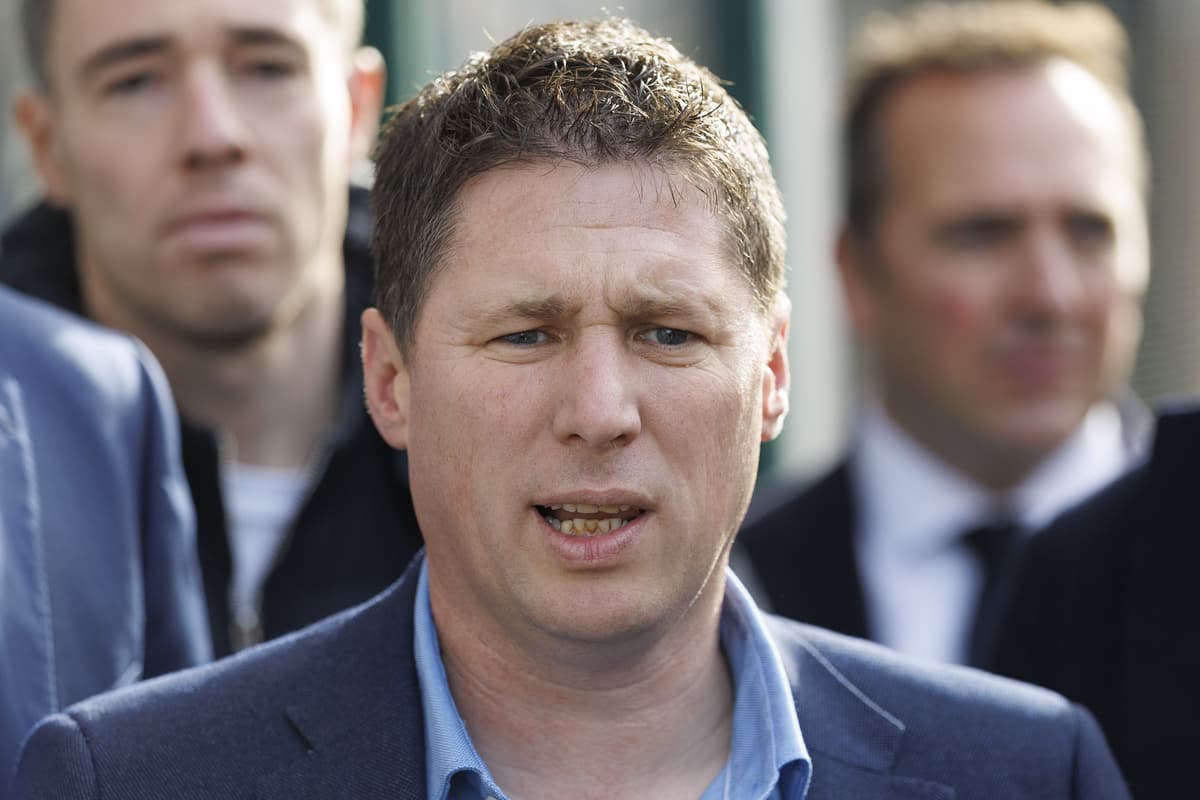
Ireland’s Government should formally oppose proposals requiring the Attorney General for England and Wales to give consent for Troubles-related prosecutions, Irish legislators have recommended.Concerns have been raised that the amended Northern Ireland Troubles Bill, sent to the House of Lords two weeks ago, could undermine the independence of prosecutorial decision-making.In Dublin, the Oireachtas justice committee has completed pre-legislative scrutiny of the general scheme of the Irish Government’s legacy legislation.The report recommends opposing the involvement of the Attorney General in such decisions as well as any amendment that would remove provision for legacy inquests after the Legacy Commission is wound up.The Attorney General for England and Wales is a political appointee, with a separate Attorney General for Northern Ireland appointed by the First Minister and deputy First Minister under devolution.The report recommends that an interstate case taken by the Irish Government against the British Government be maintained until all concerns around legacy inquests are addressed.The committee’s report was published on Thursday and its recommendations have been sent to Justice Minister Jim O’Callaghan.The report contains a foreword by committee chairman Matt Carthy which welcomes co-operation with legacy mechanisms and supporting information recovery but raises several concerns.In particular, it says concern arises from “proposed amendments that would give the British Attorney General a decisive role in legacy prosecutions, raising questions about the independence of prosecutorial decision-making”.Minister for Justice Jim O’Callaghan (Brian Lawless/PA)PA WireIt also questions procedural protections to UK security personnel.The foreword says it is “essential” that the Oireachtas is satisfied that any legislation providing for co-operation does not undermine accountability, weaken the principles underpinning the Good Friday Agreement, or create a system that affords preferential treatment or a degree of impunity to former members of the British armed forces.Speaking at the launch, Mr Carthy said the “British Government is seen as the main blocker to truth and justice” for families and communities.“Our committee feels that, regardless of what we do in this state legislatively, if we don’t have a British Government that’s willing to be honest in its approach to these these matters, then ultimately we will have more and more people pass to their graves before actually securing the truth that they seek.”Read MoreAsked if there had been a change of approach under the Labour Government, Mr Carthy said: “No, is sadly the honest answer.”He added: “We haven’t seen the type of sea change that would be required with the transition from a Tory government that sought to essentially tear up the legacy and accountability mechanisms that had been previously agreed.”He accused the UK of prioritising the “protection of their state and state actors” over truth, reconciliation and accountability.Justice committee chairman and Sinn Féin TD Matt Carthy (Brian Lawless/PA)PA WireThe Dublin Government’s legislation is designed to facilitate co-operation between Irish authorities and UK public inquiries and the investigative Legacy Commission when it is established, as well as establishing a joint cross-border Independent Commission on Information Retrieval.The committee’s recommendations include that the legislation should clearly define what is meant by national security, sovereignty and other essential interests of the state when being cited as a reason to withhold information.National security restrictions should not be relied on to conceal wrongdoing or state involvement in serious human rights violations, the minister will be told.The committee believes decisions to withhold information should be made by an independent judge rather than a minister.Independent judicial oversight is also sought for decisions on redactions of information or restrictions on witness questioning.The committee also recommended the establishment of an independent unit to investigate unresolved Troubles-related cases, and that any legacy investigative mechanism should be institutionally independent from An Garda Síochána.The committee calls for stronger statutory obligations on state bodies as well as current and former office holders to co-operate with investigations and information-recovery processes.
Irish Government should oppose aspects of UK Troubles Bill, committee says
Full Article
Original Source
Read the full article at Standard →KhanList aggregates and links to publicly available news content. We do not host full articles from third-party sources. Always verify important information with original sources.