
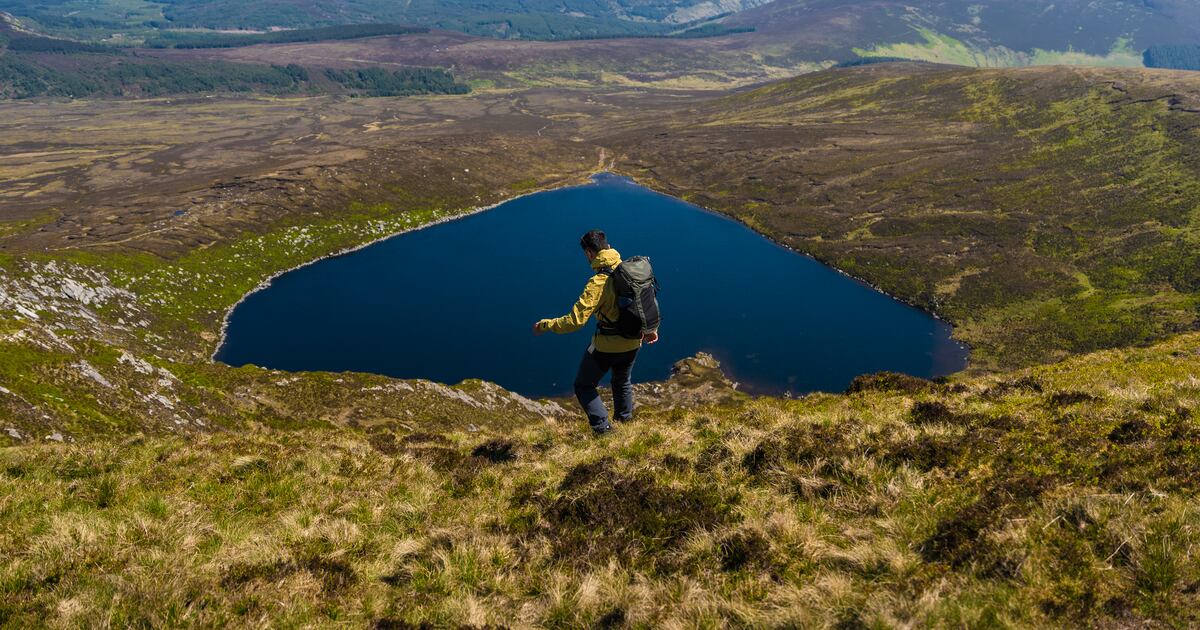
Lakes are often overlooked in favour of the seaside, but they are stunning places to enjoy the water and hike around, from Lough Bunnafreeva West – the highest corrie lake in Ireland, 300m above sea level on Achill Island – to Coumshingaun Lake in the heart of the Comeragh Mountains in Co Waterford, which offers one of my favourite hikes in the country. Growing up in Westport in Co Mayo, people used to reply “Ah there’s nothing to do or see” when I said I was keen to venture a bit further than the town to explore. I wanted to put that to the test so I grabbed my camera, and hit the road. After more than 10 years capturing the beauty of the Irish countryside and sharing it online, I still feel I’ve barely scratched the surface.We live on an incredible island. It’s so easy to get caught up in the busyness of daily life that we forget what’s on our doorstep. I want to remind people of the beauty and the experiences you can have right here.My new book, Unseen Ireland, is a collection of some of my favourite places off the beaten track around Ireland, with photographs, to inspire others to go visit for themselves. Here, I share some of my favourite, lesser-known lakes as listed in the book. READ MORECO MAYODoolough, Dubh LochDoolough Valley, Co Mayo. Photograph: Joshua Nueva SUPPLIED FOR SINGLE USE ONLY Doolough Valley is a remote corridor carved by glaciers between the Mweelrea and Sheefry Mountains in Co Mayo. Stretching roughly 10km from Doolough to Killary Harbour, this is a place of solitude and spiritual communion. The landscape here is raw and stunningly beautiful. The obsidian waters of Dubh Loch – the Black Lake – reflect the steep flanks of Ben Lugmore, while blanket bog and heather moorland contrast with the rocky slopes. The memory of the terrible event known as the Doolough Tragedy, seems to live on in these stones and sky, in the waters and in the ground itself.In the early spring of 1849, during the height of the Great Famine, hundreds of ill and starving people were forced to walk for hours, from Louisburgh to Delphi Lodge in Doolough Valley in an unsuccessful attempt to secure food or aid from officials. The weather was harsh, with vicious winds and hail, and it was very cold. When they arrived, the desperate families were turned away empty-handed and ordered to return to their homes. Exhausted and malnourished, many died on the journey. A Famine Memorial Cross now stands by the lake in remembrance, and every year a Famine Walk retraces the steps of the victims.Haunting, moody beauty and the striking light make this a popular location with photographers. Both Doolough and Fin Lough are deep glacial lakes, inky and mirror-glazed. The scenery is best enjoyed by driving or cycling between Leenane and Louisburgh. There is plenty more to see in the surrounding areas. Wild Atlantic trout and salmon thrive in the rivers and lakes, and you can even watch the salmon leap at the Aasleagh Falls near Leenane. Louisburgh, a small town with traditional music, also provides access to Silver Strand Beach. Connemara National Park is just an hour south, and the pilgrimage mountain Croagh Patrick is 40 minutes north.CO CAVANCavan’s Lakelands, An CabhánCavan Lakelands. Photograph: Joshua Nueva The watery heart of Ireland, it is said that Co Cavan has a different lake for every day of the year. Indeed, there are more than 365 lakes and water systems here, including Lough Oughter, Lough Ramor, and the Shannon-Erne Waterway. Lough Oughter alone forms a patchwork of channels, coves and islands of all shapes and sizes, spreading across thousands of hectares. The vast networks of tranquil lakes are perfect for kayaking, fishing, boating and paddleboarding, and offer plenty of opportunities to walk and picnic in the most peaceful surroundings. The streams and rivers here have been used for travel since Neolithic times. Crannógs, ancient artificial islands built for defensive purposes by early settlers, skulk just beneath the surface of the water. Upper and Lower Lough Erne link to the Erne System, which connects lakes and rivers and was used by the Vikings as a trade route, and the River Erne is one of Ireland’s most important waterways. Ancient ringforts and burial sites lie along the lakeshores, testament to millenniums of settlement. Cavan Burren Park is another area rich in history, with glacial erratics and megalithic tombs aplenty within an ancient karst landscape. The stunning Marble Arch Caves and Cuilcagh Walk are located across the border, in Co Fermanagh. The Shannon-Erne Waterway is also noteworthy for its stunning scenery; an ideal location for cycling, boating or gentle walks by the waterside. Lough Sheelin and Lough Ramor are well known for trout angling, birdwatching and for their scenic viewpoints. Killykeen Forest Park is a beautiful lake system surrounded by forest, another great area for picnic spots and walks, and as well as plentiful opportunities to view wildlife. Watersports, including kayak and paddleboard rentals, are available at the Cavan Adventure Centre.This is the world’s first cross-border geopark, its blend of geology, landscapes and cultural history officially recognised by Unesco in 2015. It is a haven for an amazing range of wildlife, especially fish including perch, bream, pike and trout. Red squirrels, pine martens and otters all thrive here, as do whooper swans, herons, great crested grebes and kingfishers, among others. Some of Ireland’s most fascinating myths and legends originate here, with the lakes linked to tales of water spirits, enchanted islands and mysterious hidden kingdoms.The northern areas are dominated by the sprawl of Lough Oughter, islands studding the water all around, some bare, some furred with forest. The ruins of Cloughoughter Castle crown one of these islands, a circular Norman tower built in the 13th or early 14th century. The island can only be accessed by boat or kayak as there is no bridge; observed by silent herons, visitors must paddle through the reed beds, creating ripples in the reflection of the castle on the water.Between spring and autumn is the best time to visit Cavan’s Lakelands, to explore the vast networks of beautiful lakes, spot precious wildlife, discover thousands of years of history and soak up the tranquil, magical atmosphere of this water wonderland.CO WATERFORDCoumishingaun Lake & Mahon Falls, Com SeangánComishingaun Lake. Photograph: Joshua Nueva Nestled in the stunning Comeragh Mountains, Coumshingaun Lake in Co Waterford is one of Ireland’s finest examples of a corrie (glacial lake). Its Irish name roughly translates as “a mountain recess in the shape of a wicker basket”. Coumshingaun Lake is surrounded by steep rocky walls that tower 630m above sea level. It is not waymarked, so do take care. Avoiding foggy or rainy days is sensible. This beautiful hike is challenging but incredibly satisfying. Views of the ruggedly remote surroundings make the effort more than worthwhile, and a bracing swim in one of Ireland’s most stunning wild swimming spots rounds off the experience. There are many fantastic walks nearby, including Crotty’s Lake. Folklore tells of William Crotty, an 18th-century Robin Hood-type outlaw also known as Crotty the Robber, who used locations in the Comeragh Mountains as his hiding places. He was captured in 1742, after a two-day standoff at his cave next to Crotty’s Lake. Local tales speculate that his secret treasure is still buried somewhere up here.Wildlife thrives in these habitats of heather moor, upland blanket bog and rocky summit plateau. Bird species include red grouse, hen harriers, wheatears, siskins, crossbills – with occasional rarities like dotterels. White-tailed eagles once lived here too, but are now extremely rare. Mammals including foxes, badger and deer may be spotted, and there are brown trout in the lake. Visit between April and September for the best weather for hiking and stunning views, and greater chances of spotting birds and animals.CO WESTMEATHLouigh Ennell, Loch AinninnLough Ennell. Photograph: Joshua Nueva SUPPLIED FOR SINGLE USE ONLY South of Mullingar, in Co Westmeath, the ancient waters of Lough Ennell stretch more than 6km through the midlands. This important limestone lake is home to several different types of habitat, companion to a stunning historic country house, linked to a significant work of literature, and a haven for wildlife. There is plenty here to attract visitors but, from about October through to February or March, one special reason soars high above the rest.As day slides away into dusk, the sky becomes a stage for one of nature’s most spectacular performances. While the light fades and the temperature drops, thousands of starlings converge in a mesmerising murmuration, like a bird-ballet in the sky above the lake.Seeking respite from northern European temperatures, starlings spend winters in Ireland’s milder climate before returning to their breeding grounds in places like Scandinavia through February and March. The vast reed beds of Lough Ennell offer protection and overnight warmth, but before settling down to sleep the birds swoop and climb and dive together. This striking display creates a huge, shape-shifting mass thought to keep the flock safe from predators such as peregrine falcons, or perhaps to signal where the group will roost for the night. The best location for viewing the murmuration is Lilliput Adventure Centre, otherwise try Ladestown or Tudenham.Nearby Belvedere House is one of Ireland’s most striking 18th-century country houses. This Georgian beauty was built on the edge of Lough Ennell in 1740, and the house and its 160 acres of rolling gardens and woodland trails are open to the public year-round. The calm elegance of this building contrasts starkly with its family history: it was home to a brutal husband and the site of a bitter family feud. Following an accusation of infidelity, the owner Lord Belvedere imprisoned his wife in another location (Gaulstown House) for more than 30 years. He also built an enormous Gothic-style folly – which became known as the “Jealous Wall” – to block the view of his brother’s estate, Tudenham Park. It is the largest folly in Ireland.Jonathan Swift often holidayed here and retreated to write at Lilliput and Lilliput House, although at the time the area was called Nure. Once Gulliver’s Travels was published, locals began referring to the place as Lilliput, and so today that is its name. Lilliput House, built in the 18th century, is now the site of the Lilliput Adventure Centre in Jonathan Swift Park. The stunning shore lands around Lough Ennell are paradise for birdwatchers, especially during winter and spring. As well as the famous starlings, ducks, swans, herons, great crested grebe, kestrels and sparrowhawks can all be spotted here. Plenty of other creatures also make their homes around the lake, notably otters, pinemartens, badgers, bats and foxes. CO WICKLOWTonelagee and Lough Ouler, Tóin le GaoithLough Ouler, Co Wicklow. Photograph: Joshua Nueva Its Irish name – Tóin le Gaoith – describes this place perfectly, translating as “backside to the wind”. Indeed, this mountain really does show its back; standing exposed in the Wicklow Mountains, its 817m (2,680ft) height makes this the third tallest summit among the peaks in this range.Most visitors come to view Lough Ouler, the heart-shaped corrie lake that nestles below the northeastern side of Tonelagee. This lake, formed by glacial erosion, is accessible only by foot. There are large boulders on the edge, which make a perfect place to pause for a quiet moment while soaking up the stunning scenery.A walking route here often begins at Wicklow Gap car park, which is a popular trailhead for reaching both Lough Ouler and Tonelagee’s summit. One of Ireland’s highest mountain passes, Wicklow Gap has been used as a crossing point for centuries; traders, locals and shepherds have long travelled this route to make their way from east to west of the Wicklow Mountains. There are other starting points for the beautiful walk up Tonelagee and along Lough Ouler, including the Glenmacnass Waterfall car park on Military Road; this route leads along the Glendmacnass River before crossing over to begin the climb. Glenmacnass Waterfall cascades beside the road, convenient for those who prefer to take in their scenery from the comfort of the car. For hikers the summit of Tonelagee, marked by a trig point, offers the most spectacular views of the lake and surrounding mountains.If you are planning a hike, come well prepared with appropriate clothing and strong footwear; the terrain here is open and exposed to the elements. Whichever route you choose, check the distance and difficulty of your climb before you set out. During the winter, conditions are particularly challenging, and walkers are likely to encounter fog and possibly ice, as well as boggy ground – at this time of year it is best to leave this route to the most experienced hikers. Spring and autumn are relatively quiet, with beautifully fresh spring greens and autumn golds and russets adorning the slopes. Summer is the busiest season and the best time to photograph Lough Ouler, with both visibility and good light more reliable. Skylarks shoot upwards, meadow pipits flit from tussock to tussock, kestrels hover and swoop, and ravens chatter and caw to each other.Throughout Wicklow, myths and stories are often associated with lakes; traditional tales of monsters, ancient curses, and treasures hidden beneath dark and silent waters. Lough Ouler, however, is most famous for looking like a heart – this naturally-occurring outline is more than enough to make the lake a destination for photographers and romantics alike.This is an edited extract from Unseen Ireland: The Hidden places, History and Lore of the Wild Irish Landscape by Joshua Nueva, published by Greenfinch in Hardback
Ireland’s secret lakes: Five incredible places to explore
Full Article
Original Source
Read the full article at Irishtimes →KhanList aggregates and links to publicly available news content. We do not host full articles from third-party sources. Always verify important information with original sources.