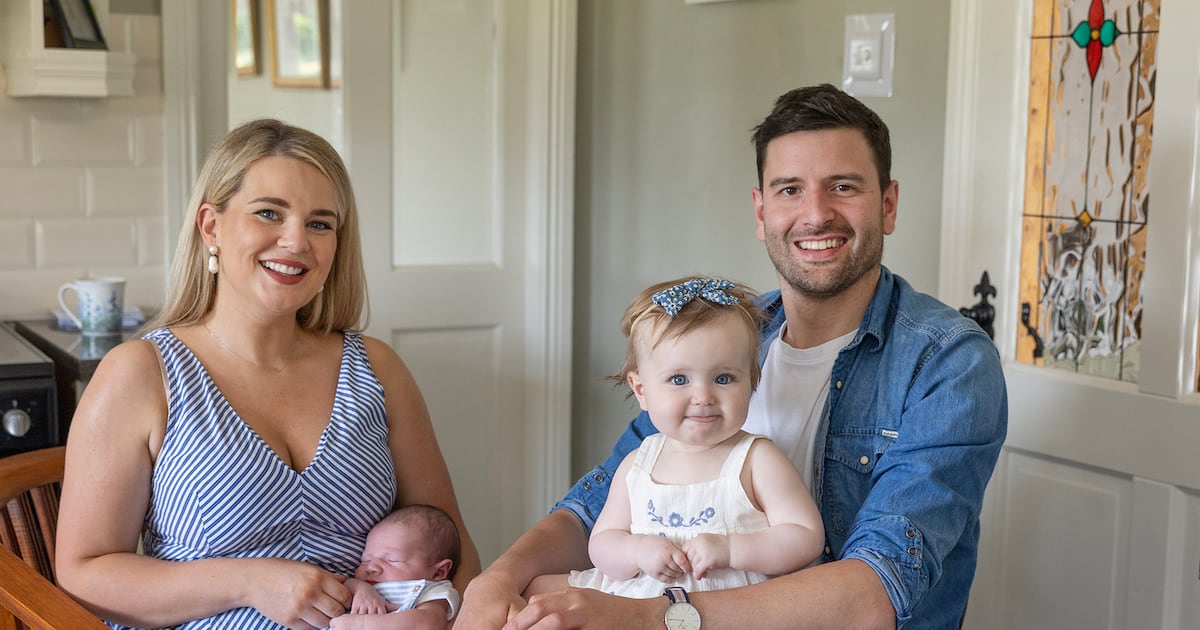
Aircraft maintenance engineer James Flanagan had a curious sensation in his legs while working inside a plane’s fuel tank at Shannon Airport.“I thought my legs were wet,” he says of that incident, which prompted him to go to the company doctor. There had also been intermittent tingling in his left hand. But at age 26, the progressive, incurable disease of multiple sclerosis (MS) “was not on my radar at all”.Until, after a series of tests, that was the diagnosis he received from a neurologist in Limerick in October 2014.Flanagan knew next to nothing about the autoimmune disorder, which affects the brain and spinal cord. Although he did remember watching a documentary about a young woman who went from completing marathons to being on the point of collapse due to MS.READ MOREHe is one of an estimated 860,000 people in the State – one in six of the population – who is living with a neurological condition, which is a broad term for brain, spinal cord, muscle and nerve issues. The most common of these is migraine, but epilepsy, stroke, dementia, acquired brain injury and Parkinson’s disease, as well as MS, all come under the neurological umbrella.“It made me rethink everything,” says Flanagan of his diagnosis. Less than two years later, he left his job in Shannon to work as an engineering supervisor with EasyJet. Wherever their planes went for maintenance, Flanagan would go to oversee the work.“I just wanted to live my dream before things got worse. I had to be brave, take that jump.”He travelled to places such as Malta, Cyprus, France, Italy and Spain with the job. He even returned to Shannon once, to supervise the work of his former colleagues. “All the while multiple sclerosis was burning away in the background. I could feel myself getting worse.”James Flanagan: 'I feel like MS is trying to slow me down – and every time it does, I kind of smile and push past it and say, nice try.’ Photograph: John D Kelly During one visit home, a chance encounter with a former colleague at an M7 services station led to his permanent return to Ireland in 2019. The man had set up his own company and asked him to come and work for it.Flanagan felt it was good timing; he needed to be back home. However, it was difficult to leave the EasyJet job he loved. Work aside, in the UK he had been able to avail of a clinical trial in Addenbrooke’s Hospital in Cambridge and would not have access to such a source of hope in Ireland.“They could find something amazing that could work for you.”After deciding to come home, he recalls sitting crying on his bed in a five-star hotel in Cyprus, “but in the back of my mind [I knew] I had to leave”.He has been working in aircraft leasing, back in Shannon, ever since. Within the first 12 months of his return, he had met his future wife, Laura, a nurse, who like him is from Cashel, Co Tipperary. “Everything fell into place for us; we were just having a ball.”They now live in the townland of Gaile, in between Thurles and Cashel, with their 15-month-old daughter NancyMay and newborn son Louis. They were not to know that being fractionally inside South Tipperary, rather than North Tipperary, would turn out to mitigate against access to neurological services.[ Living with multiple sclerosis: ‘What I think matters has completely changed’Opens in new window ]Flanagan is a wheelchair user now. “Almost full-time,” he says, stressing the word “almost” with characteristic determination to hold out against MS. He still works five days a week, commuting to Shannon, and appears to have huge mental strength in the face of adversity. “I’m just so used to it. It’s strange in a way, I feel like MS is trying to slow me down – and every time it does, I kind of smile and push past it and say, ‘nice try’.” Achieving milestones, such as completing a master’s in engineering practice at the University of Limerick in 2023, and then, of course, starting a family, helps him psychologically. The arrival of their children was “amazing for everyone,” he says, pointing out that everybody in his family, his wife and his parents, are affected by his MS. “They all have to watch me struggle with this.”In a stark example of what the Neurological Alliance of Ireland (NAI) calls a “postcode lottery”, Flanagan does not have access to a community neurorehabilitation team. The southeast is the only geographical part of the State still waiting on funding for one. Instead, he pays for physical therapy privately. His house is just inside Dublin and South East HSE region, which has one team – more than 150km away in Bray, Co Wicklow. If his home was just a few kilometres up the road in Thurles, he would be in the HSE Midwwest region, which has a specialised, multi-disciplinary team based in Dooradoyle, Limerick.James Flanagan with his wife Laura, son Louis, daughter NancyMay and parents Jim and Marie at the family farm in Co Tipperary. Photograph: John D Kelly Nine such teams were promised in 2019,one for each of the then nine HSE administrative areas, which have since been consolidated into six regions. Eight of the teams have been funded, with six up and running. They include physiotherapists, occupational therapists, neuropsychologists and dietitians, all specialised in neurorehabilitation.“These are fantastic,” acting as a “bridge between hospital and community”, says NAI’s chief executive officer, Magdalen Rogers. There is a big difference for, say, a road accident victim or stroke survivor between being ready to be discharged from hospital and being well enough to resume independent living or go back to work. That’s where the team steps in. They also help to prevent others needing to go to hospital.NAI’s chief executive officer Magdalen Rogers. Photograph: Damien Eagers Flanagan discovered the “amazing” benefit of neurorehabilitation in early 2022, when his neurologist in Tallaght University Hospital referred him to Peamount Healthcare, Co Dublin, for a week. In the previous months he had been able to avail of revolutionary stem cell treatment at one of UCLH’s (University College London Hospitals) centres, under the HSE’s treatment abroad scheme. He was much weaker by the time he returned home but full of hope that his MS would have been “switched off” and he would not deteriorate further.“I just needed to build the strength back. I couldn’t repair damage that was done but I could just make myself stronger.”He worked with specialised neuro-physical therapists every day at Peamount. “They were well aware of what my body could do and what it couldn’t do and what I should do. Day by day, I got stronger and stronger. It was just amazing what happened.” He also saw OTs who showed him ways to improve daily life and had sessions with a psychologist.“When I left, I was walking; I was doing 1,800 steps per day. Whereas when I went in, I wasn’t covering anything near that.”The physical therapy had been of such benefit that he wanted to continue it all year round, but there was nothing like it available in his community. He had some access to a physio and OT at a primary care centre but they are not trained specifically in neurological conditions.“It’s really disappointing, especially when you’ve got a taste of what neurorehabilitation can do. People don’t know what they are missing out on because they have never been able to avail of it.”He pays about €5,000 a year for private physical therapy, “trying to recreate that care I got in 2022 – at huge personal expense, but my body’s on the line”.The southeast is an “outlier” in being the only area not funded for community neurorehabilitation, says Rogers. The alliance’s recent pre-budget 2027 submission seeks an investment of €2.2 million to address both this anomaly and other regional inequities within neurological services.“It’s not just the care for people who get a diagnosis; it’s the people who are being missed presenting in their regional hospitals.”There is this “random situation”, she explains, where some of the State’s 17 model 3 hospitals (ie those providing 24/7 acute care but not at the level of model 4 hospitals) have a neurology service, as per the 2016 model of care. “Others either don’t, or have a very under-resourced neurology [service].”For example, there is no neurologist in Tipperary hospital, she says, while cover is scant in Tullamore and Mullingar hospitals. So little consultants’ time is allocated to these two hospitals that local patients have to travel to Dublin to see those same neurologists.As for people admitted to a regional hospital, if there isn’t a full-time neurologist, either patients have to be kept in until they are seen, “or there’s a risk that they’re not seen by a neurologist”, she says. It’s “luck of the draw” for patients: some hospitals provide specialised care and some hospitals don’t.The NAI, an umbrella organisation for neurological patient groups, is one of many lobbying for more money from Budget 2027 for their area of interest.What does Rogers think makes their case compelling?“Over 50,000 people are being diagnosed with a neurological condition each year and that always takes people by surprise,” she says. Growing demand for services has outpaced increased investment in recent years, with neurology waiting lists having doubled over the past decade to more than 24,000, partly due to an ageing population. The State still has the worst ratio of neurologists to patients in Europe, although the gap is not as big as it was, she says. However, “it is no good, if they’re all based in the major population centres”. The Department of Children, Disability and Equality says its €3.9 billion allocation to the HSE this year for specialist disability services is 20 per cent more than 2025. The HSE, it points out, is leading the national neurorehabilitation strategy that aims to deliver services as close to patients’ home as possible. It adds that until the 2027 budgetary process, through which the HSE can submit proposals to both maintain and expand services, it would not be appropriate to comment further.Nancy and James. HSE Dublin and South East, the region in which Flanagan lives, says submissions will be made to Budget 2027 to fund community neuro-rehabilitation teams in remaining areas that do not have funding for such a team, including in Dublin and South East, and to enhance existing teams.“The HSE continues to engage with the Department of Children, Disability and Equality through the annual budgetary process to secure the necessary funding to establish this essential service in such a way that there is equity of access for those who need it, regardless of where they live.”Meanwhile, the Department of Health says that, in 2025, €4.3 million was allocated to support the implementation of the neurology model of care. “This funding is enabling the recruitment of five consultant neurologists and an additional 25 nurse specialist and health and social care professional posts.”[ Spending above €10,000 in health service now requires top-level approvalOpens in new window ]To progress the model of care recommendations, the national clinical programme for neurology is working on a “hub and spoke” model, under which there will be one model 4 hospital per region catering for the most complex care, while supporting model 3 hospitals to provide services to people with less complex needs, and access to the “hub” as required. New services, it adds, will be developed at: Letterkenny University Hospital, Wexford General Hospital, Mayo University Hospital, Midlands Hospital, Portlaoise, and Kerry General Hospital.While Flanagan is now a wheelchair user, the MS has not affected his cognitive abilities. He had research work published in the Journal of Air Transport three months ago. The disease affects people in different ways and he has met people with MS who can walk perfectly but find it difficult to think and speak.“It has only held me back with my legs,” he says, adding that the stem cell therapy could have saved him from deterioration of other functions. “So, I’m lucky in a way.”
Ireland’s postcode health lottery: ‘My body is on the line,’ says MS sufferer who pays for own therapy
Full Article
Original Source
Read the full article at Irishtimes →KhanList aggregates and links to publicly available news content. We do not host full articles from third-party sources. Always verify important information with original sources.