
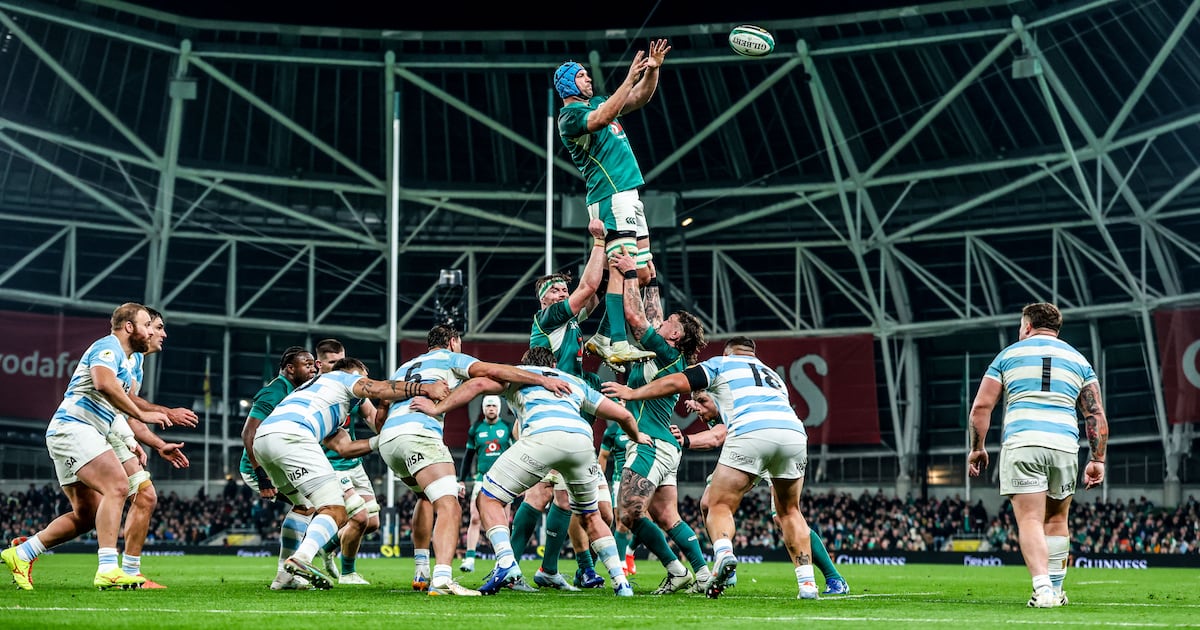
The November window two years ago saw Ireland score a try against Argentina off the back of intricate running lines at a lineout. Sound familiar? It should. They repeated the trick on Friday night. Back in 2024, five men stood at the set-piece, forming a dummy maul. The openside flanker peeled out the back of the maul, popping to Dan Sheehan rampaging around the corner. An inside support runner remained close to the melee of bodies should he be required.On that occasion, Sheehan took the ball himself and was tackled close to the line. One phase later, Ireland scored. Friday night brought a case of deja vu. Once again, Sheehan peeled around the corner, running around a pretend maul with a man supporting to his left. This time, the inside pass was made. Nick Timoney ran the line and was hauled down short before Ireland crossed one phase later. READ MOREThere were subtle differences between the two moves. Clearly, though, Ireland’s coaching staff had identified the same flaw in Argentina’s defence two years apart; they can overcommit to mauls close to their own line, leaving space between the set-piece and the backline. “These moves are planned to within an inch,” said Timoney, the man who nearly benefited from the meticulous scheming. “The coaches, their fingerprints are all over that.”On Friday night, Messrs Goodman, O’Connell and Sexton all earned their supper. Andrew Goodman is responsible for Ireland’s set-piece attack as a whole. Paul O’Connell runs the lineout and would have had an input into how that dummy maul opened up the space for Timoney. Johnny Sexton, another assistant with a famed desire for perfection, was credited by players for assisting the more laid-back Goodman with some of the backline play. Both groups of players, forwards and backs, had their own set-play try. Hugo Keenan’s first score set Ireland on their way. The try was secured through instinctive offloads, like Rob Baloucoune’s to Mack Hansen before the latter threw a lovely ball over multiple defenders, guiding Keenan over the line. It was all initially set up by Robbie Henshaw’s clever, scripted return to Sam Prendergast.Irish teams generally need more unpredictability in their attack. When things go wrong, you see listless carries in phase-play that lasts too long. Defences are happy to watch Ireland overplay in front of them. Empty carries lead to lost ground, forcing uncompetitive kicks under pressure. For the first 10 minutes on Friday, Ireland were guilty of this. Argentina sat back and waited for the play to develop. When Ireland made their move, Shaun Edward’s defence won the collisions. Prendergast had to kick it away.A spark was needed. For some teams, it can come from counterattack or elite kick return. For Ireland, the Xs and Os of the set-piece tactics board remains a vital part of their rugby DNA. When it purrs, as it did on Friday, everyone looks clever. Andrew Porter in action against Argentina's Santiago Chocobares and Julián Montoya during Friday's Nations Championship Test at the Aviva Stadium. Photograph: Dan Sheridan/Inpho “We’re after our set-piece delivering, so we’ve got to be joined up and back that up with some positive play,” said head coach Andy Farrell. “Robbie had a lovely ball right at the line, Rob put some pace on it and turned the corner really well. Great try.” What Farrell said next, though, was of particular note. When set-piece scores arrive through gaps predicted to appear should player X run line Y, pats on the back are the order of the day in the coaching box. They know who worked on what to identify a structured score. While that satisfaction must make everyone feel warm and fuzzy, Farrell’s favourite try of the night was actually a more unstructured one. Looking to clear possession from a lineout inside their 22, Argentina had their pocket picked by the excellent Ryan Baird. From there, Ireland went wide, Hansen feeding Keenan again for a strong finish through multiple defenders. The throw at the lineout was not Ireland’s. Gearing up to defend, there were no planned running lines. No predicted holes in midfield. Just unexpected possession and a chance to think on the hop. “The tries that please you most are the ones where you’ve got the pressure on their lineout, turn the ball over, play some good rugby,” said Farrell. “That’s a proper team try, proper joined up.”Ireland won’t ever be a France when it comes to counterattack or zero-ruck tries. But they do have the ability to be world leaders when it comes to planned set-play strikes. If those planned moves continue to hum, with the odd unplanned score coming from moments of pressure, they will come close to having the variation required to avoid the attacking sins and predictability of years gone by.
Ireland coaches earn their supper with perfect read of Argentina’s defensive frailties
Full Article
Original Source
Read the full article at Irishtimes →KhanList aggregates and links to publicly available news content. We do not host full articles from third-party sources. Always verify important information with original sources.