
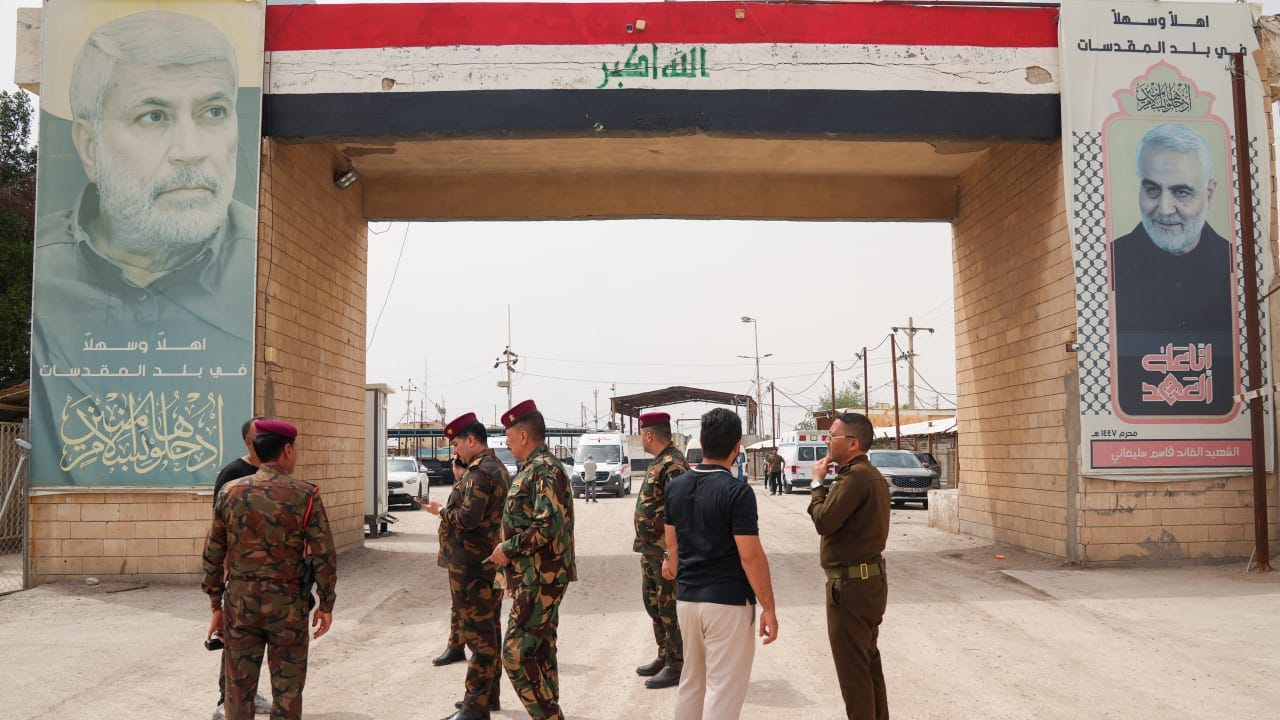
OCTOBER 26, 2026 13:54Iraq's government is facing a growing challenge in Maysan province along the Iranian border, where local officials have threatened civil disobedience over the closure of a key border crossing.The dispute comes amid tensions between Baghdad and Tehran and renewed protests in the Iraqi capital marking the anniversary of the 2019 Tishreen movement.The developments are pushing Iraqi Prime Minister Ali al-Zaidi to make key decisions as he also has to deal with looming rumors of renewed war with Iran. Iran has turned Iraq into a frontline and has carried out around 1,600 attacks with drones, missiles, and local militias. Most attacks targeted US diplomatic facilities and Kurdish Iranian opposition groups. Nevertheless, Iran also wants the borders open.According to Rudaw, Zaidi ordered an investigation on Monday into Mustafa Daeer Mohammedawi, the head of Maysan's provincial council, after he threatened to block roads connecting the southeastern province with the rest of Iraq. Mohammedawi warned on Sunday that the province would resort to civil disobedience unless the Sheeb border crossing with Iran was reopened by Thursday."If it is not opened, then the people of Maysan province will be forced to resort to civil disobedience on all roads," Mohammedawi said, according to Rudaw. He warned that Maysan could be effectively cut off from the rest of the country.Iraqi Prime Minister Ali al-Zaidi delivers a televised address after assuming office, in Baghdad, Iraq May 16, 2026. (credit: IRAQI PRIME MINISTER MEDIA OFFICE/HANDOUT VIA REUTERS)The crossing, known as Chazabeh in Iran and Sheeb in Iraq, is an important commercial route between the two countries. Baghdad closed it last Wednesday, citing the need to improve its technical and logistical infrastructure. Iraq government spokesperson Haidar al-Aboudi said the crossing lacked the necessary technical and technological preparations. Iraqi officials have also raised concerns about smuggling through the crossing. The wider story likely relates to Iranian influence in Iraq. It appears militias used an area near the crossing to target Saudi Arabia in September.Iraq-Iran border closing enables review of securityAn Iraqi border official told Reuters, according to Rudaw, that the closure would enable authorities to review security arrangements and install detection equipment to prevent the smuggling of prohibited materials.Meanwhile, Abdul Amir Hassan Ali al-Taiban, an advisor to the Iraqi prime minister, claimed that drugs and currency were entering southern Iraq through crossings with Iran. Iraq referenced “uncontrolled groups,” which may be a euphemism for Iranian-backed militias.Iran's embassy in Baghdad rejected the allegations on Saturday, calling them false and urging Iraqi authorities to respond to statements that could damage bilateral relations.Maysan is a Shiite-majority province in southeastern Iraq. Its capital, Amarah, is an important commercial center near the Iranian border. The province's location makes cross-border trade especially important to the local economy.According to Rudaw, protesters gathered near the Sheeb crossing, including truck drivers whose livelihoods depend on trade with Iran. They claim they want to use the crossing for trade and regular reasons. Iraq appears to be facing pressure to keep the crossing closed.Mohammed Jassim al-Khafaji, an Iraqi lawmaker, questioned whether Zaidi had the legal authority to investigate an elected provincial council chairman. According to Rudaw, Khafaji argued that only the provincial council could remove its chairman through a majority vote.This has wider implications for the Iran-backed militias in Iraq. The Islamic Resistance in Iraq, an umbrella organization of pro-Iran armed groups, has accused the Iraqi government of yielding to Washington's demands regarding border crossings and flights involving Iran.Iraq sees demonstrations tied to Tishreen protest movementAt the same time, Iraq is witnessing renewed demonstrations connected to the Tishreen protest movement that began in October 2019. Protesters gathered in Baghdad on October 25. It’s worth recalling that in 2019 the Iranian-backed militias suppressed these protests and killed hundreds of people. The Badr Organization was one of the Iranian-backed groups accused of a role in oppressing the protests.Shafaq News also reported on the demonstrations, noting that participants waved Iraqi flags and called for political and economic reforms. The Tishreen movement represented a major popular protest movement. Beginning in Baghdad and southern Iraq, young Shiite Iraqis largely drove the protests, frustrated by corruption, unemployment, poor services, and the influence of political factions.The demonstrators also opposed the system of sectarian political quotas known as muhasasa, which distributes political positions and resources among Iraq's major communities.According to figures cited by Rudaw from rights organizations, more than 600 protesters were killed, approximately 20,000 were injured, and around 3,000 were arrested during the movement. Badr leader Hadi al-Amiri, a senior figure in the Shiite-led Coordination Framework, recently defended the role of Iranian-backed armed groups in confronting the Tishreen movement.According to Rudaw, Amiri described the protests as "sedition" and said the Islamic Resistance in Iraq had helped preserve the political order. "The [Islamic] resistance [in Iraq] stood courageously against the Fitna [sedition] of Tishreen, maintaining the state and political order in the process," he said at an event in late August. This shows how Iraq is divided between the militias and the ordinary people.Protesters demand accountability for 2019 violenceFor protesters, accountability for the 2019 violence remains a central demand. They have been angered by Badr’s appearance and its boasting of its role in killing Iraqis. Badr is the largest of the militias that are not sanctioned by the US. Most other groups, such as Kataib Hezbollah, are sanctioned as terrorist groups by Washington.Shafaq News quoted activist and journalist Muntadhar al-Zaidi, who called for accountability over the killing of protesters and criticized the concentration of political power and misuse of public wealth.According to Rudaw, the National House political party associated with the Tishreen movement called for peaceful demonstrations and reiterated demands to end corruption, reform the political system, and bring weapons under state control.For Zaidi's government, the challenge is to demonstrate that state institutions can enforce the law, secure borders and respond to public demands without becoming hostage to competing political and armed factions. It remains to be seen if Iraq can free itself from Iran’s influence and control.Follow us on Google
Iraq's government struggling amid threats of rebellion, protests, rising Iran tensions - analysis
Full Article
Original Source
Read the full article at Jpost →KhanList aggregates and links to publicly available news content. We do not host full articles from third-party sources. Always verify important information with original sources.