
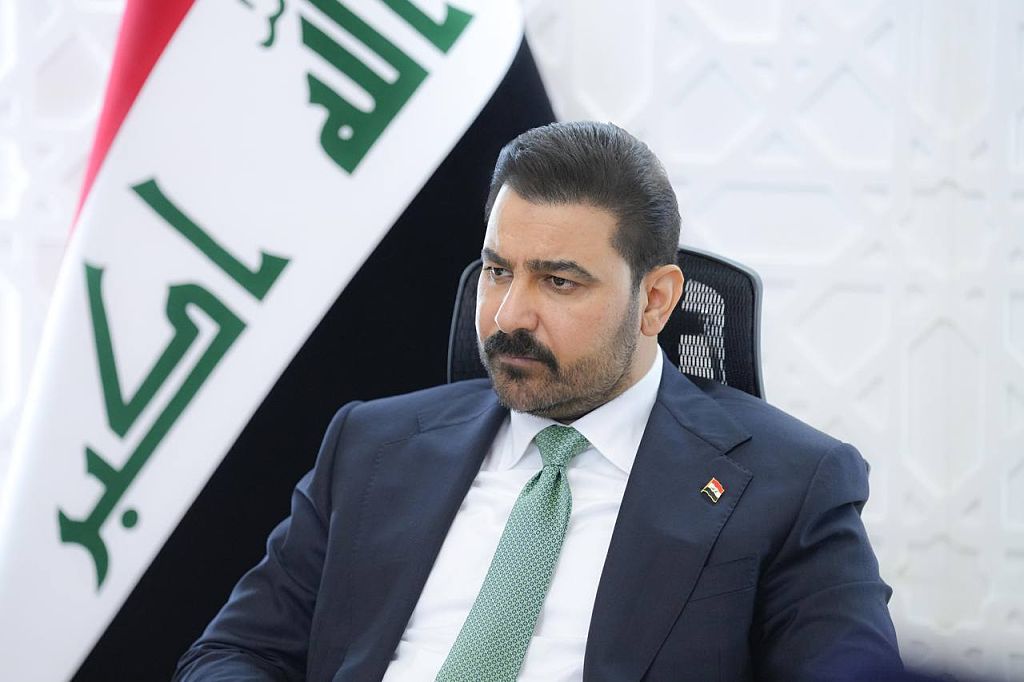
Iraqi Prime Minister Ali al-Zaidi’s countercorruption efforts are about more than money. Zaidi is targeting Iran-backed militias by cutting off their financial pipelines to pressure them to disarm. Some have already promised to do so, but not enough to blunt the Islamic Republic’s influence on the country. Zaidi canceled contracts for the check-in counters, car park, and taxi stand at Mosul International Airport on November 7 for connections to armed groups, likely referencing the militias. Three days prior, the Iraqi News Agency reported that the Federal Commission of Integrity was investigating Ministry of Transport contracts benefiting the militias. Tom Barrack, U.S. ambassador to Turkey and special envoy for Syria and Iraq, described the decision on airport contracts as “sovereignty in action.” The Trump administration has made countering the influence of Tehran in Iraq a top priority in engagement with Baghdad, particularly disarming the militias. Vague Threats and Fruitless Disarmament Negotiations While official statements did not identify which militias these contracts were connected to, media outlets identified Kataib Hezbollah, the most powerful of the militia groups. The U.S.-designated foreign terrorist organization promptly issued a strong denial. In the statement, Abu Mujahid al-Assaf, the group’s spokesman, attacked Zaidi, suggesting he should be investigated by the Integrity Commission. Assaf’s November 7 statement also made reference to “opening the files of (Khor Mor),” one of Iraq’s largest gas fields located in the semi-autonomous Kurdistan Region. The next day, a drone, launched from inside Iraq, struck Khor Mor. No group has claimed responsibility, but Iran-backed militias are often thought to be behind more than a dozen attacks on the field since 2022. Zaidi has set a deadline of the end of June 2027 for disarmament of Iran-backed militias, an extension of his earlier September 30, 2026, deadline, as multiple militias resist calls to hand over their weapons to the state. Kataib Hezbollah has outlined requirements for disarmament including the removal of American political and economic influence on Iraq; withdrawal of Turkish forces; and disarmament of the Peshmerga, the Kurdistan Region’s security force. Zaidi has reportedly rejected proposals related to disarmament presented by the Coordination Framework, the ruling coalition of Shiite parties in Iraq that includes militia- and Iran-aligned parties, including a plan to give government positions to Kataib Hezbollah. Kataib Hezbollah Profits Off the Iraqi State The U.S. Treasury sanctioned a militia-linked conglomerate, Muhandis General Company, in October 2025. The organization “uses a sub-contracting method to divert funds from Iraqi government contracts,” Treasury said. The Iraqi government, under previous Prime Minister Mohammad Shia al-Sudani, established the company in 2022 as the economic arm of the Popular Mobilization Forces (PMF), an official Iraqi security organization dominated by Iran-backed militias including Kataib Hezbollah. Treasury noted that Muhandis is, in practice, under the control of Kataib Hezbollah, particularly the Kataib Hezbollah leader and PMF Chief of Staff Abu Fadak. Muhandis General Company receives preferential treatment in the government contracting process, which enables the organization and its front companies to funnel money from the Iraqi government into entities connected to Iran and its militia network. Baghdad Will Require American Support To Rein in Militias As the Khor Mor strike indicates, Iraqi militias are likely willing to escalate kinetically when their financial interests are challenged. Washington can help Baghdad stand its ground on both disarmament and efforts to target the militias’ financial pipelines. Treasury should assess, for the purpose of potential sanctions, officials in the Ministry of Transport and other departments that are enabling the exploitation of contracts to benefit Iran-backed militias. Treasury should also identify and block additional funds from front companies of Muhandis General Company and investigate whether the contractors listed in the Mosul airport case are part of this network. Simultaneously, Washington must monitor Iraq’s disarmament process closely. As a small number of militias have agreed to disarm, Washington should encourage Baghdad to share the details of these processes and permit international oversight of their implementation. Furthermore, both the State Department and Treasury should monitor the rewards that militias get for compliance, particularly political positions and economic access. These groups should not be permitted to swap their weapons for expanded financial and political control in the country. Bridget Toomey is a research analyst at the Foundation for Defense of Democracies (FDD). For more analysis from Bridget and FDD, please subscribe HERE. Follow FDD on X @FDD. Follow Bridget on X @BridgetKToomey. FDD is a Washington, DC-based, nonpartisan research institute focusing on national security and foreign policy.
Iraqi Prime Minister Puts Iranian Stooges on Notice
Full Article
Original Source
Read the full article at Fdd →KhanList aggregates and links to publicly available news content. We do not host full articles from third-party sources. Always verify important information with original sources.