
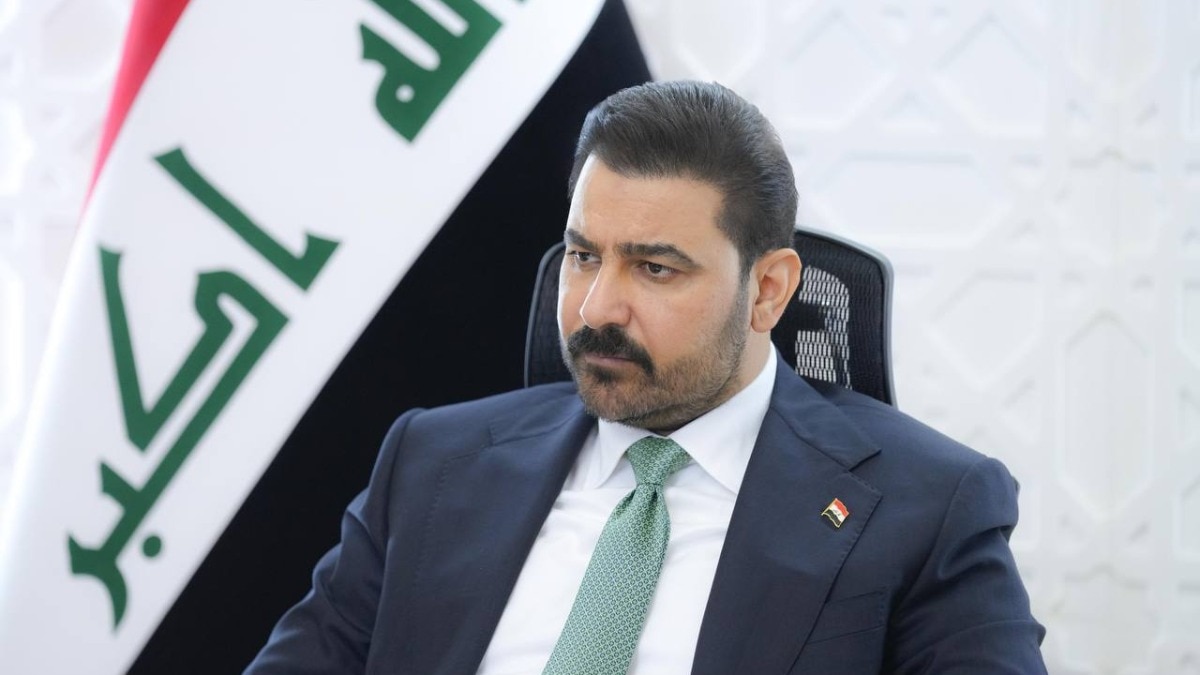
Iraq's Prime Minister, Ali al-Zaidi, has reportedly told political allies that a leaked US war plan presented to American President Donald Trump envisages American forces entering Southern Iran through Iraqi territory. Another scenario also presented by Zaidi is reported to involve Tehran pressuring Baghdad to launch an invasion of Kuwait from Iraq.According to a report by Iraqi newspaper Al-Mada, Zaidi, who also serves as the Commander-in-Chief of Iraq's Armed Forces, made the claims during a meeting of the Coordination Framework, an alliance of the country's Shia political parties.Al-Mada reported Zaidi as telling attendees that he had seen part of the leaked war plan, which outlines three possible scenarios for a war between the US and Iran, involving ground combat between both sides on Iraqi or Iranian territory.Zaidi's revelations come amid growing fears of a renewed US-Iran confrontation, and also concerns that Baghdad could be dragged into the war. Even though Iraq has repeatedly declared its neutrality, its geographic position (between Iran and the US' Gulf state allies), means that it is struggling to prevent its territory from becoming a part of the war. WHAT ARE THE US WAR PLANS SEEN BY IRAQ'S PM?According to the Al-Mada report, Iraq's PM, Ali al-Zaidi, presented all least three possible scenarios envisioned by American war planners that had been presented to US President Donald Trump.The first scenario involved American ground troops using Iraqi territory to launch an invasion of Southern Iran. Southern Iran is a particularly important part of the country because it includes Khuzestan, an oil-rich province bordering Iraq's Bara governorate. The region houses some of Iran's major oilfields and refining infrastructure, and lies along the Shatt al-Arab waterway, which connects both countries to the Persian Gulf. A potential US ground operation in the region would therefore carry significant economic and strategic implications for Tehran.Ironically, a similar strategy has been adopted by Iraqi dictator Saddam Hussein during his nearly decade-long war with Iran. The initial stages of the 1980-1988 Iran-Iraq war saw Baghdad's military forces launching a massive offensive to take Khuzestan, which was bogged down in the face of heavy Iranian resistance.The second scenario outlined by Zaidi envisaged Tehran pressuring Baghdad to allow the use of Iraqi territory for an armed incursion into Kuwait. The small, oil-rich Gulf state has long been a US ally and has itself been subjected to repeated missile and drone attacks during the US-Iran war, including strikes attributed to Tehran.The last time Kuwait's territorial sovereignty was violated through a full-scale invasion was in August 1990, when Saddam Hussein's forces invaded and occupied the country. The subsequent Gulf War saw a US-led international coalition launch a massive military campaign against Iraqi forces, driving them out of Kuwait in February 1991, and smashing Baghdad's military to pieces. The campaign also involved extensive aerial bombardment and the destruction of large parts of Iraq's military infrastructure.Details, however, remain scarce. Al-Mada did not disclose the third scenario presented by Zaidi, nor did it provide further operational details about the two that were revealed. It is also unclear whether these scenarios have been formally approved by Washington or are merely contingency plans.IRAQ CAUGHT BETWEEN THE US AND IRANPrime Minister Ali al-Zaidi's revelations come amid growing fears that Iraq could be dragged deeper into the US-Iran conflict. Though Baghdad has declared neutrality, its location between Iran and US-allied Gulf states, coupled with the presence of powerful Iran-backed armed groups, has made it difficult to keep the country out of the fighting.Iraq has spent more than two decades balancing relations with Washington and Tehran. The US-led invasion in 2003 and the overthrow of Saddam Hussein gave Washington a significant foothold, while Iran expanded its influence through political allies and armed groups. Several of these factions gained prominence during the fight against the Islamic State between 2014 and 2017.The challenge has intensified since the recent ongoing conflict began on February 28. According to a report by the Belgium-based think tank, the International Crisis Group, Iran-aligned Iraqi factions claimed more than 750 attacks on US targets in Iraq and across the region. Israel also struck weapons depots and launch sites belonging to these groups, while Iran targeted US positions at Harir and Erbil airport. US strikes on Iran-backed factions killed around 80 fighters in the war's first month, the Crisis Group said.Baghdad has repeatedly said it does not want to be drawn into the conflict. After a phone call with US President Donald Trump on November 5, al-Zaidi reiterated that Iraqi territory must not be used to launch attacks against neighbouring countries, according to Arab News.Foreign Minister Fuad Hussein has also warned armed groups against joining any Iranian retaliation. Speaking to Dijlah TV, he said Iraq was not prepared for another war. "We are not part of any axis, and we do not want to let the Iraqi arena be turned into a battlefield."All this being said, Baghdad remains under pressure. Reuters reported that Washington has been pressurising Iraq to disarm many of the Tehran-backed armed groups and on November 6, asked Baghdad to close all but two of its border crossings with Iran.On the other hand, Reuters reported back in September that five Iran-aligned armed groups had rejected Baghdad's deadline to surrender their weapons, dissolve their organisations and integrate into state security forces. They also demanded guarantees that American forces would not return to Iraq and that Washington would stop influencing the country's political and economic decisions.This leaves Baghdad facing pressure from both sides: Washington wants Baghdad to curb Iran-backed groups on Iraqi soil, while Tehran has an interest in preserving its influence over them. The government's declaration of neutrality has done little to prevent armed groups from using Iraqi territory to attack US interests.The reported scenarios involving US forces crossing Iraq to enter Iran and Tehran potentially using Iraqi territory to move against Kuwait underline Baghdad's predicament. Zaidi wants to keep his country out of the war but is finding maintaining neutrality is becoming increasingly difficult to sustain.- Ends(Written by Shounak Sanyal)
Iraqi PM claims to have seen Trump's Iran war plan. What's in it?
Full Article
Original Source
Read the full article at Indiatoday →KhanList aggregates and links to publicly available news content. We do not host full articles from third-party sources. Always verify important information with original sources.