
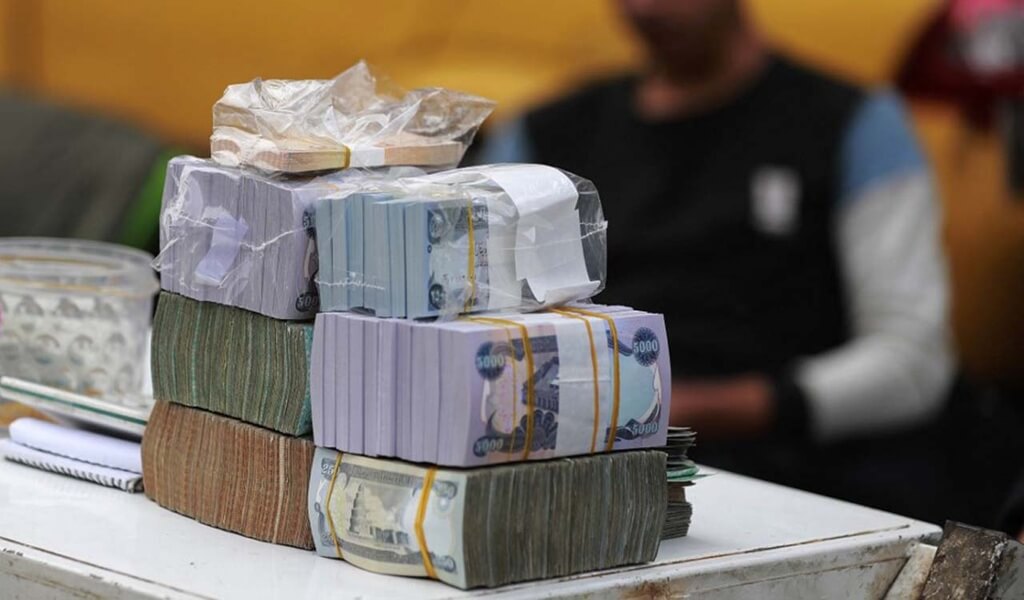
Packs of Iraqi dinars in a currency exchange shop in Baghdad, Iraq. Photo: Ahmad al-Rubaye/AFP Baghdad (IraqiNews.com) — Iraq spent an average of 7.438 trillion IQD (approximately $5.67 billion) per month on civil service salaries and social safety net allocations during the first six months of 2026, according to cumulative state expenditure records released by the Ministry of Finance. Total operational outlays directed toward public sector compensation and social assistance reached 44.627 trillion IQD over the half-year period, underscoring the heavy baseline burden non-discretionary operational spending places on the federal budget. Civil Service Employee Compensation: Stood at 30.769 trillion IQD across the first six months, remaining the single largest operational expenditure line in the federal accounts. Social Safety Net & Welfare Support: Reached 13.858 trillion IQD, providing cash transfers, disability allowances, and social assistance stipends to vulnerable households nationwide. Combined First-Half Outlays: Totaled 44.627 trillion IQD across both items. Monthly Average Baseline: Represents 7.438 trillion IQD per month, though actual monthly disbursements fluctuate depending on liquidity availability, ministerial scheduling, and bonus payments. Operational Spending Structure (January – June 2026) Expenditure CategoryH1 2026 Cumulative (Trillion IQD)Monthly Average (Trillion IQD)Share of Combined TotalEmployee Compensation (Salaries)30.7695.128~68.9%Social Welfare Network Transfers13.8582.310~31.1%Total Non-Discretionary Spending44.6277.438100% The cumulative 44.6 trillion IQD outlay highlights the structural rigidity of Iraq’s state budget, where operational entitlements consume the bulk of sovereign hydrocarbon revenue: Sovereign Revenue Absorption: With global oil prices fluctuating and export volumes constrained by regional market logistics, operational obligations consume the majority of monthly oil revenues, leaving minimal fiscal space for capital infrastructure and investment projects. Link to Debt Pressures: High non-discretionary commitments explain the recent surge in domestic public debt (which exceeded 106 trillion IQD in June 2026) and cabinet deliberations regarding temporary external credit facilities to maintain operational cash liquidity without triggering inflation.
Iraq spent 7.4T dinars monthly on salaries and welfare in H1 2026
Full Article
Original Source
Read the full article at Iraqinews →KhanList aggregates and links to publicly available news content. We do not host full articles from third-party sources. Always verify important information with original sources.