
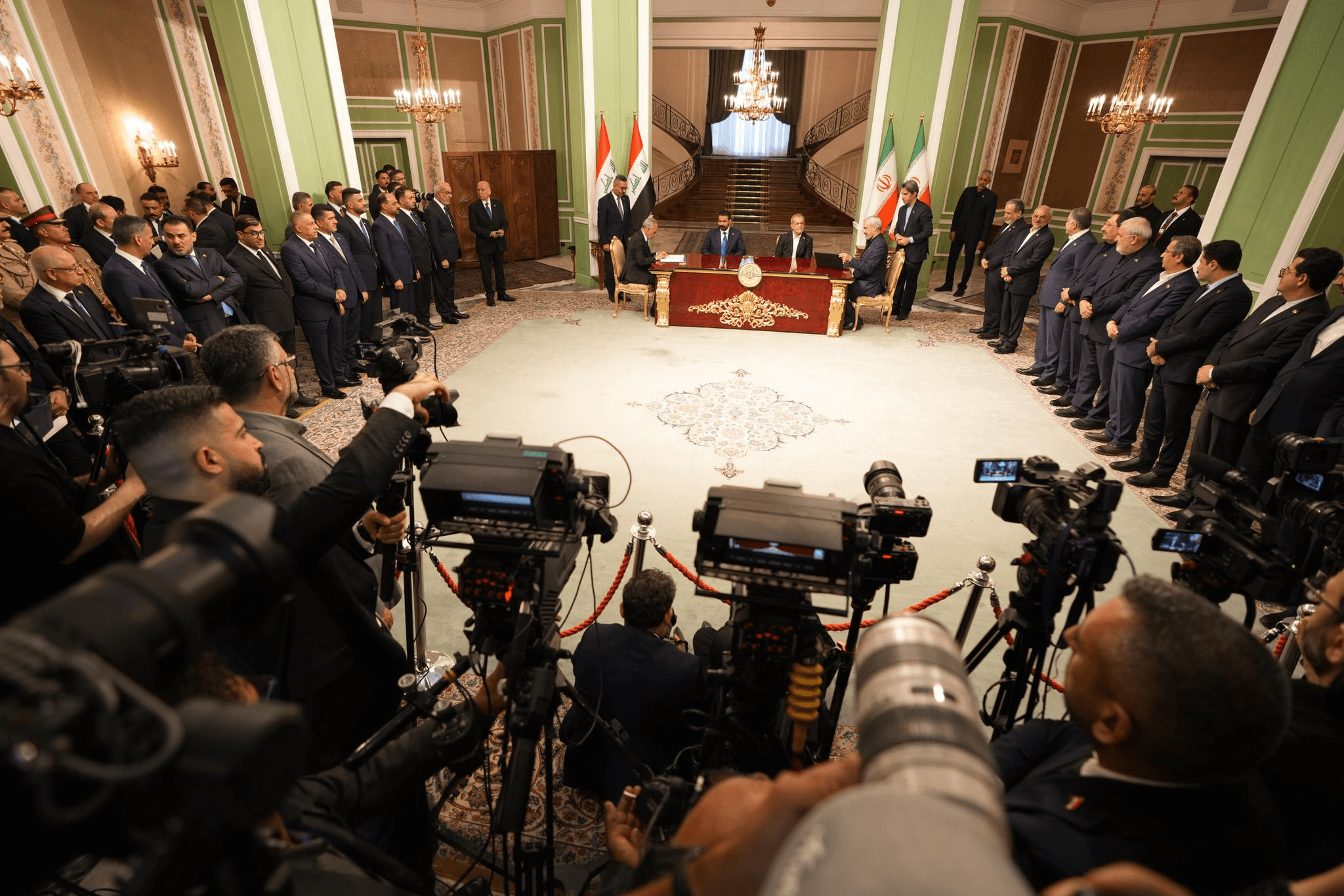
Baghdad (IraqiNews.com) — Iraq and Iran inked an agreement and three memorandums of understanding on transportation, rail connection, and government collaboration as Prime Minister Ali al-Falih al-Zaidi wrapped up an official visit to Tehran aimed at improving bilateral relations. According to the Iraqi Prime Minister’s office, Al-Zaidi met with Iranian President Masoud Pezeshkian and conducted extensive conversations with key Iranian officials such as Parliament Speaker Mohammad Bagher Ghalibaf and Judiciary Chief Gholam-Hossein Mohseni Eje’i. The two sides signed an agreement on international road freight transport and shipping, as well as memorandums of understanding to extend a railway connecting Kermanshah, Khosravi, Khanqin, and Baghdad, establish a twinning agreement between Baghdad and Tehran municipalities, and collaborate on government administration and human resource training. Iraqi ministers in charge of foreign affairs, electricity, and finance, as well as the head of the Planning Commission, signed the agreements in the presence of Al-Zaidi and Pezeshkian. The proposed railway extension would improve overland transportation links between Iraq and Iran, as part of Baghdad’s larger plans to expand regional trade corridors and improve cross-border connectivity through investments in rail, road, and logistics infrastructure. The visit takes place as Iraq aims to retain tight economic and political connections with neighboring Iran while simultaneously developing partnerships with the United States and Gulf nations as part of a larger drive to diversify investment and boost regional cooperation. According to the New York Times, Iran rejected a US cease-fire proposal delivered by Al-Zaidi during the visit, while Iraqi authorities made no public comment on the claim.
Iraq, Iran sign transport, rail deals after Tehran talks
Full Article
Original Source
Read the full article at Iraqinews →KhanList aggregates and links to publicly available news content. We do not host full articles from third-party sources. Always verify important information with original sources.