
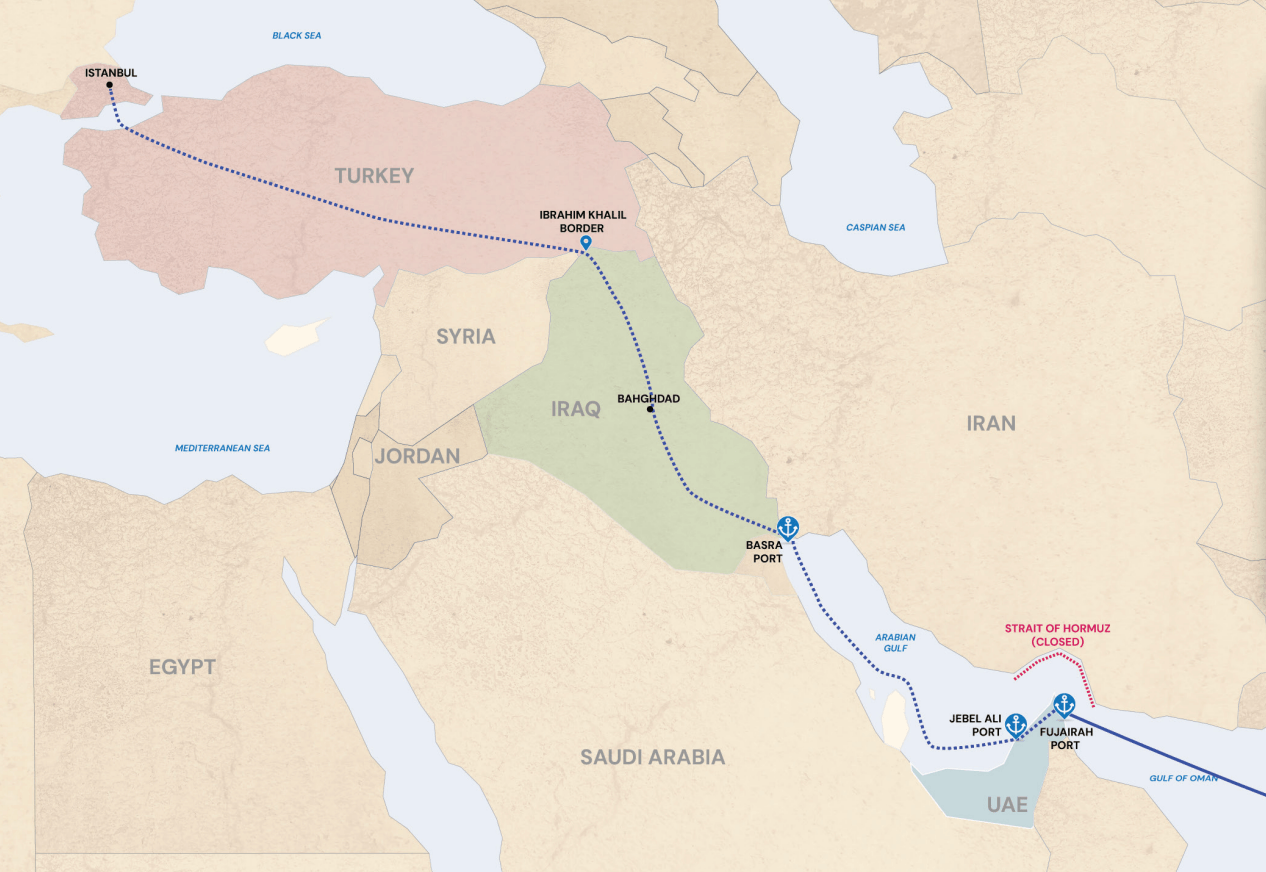
Baghdad (IraqiNews.com) — According to a new report by the Institute of Regional and International Studies (IRIS) at the American University of Iraq, Sulaimani, Iraq risks losing some of its growing commercial ties with Gulf states as the Strait of Hormuz is disrupted, forcing Iraqi traders to seek alternative supply chains through Turkey. According to the August Iraq Economic Review, Iraq’s economic integration with the Gulf has expanded in recent years as a result of a mix of big government initiatives and smaller commercial networks that link Iraqi enterprises to GCC ports, suppliers, and logistical companies. The Hormuz crisis is now challenging both. Qatar is cited as one of the most notable instances of the investment trend. According to the research, Doha has committed more than $9 billion in energy, logistics, infrastructure, and real estate investments since 2023, excluding its interest in TotalEnergies’ Iraqi energy project. Saudi energy interconnection projects, UAE engagement in Grand Faw Port, Qatari investments, and the Development Road are all steadily strengthening economic ties between Iraq and its Gulf neighbors. According to the report, Iraqi participation in the GCC is not required for this integration, which may be achieved via bilateral investment, infrastructure, and private-sector collaboration. However, the analysis highlights a less noticeable issue affecting Iraqi traders. Businesses that formerly depended on the UAE, notably Jebel Ali, to import Asian commodities and industrial inputs into Iraq are now experiencing greater transportation and logistical expenses as a result of the Hormuz interruption. Some have started going north to Türkiye, where existing land links provide a more dependable option. The move might have long-term effects. According to IRIS, economic connections among smaller merchants are based on suppliers, credit, and trust, so if such networks relocate to Turkey, they may not immediately return to Gulf routes, even if circumstances near Hormuz improve. Türkiye is especially appealing since its manufacturers can provide items, including building materials, at costs and qualities appropriate for the Iraqi market. Traders contacted for the research said that certain Gulf-made alternatives were too costly for their consumers. According to the paper, Baghdad could react by engaging directly with chambers of commerce, trade groups, and transportation firms to identify the real challenges that businesses face, rather than depending only on high-level agreements with Gulf states. It offers temporary tariff reductions, speedier customs processing, and freight assistance for lower-value commodities traveling via alternate Gulf routes, notably Fujairah. It also suggests establishing an Iraq-GCC platform to provide merchants with information on freight prices, transit times, and the profitability of routes via Jebel Ali, Khorfakkan, and Turkish ports. The study also emphasizes that Gulf investment will be contingent on circumstances inside Iraq. Baghdad must strengthen administration, lower business costs, shield investment from the militia economy, and deliver promised infrastructure if the present wave of Gulf interest is to result in long-term economic integration. IRIS cautions that the opportunity for action is dwindling. If more Iraqi enterprises develop suppliers, financial contacts, and transportation networks in Turkey, reestablishing the Gulf-oriented trade lines created over the last decade may become more challenging.
Iraq-Gulf trade faces Hormuz strain, IRIS says
Full Article
Original Source
Read the full article at Iraqinews →KhanList aggregates and links to publicly available news content. We do not host full articles from third-party sources. Always verify important information with original sources.