
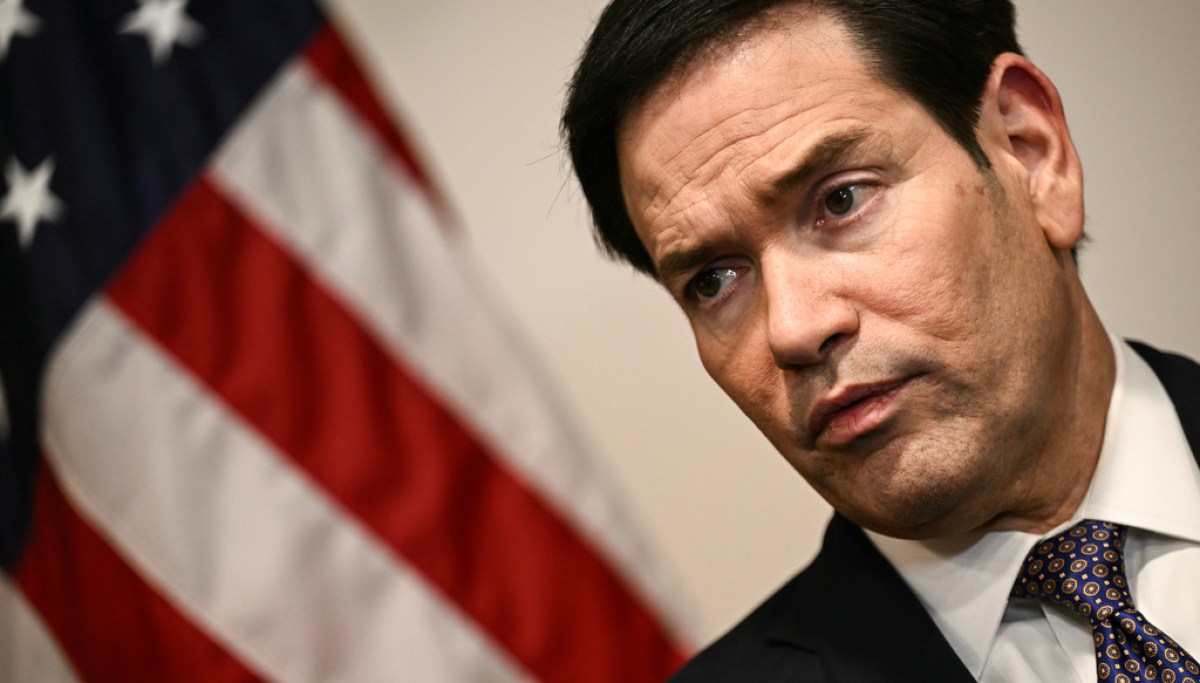
Secretary of State Marco Rubio’s message to the G7 — that Washington intends to maintain severe economic pressure on Iran — has an audience beyond the diplomats gathered in Paris. It also matters to the people inside Iran’s security establishment who may someday have to choose between protecting the regime and abandoning it.For an Iranian officer considering that choice, American credibility is personal. Breaking with the regime could cost him his freedom, his livelihood, and his family’s safety. Before taking that risk, he must decide whether the alternative is believable — and whether Washington’s commitment will survive the next diplomatic opening.That calculation deserves more attention in America’s Iran debate. Sanctions can constrain a government’s resources. Military action can damage its capabilities. Neither automatically persuades the people sustaining it that they have a viable future outside it. I witnessed Egypt’s counterrevolution against the Muslim Brotherhood firsthand. What stayed with me was the military leadership’s determination to maintain its course despite international pressure.In 2013, mass protests against President Mohamed Morsi preceded his removal by Egypt’s armed forces. The Obama administration objected to the military’s intervention and subsequently withheld certain weapons deliveries. Egyptian military leaders nevertheless refused to reverse their decision.Egypt’s experience demands an honest accounting. The overthrow of an elected president and the repression that followed cannot be dismissed. Nor should Washington treat military rule as the answer to Iran’s future. The narrower lesson is that political power depends heavily on the choices of those who enforce it — and on their willingness to sustain those choices under pressure.Egypt also demonstrated that opposition to Islamist government can come from within a Muslim society. The Brotherhood’s opponents were Egyptians with their own aspirations for their country. Washington should recognize the same political agency among Iranians who reject clerical rule.My firsthand experience of the war in Syria reinforced both the importance and the limitations of organized opposition. Defections can weaken a government, but fragmentation and extremist factions can undermine those seeking to replace it. Opposition to a dictatorship is not, by itself, evidence of an ability to govern.I have met Iranian opposition leaders and attended their conferences. Those experiences convinced me that credible leadership matters. They did not establish that any single organization represents all Iranians. Washington should assess opposition groups by their support inside the country, their capacity to work together, and their commitment to protecting people who disagree with them.That matters because uncertainty about what comes next can keep a security establishment loyal even when confidence in its rulers deteriorates. An officer who fears national collapse or indiscriminate retaliation may remain with the regime for reasons of survival.American policy should address that problem directly.First, Washington should explain what its economic pressure is intended to accomplish. Restricting the regime’s ability to finance repression is a defensible objective. But sanctions should be judged by their effects on conduct and capabilities, not simply by the severity of the hardship they produce.Second, policymakers should distinguish among Iran’s security institutions and the individuals serving in them. The conventional military, the Artesh, is not interchangeable with the Islamic Revolutionary Guard Corps or the Basij. Differences in institutional interests deserve serious analysis, not assumptions that defections are inevitable.A credible political alternative must also distinguish accountability for abuses from collective punishment. People who refuse to participate in repression need reason to believe they can have a place in their country’s future.Third, Washington should make its commitments precise enough to sustain. Encouraging resistance carries responsibilities. America should not imply that it will protect people if it has neither the means nor the intention to do so.My prescription is sustained maximum economic pressure without negotiations with the regime, while retaining military strikes as an option tied to clear objectives. Washington should concentrate on encouraging defections and strengthening a credible Iranian opposition. Its message should give those considering a break reason to believe that America will sustain its course under pressure.THE DRUMS OF WAR AND REZA PAHLAVI’S FALSE PROMISE OF DELIVERANCEThe resolve I witnessed in Egypt was consequential. For Washington, the lesson is to understand how its own resolve shapes decisions inside Iran.Before an Iranian officer risks breaking with his rulers, he will ask whether the alternative can endure. American policy should give him a serious answer.Tera Dahl-Jones served as deputy chief of staff for the National Security Council under President Trump and reported from the Middle East.
Iran’s potential defectors are watching Washington
Full Article
Original Source
Read the full article at Washingtonexaminer →KhanList aggregates and links to publicly available news content. We do not host full articles from third-party sources. Always verify important information with original sources.