
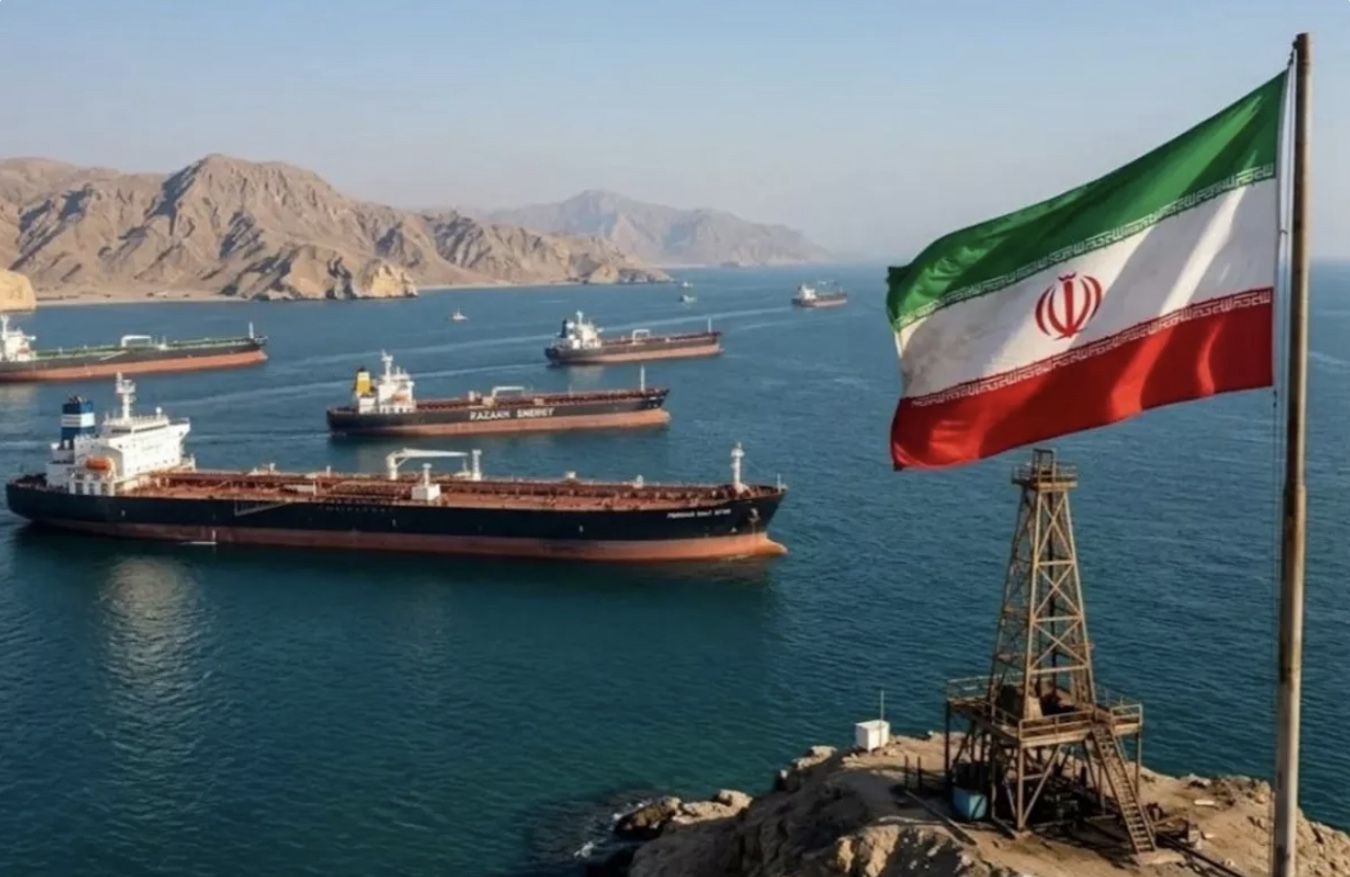
On November 3, as Americans voted in the midterm elections, Tehran announced which states may use the Strait of Hormuz. Amir Hayat Moqaddam, deputy chairman of the Iranian parliament’s National Security and Foreign Policy Committee, stated that vessels from India, China, Iraq and Qatar are exempt from its transit restrictions. These ships “pass freely,” he added, and “the Americans do not intercept them either.” The remarks came in a parliamentary interview rather than as a formal decree. They nonetheless follow a pattern set in March, when Iranian Foreign Minister Abbas Araghchi cleared China, Russia, India, Iraq and Pakistan as “friendly nations” for transit. On the eve of America’s midterm vote, US forces conducted fresh strikes on Iran, following a month in which attacks on shipping around the strait reached a record high. President Donald Trump had pledged that the war would end “immediately after” the election, yet US pump prices have stayed above US$4 a gallon since June. On November 4, Brent crude fell 0.7% to $102.87 a barrel as markets weighed the Democrats’ sweep of Congress against the risk of renewed strikes. Front-month futures for Brent fell around 6% coincident with Vice President JD Vance’s tweet saying the Republicans’ midterm loss owed largely to the Iran war, signaling a potential shift toward ending rather than escalating the war. For Asian governments, the strategic question thus extends beyond whether Washington chooses escalation or negotiation to who retains access to Hormuz in the interim. Iran’s stated exemptions convert a wartime blockade into a licensing regime based on nationality. Since May, Iran’s Persian Gulf Strait Authority has issued transit permits only upon payment, with ships reportedly paying up to US$2 million per transit in Chinese yuan. Moqaddam was explicit about what each exemption secures for Tehran. The Indian exemption facilitates Iran’s medicine imports, while the Chinese exemption is intended to secure Beijing’s political support. Indian and Chinese vessels pay transit fees, while Qatari ships cross free of charge. Tehran frames these charges as payment for navigation and environmental services and invokes the Turkish Straits as a comparable case. The analogy is unpersuasive, because the Montreux Convention is a multilateral treaty that confines charges to specified services. Hormuz, by contrast, falls under the transit passage regime of the UN Convention on the Law of the Sea (UNCLOS), which Iran signed but never ratified. Washington, the Gulf states and European governments reject the fees as unlawful. Trump, however, has described a toll arrangement as a “beautiful thing” and at one point even floated a joint venture with Iran. Each paid transit, combined with Washington’s mixed signals, risks establishing a precedent for other chokepoints vital to Asian trade, from Bab el-Mandeb to Malacca. The costs of this regime fall hard on Asia, but unevenly. Gulf crude and condensate exports averaged 14 million barrels a day in October, roughly 86% of pre-war levels. Most of these barrels flow eastward, and Iran’s list now differentiates among Asian buyers by political alignment rather than need. China lost its discounted Iranian supply once Iranian oil afloat outside the US blockade line fell to zero by mid-October. The exemption therefore matters because Chinese imports from the wider Gulf were on course to exceed 5 million barrels a day in October. India’s Ministry of External Affairs confirmed on November 3 that 23 Indian nationals, including 15 seafarers, have died in the conflict, and Tehran has since reaffirmed the Indian exemption. New Delhi can justify paying for passage as crisis management, although doing so binds India to a fee regime that its closest defense partner rejects. Qatar’s free passage safeguards LNG supplies for Indian and East Asian buyers. Iraq’s exemption, by contrast, has not restored its export volumes, which fell again in October. Japan and South Korea, the region’s most exposed economies, remain outside the list. Tokyo released national reserves equivalent to about one month of supply in March and a further 20 days of supply from May. Japan’s crude imports from Saudi Arabia fell 41.2% between April and July, compared with a 21% decline for South Korea. Both governments endorsed a March joint statement condemning Iran’s closure of the strait. Their alignment with Washington now imposes an energy cost that neutral competitors avoid. Yet this divide is less absolute than Iran’s list implies. Seoul secured priority access to 200 million barrels of Saudi crude from June to the end of the year and has contracted October and November supplies at last year’s monthly average. The substantive gap therefore lies in cost, certainty and political exposure. Neutral buyers pay a predictable toll, whereas US allies depend on reserves, rerouting through Yanbu and Fujairah, and case-by-case bargaining. Neither Tehran nor Washington holds as strong a position as this arrangement suggests. Iran itself is not exporting oil because of the US blockade, so transit fees partly compensate for lost revenue. Its seven conditions for reopening the strait, including sanctions relief, suggest that the permit system is a bargaining instrument rather than a durable order. Washington, for its part, blockades Iranian ports while maintaining that the strait remains open. Allowing exempted ships to pass keeps oil flowing for an administration that has just lost Congress partly over high fuel costs. If Moqaddam’s account is accurate, China-bound Gulf crude is moving under an Iranian license with American acquiescence. The allies that supported Washington’s position bear the higher cost of this pragmatism. The midterm results raise the cost of this ambiguity for Tokyo and Seoul. A week before the vote, Brent closed at $115.32 following reports that Washington had told Gulf states to prepare for strikes after the election. Renewed strikes could push prices above $120, and markets now place the probability of US military action above 50% by late November. A negotiated settlement would compel Tokyo and Seoul to seek their own arrangements with Tehran. Escalation, by contrast, would leave them bearing the costs of a war they did not choose. Either scenario increases the incentive for separate deals, and a single bilateral concession could unravel the coalition for open navigation. A universal reopening remains the preferable outcome, and a diplomatic channel for it already exists. Araghchi has proposed a Qatar-mediated “two-day plan” to end the standoff. Under this plan, the United States would implement agreed measures on the first day, and Iran would restore normal navigation on the second. On November 3, however, senior official Mohsen Rezaei described Washington’s response to Iran’s seven conditions as “not convincing”. Mediators Qatar and Pakistan are working to narrow the remaining gap. The dispute concerns sequencing and sanctions relief rather than whether the strait should reopen at all. Asian importers have the largest stake in closing this gap and greater leverage than they currently exercise. Iran’s permit system functions only as long as China, India, Japan and South Korea negotiate passage separately. Sino-Japanese rivalry and New Delhi’s commitment to strategic autonomy make a joint front unlikely. A minimal common position nonetheless remains achievable. Governments using exemptions should state publicly that they do not recognize any Iranian right to levy transit charges. The most exposed importers should pool their supply security, building on mechanisms such as Seoul’s crude swap system and the coordinated emergency release, which had delivered about 330 million barrels by mid-October. Industrialized importers still hold around 1.1 billion barrels of public emergency stocks, giving them room to resist Tehran’s terms. China, India, Japan and South Korea should also support the Qatar-Pakistan mediation, on the condition that any settlement restores free passage for vessels of every flag. A strait that is open to certain nationalities and not others is not an open strait. Every exemption accepted today sets a precedent for future chokepoint coercion. Asian governments should therefore insist that the US-Iran war end with Hormuz open to all shipping. Otherwise, Tehran will continue to dictate the terms of their energy security. Bilal Habib Qazi is a research analyst at the Institute of Regional Studies, Islamabad. He can be reached at bhqazi@gmail.com. The views expressed in this piece belong solely to the author and do not necessarily reflect those of the affiliated organization.
Iran’s Hormuz toll regime to punish weakened Trump’s Asian allies
Full Article
Original Source
Read the full article at Asiatimes →KhanList aggregates and links to publicly available news content. We do not host full articles from third-party sources. Always verify important information with original sources.