
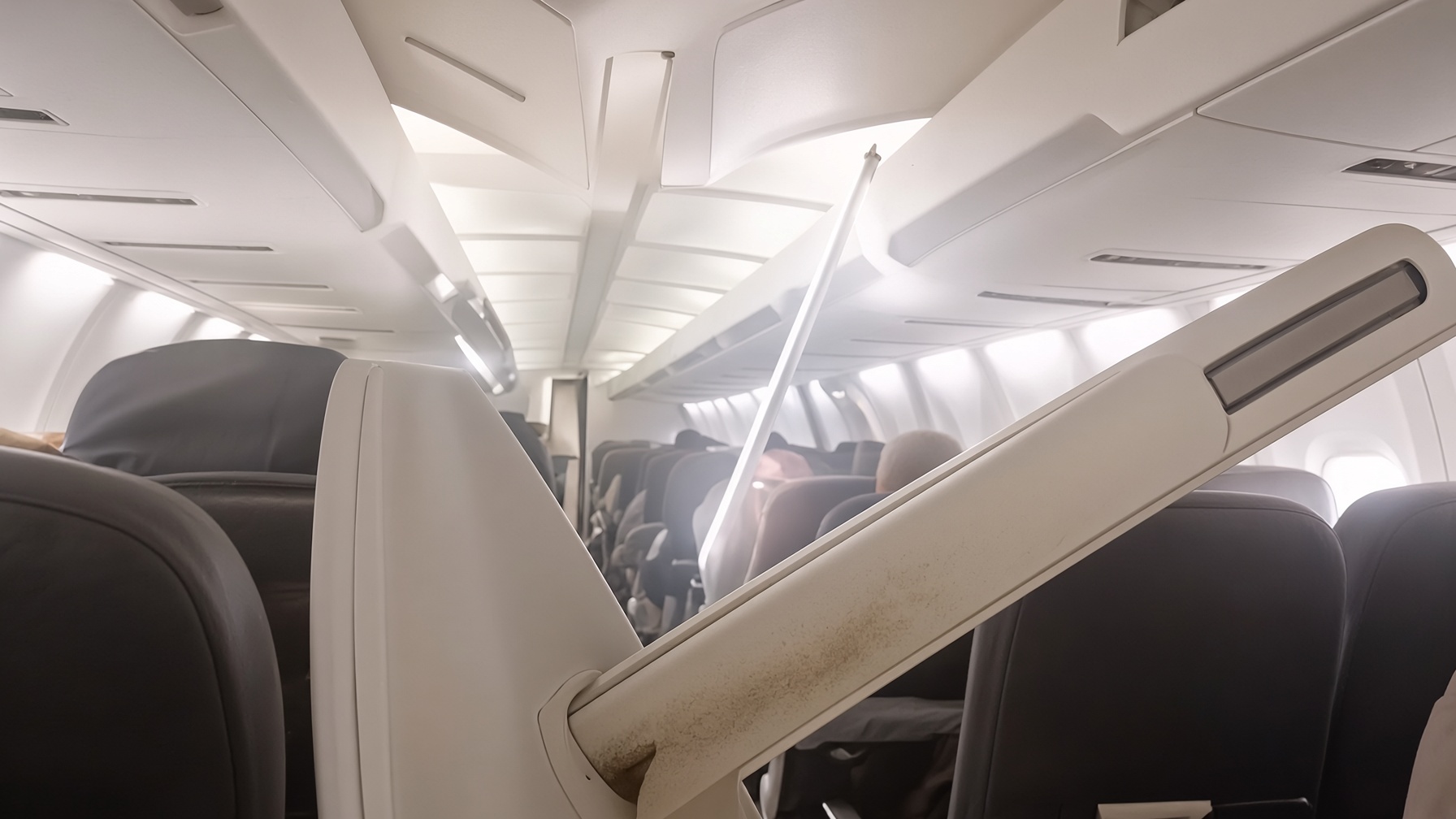
A long section of cabin interior dropped across the seats of an Iranian Boeing 737. Passengers onboard Sepehran Airlines from Mashhad to Kermanshah on Monday gripped the seatbacks in front of them and ducked as panels came loose. The lights in the cabin remained on – even as parts of the ceiling were hanging down into the cabin. The plane turned back to Mashhad and there reportedly weren’t any injuries. Passenger video of the damaged Sepehran Airlines cabin, shared by Breaking Aviation News & Videos on September 15, 2026. Local news accounts describe a burst tire on takeoff, followed by engine damage. The pilots declared an emergency and the runway that was used was closed. It appears that the aircraft was 30-year old EP-FSU, a Boeing 737-300 that first flew in July 1996. CAN News’ September 14 report on the Mashhad–Kermanshah emergency return. There is visible damage to the cabin’s interior lining and overhead equipment. Severe shaking can overload the supporting structures for interior panels. If engine damage left a rotating assembly out of balance, that could cause this. A damaged tire might also produce substantial jolts while the aircraft is rolling. It seems likely though that maintenance issues may have put the cabin in the condition to be susceptible to this. There’s also a 2016 proposed airworthiness directive where passenger service units were detaching in other 737 incidents when loads exceeded their emergency design requirements. It proposed changes to their retaining lanyards to reduce injuries and obstructions during evacuation. That covered later 737 models, rather than -300 classics however. . On September 8, just six days before this flight, the U.S. Treasury sanctioned Sepehran along with the remaining Iranian airlines. The action targeted companies helping Iranian aviation obtain aircraft and support abroad. Treasury says its campaign is aimed at the regime’s use of aviation to move weapons, personnel and other illicit cargo. In OFAC’s suspension notice, the United States halted its aircraft safety licensing policy, alongside authorizations involving overflights, emergency repairs and certain foreign aircraft visiting Iran. Back in 2018, when the United States withdrew from the nuclear agreement and revoked the broad aircraft sales licensing approach, OFAC kept a route for considering safety-of-flight applications. That route for some spare parts is gone. Meanwhile, a September 10 policy adopts presumed denial for Iran-related license requests (rebuttable only when required by law or for exceptional, urgent circumstances such as risks to life or environmental safety). It seems unlikely that a change in policy less than a week earlier was the cause of this. However, aircraft need a continuing supply of parts, overhaul work and technical support. Iran has been using front companies, concealed ownership and misleading paperwork to gain access tothis, but the U.S. is now making it harder. I wrote about Iran Air auctioning older jets in 2020. By December 2021, an Iranian airline association official was already saying more than half the country’s civilian fleet was grounded for lack of parts. The Iranian regime has summarily executed thousands of political prisoners, massacred thousands of civilians this year in protest crackdowns (including children) and has tortured and raped detainees. It forcibly disappears opponents and persecutes women. Even the U.N. has concluded these are crimes against humanity. This regime must not have the bomb. And yet I am still very concerned about U.S. strategy – indeed, I’m not clear what it is! – and the war has added damage to civilian aircraft and equipment that makes civil aviation there less safe. I do think there’s a case for allowing at a minimum tightly controlled access to civilian safety parts and maintenance items. Many are dual use, but many are not. Sepehran already had another 737 leave the runway at Mashhad on August 25. Topics on this page
Iranian Boeing 737 Cabin Collapses Around Passengers
Full Article
Original Source
Read the full article at Viewfromthewing →KhanList aggregates and links to publicly available news content. We do not host full articles from third-party sources. Always verify important information with original sources.