
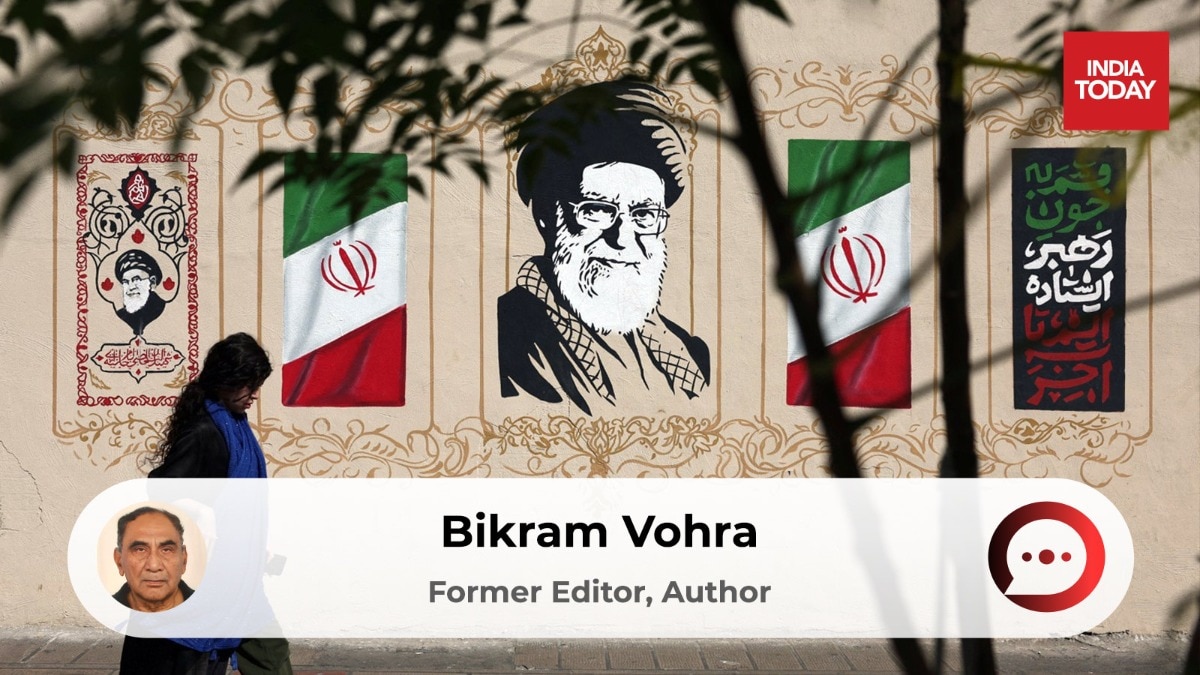
Iran's long history of invasions, sanctions and conflict has fostered a deep resilience, with growing resistance to US pressure and military action. The piece argues that superior firepower cannot break a people who see their struggle as a fight for national honour and freedom, leaving Washington without a clear endgame.Death raining from the skies has become banal to the Iranians. History has shown that both the civilian and military populations, beleaguered though they might be, have crossed a point where fear becomes secondary to a collective conviction that standing tall and firm against the enemy is the only priority.We saw it with the Russians in Afghanistan. Outgunned and slaughtered, the Mujahideen never gave in, the stench of cordite and blood feeding their choler and courage. The same scenario is unfolding in Ukraine. They have crossed that line. Now, taking on the enemy is all that matters.In his book November Code, author Bill Granger argued persuasively that such bombings did not finally terrorise the resistance into laying down arms, but rather enervated people and made them accept the horror of random death with the fatalism of people who must live with it every day. The way Londoners did during the Second World War, during the Blitz. Each day that passed made them stronger, more resistant to the Nazi terror from the sky. The same thing appeared to have happened to the Americans in their war in Vietnam.Since February 28, the Iranians have run the gamut of emotions and sacrifice. They now thumb their noses at the enemy, inviting it to do its worst. It is a terrible, crystalline clarity that descends when the price of living under the boot exceeds the price of falling to the bullet. The option to raise one’s arms in surrender simply does not exist.The Trump administration, still fumbling with its sanctions, red lines and threats, has no idea how to process a nation of 90 million people who have collectively decided that consequences are a currency they no longer trade in. Now, what creates this fatalism?For 4,000 years, Iran has been the anvil upon which empires have hammered themselves to pieces. The Greeks came. The Arabs came with swords and salvation. The Mongols came. The Turks, the Afghans, the British, the Russians. Each wave sought to break the Persian spirit. Each wave receded, leaving behind a people who had learnt the oldest lesson in the book: survival is the ultimate revenge.In the Shia ethos, to suffer for a cause is not a failure; it is the highest form of victory. The state has institutionalised this “martyrdom culture”. It is woven into the rituals, the poetry, the very fabric of daily life.This aspect is what outsiders miss.When the Iranian President or Foreign Minister says they do not fear death, Western analysts call it bluster. After all, everyone fears the harvest of the solitary reaper. They are wrong. For a political class that has seen its leaders, top military commanders, scientists and nuclear negotiators assassinated with impunity, the threat of regime change is not a distant fear; it is a daily reality. It is normalised.I spoke with a journalist recently who had just returned from Tehran. He described the disconnect: despite the threat of explosions hitting the city, the currency diving and sanctions biting, life – stubborn, defiant life – continued. The bazaars were open. Schools were running. People were going to work.The US has to realise that you cannot win a war of attrition against such a people. You can destroy their buildings, but you cannot destroy their minds. They have achieved a state of “resistance economy”, not just in their bottom line but in their shorn lifestyles.Let’s be blunt. Conspicuous consumption was taken off the menu as far back as 1979, when Jimmy Carter froze billions of dollars of Iranian assets in retribution for the hostage crisis. Ever since, there have been even more stringent sanctions, especially in 1995-96, when President Clinton signed the Iran and Libya Sanctions Act, banning all trade and business with Iran.The weakness is further underscored by the lack of an endgame. Even if the Americans numb the people into giving up, what then? Who will write the next chapter? There is no solution reflected in thinking that the pieces can simply be put together in the aftermath.Now that suffering is framed as a collective sacrifice for the nation’s honour, this defence will finally exhaust the Americans, with a shabby withdrawal the only way out.That is the only viable option. Crying havoc and letting loose the dogs of war is unworkable and will never be.The cardinal error lay in the assumption, born of US arrogance and superior firepower, that the moment the Supreme Leader was killed, the liberated public would joyously tumble into the streets and that would signal the end of the regime. Remember Saddam. Recall Gaddafi. That didn’t happen. The US think tank credited that failure to the cruel pressure exerted by the state apparatus. Even so, the next three months of war brought the people and the regime closer together against a common enemy – the US–Israel combine. What better proof of that closing of ranks than an Ali Khamenei three-day funeral that saw 43 million people come out to mourn him in July this year.How do you defeat 90 million people who care less about consequences and more about their freedom from outside oppression?You cannot bomb an idea. You cannot sanction a dream.The West looks at Iran and sees a problem to be managed. It sees a regime to be contained. It completely fails to see the spirit of a civilisation that has survived the apocalypse dozens of times and has no intention of dismounting from that steed.The fear is gone. For 90 million people, the fight for freedom from the foe is not a political statement – it is the only thing left worth dying for. And when death becomes banal, you have already lost the battle to break their will.- EndsBikram Vohra is a former editor of Gulf News, Khaleej Times and Bahrain Tribune, and the author of five books. The views expressed in this article are solely his own.Published By: Priyanka KumariPublished On: Sep 2, 2026 18:25 IST
Iran: When fear has fled
Full Article
Original Source
Read the full article at Indiatoday →KhanList aggregates and links to publicly available news content. We do not host full articles from third-party sources. Always verify important information with original sources.