
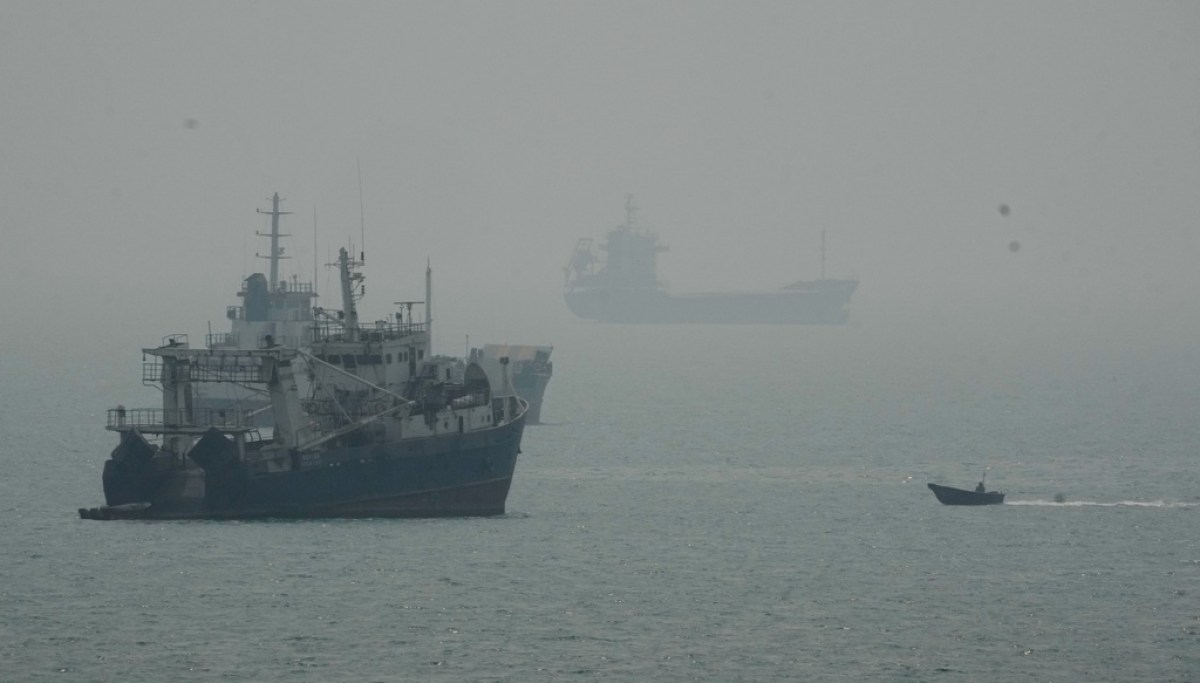
The battlefield may already be expanding.British authorities say there are strong indications Iran played a role in the incident at RAF Fairford, the British base used by American bombers against Iran. Israeli Prime Minister Benjamin Netanyahu says Israeli intelligence warned Britain beforehand of what he described as an Iranian-sponsored attack. British counterterrorism police have since arrested a dual UK-Iranian national on suspicion of preparing terrorist acts in connection with the investigation.Iran denies involvement, and the investigation continues. But the warning is unmistakable: America’s adversaries are looking beyond the traditional battlefield. We should be looking at what they might target next. The war with Iran has already demonstrated how quickly critical infrastructure can become a weapon.Look at the Strait of Hormuz. Iran did not have to destroy the world’s energy infrastructure to create global consequences. It only had to threaten a narrow maritime chokepoint through which much of the world’s energy supply travels. Ships were attacked. Commercial traffic plunged. Energy prices surged. American military resources were redirected to protect shipping.That should force Americans to ask a more uncomfortable question:What happens when the chokepoint is here?America’s greatest vulnerabilities aren’t necessarily military bases. They are systems the public assumes will work every morning: water, electricity, food production, communications, transportation, ports, and fuel.These systems depend on one another. Electricity moves water. Water sustains agriculture. Agriculture supplies food. Food processing requires water and power. Transportation requires fuel. Emergency responders require communication. Military installations themselves depend heavily on the surrounding civilian infrastructure. Attack one system, and America can respond — several simultaneously, and the consequences multiply.For more than two decades, I have worked with law enforcement, fire agencies, and military professionals. In recent years, I also experienced another side of security firsthand as a California farmer and agricultural processor. Those experiences taught me something Washington too often treats as separate policy questions.Water security is food security. Food security is national security.Our adversaries understand dependencies. We need to understand our own. We also need to stop viewing China, Russia, Iran, and North Korea as four entirely separate threats. They don’t need a formal alliance. They only need to cooperate when their interests overlap. Russia and Iran have deepened their relationship. North Korea has supported Russia militarily. China remains economically indispensable to Tehran, and China does not have to direct every Iranian, Russian, or North Korean action to benefit.China is playing the longest game.Every crisis that consumes U.S. resources, strains alliances, or exposes vulnerabilities gives Beijing another opportunity to observe how we respond.Where are our weak points? How quickly can we adapt? How many simultaneous crises can we sustain? We should ask those questions first. Deterrence in the 21st century must mean more than promising an overwhelming response to an attack.An adversary must know that attacking our infrastructure will not cripple our country.That requires treating water, food, energy, and critical infrastructure as components of national defense and identifying where failure in one system could cascade through several others. That principle is at the heart of Operation AquaShield, an initiative built around water security, food security, energy independence, and military readiness.Consider a federal reservoir: A city sees drinking water, a farmer sees irrigation, a fire agency sees firefighting water, an energy planner may see hydropower, the military sees infrastructure supporting installations.An adversary sees one target with multiple consequences.Iran has demonstrated how much leverage can come from threatening one strategic chokepoint. The U.S. has chokepoints of its own. Some are ports, some are power systems, some are communications networks, and some are the water infrastructure quietly sustaining the food on every family’s table.The next attack on America may not begin with enemy troops crossing our border.THE MULLAHS’ WORST NIGHTMARE: WHY MARCO RUBIO GETS IRAN RIGHTIt could begin when people turn on a faucet, and nothing comes out. When a farmer can’t irrigate. When electricity fails. When trucks stop moving. When grocery shelves begin emptying (COVID-19). By the time we recognize those events as national security, an adversary may already have accomplished its objective.Iran is giving America a warning. We should act before someone gives us a demonstration.Rachel Martin is chief officer of the National Security Project. She has more than two decades of experience working with local, state, and federal law enforcement, fire agencies, and military professionals on homeland security, public safety, and critical-infrastructure issues. She served for a decade as homeland security chairman for the National Federation of Republican Women and is a California farmer and former agricultural processor and manufacturer.
Iran weaponized one chokepoint in the Gulf. We have dozens unprotected at home
Full Article
Original Source
Read the full article at Washingtonexaminer →KhanList aggregates and links to publicly available news content. We do not host full articles from third-party sources. Always verify important information with original sources.