
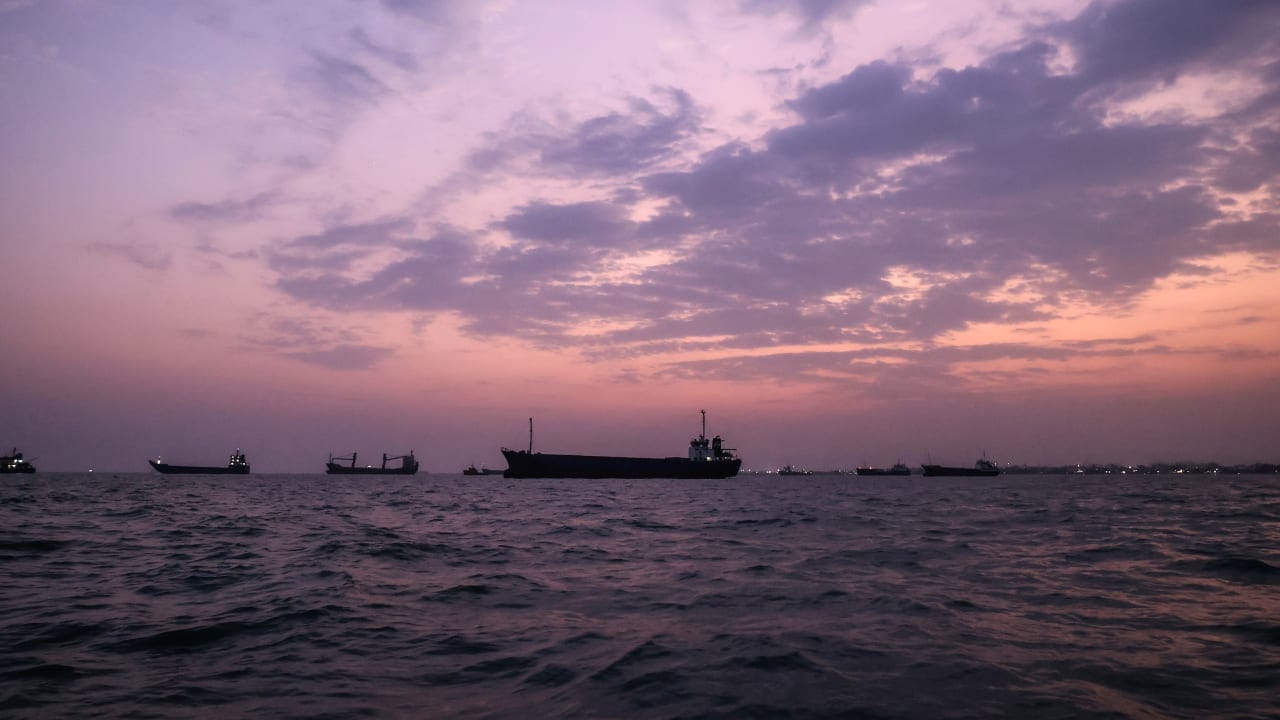
Jerusalem Post/Environment & Climate ChangeGlobal fossil fuel emissions are projected to fall 0.4% in 2026, the first drop since 2020, partly as the Iran war cut oil and gas use. Researchers warn the decline is unlikely to last.Follow us on GoogleVessels transit the Strait of Hormuz off the coast of the port city of Bandar Abbas in southern Iran on September 5, 2026; illustrative(photo credit: ATTA KENARE / AFP via Getty Images)NOVEMBER 11, 2026 08:42Global fossil fuel emissions are projected to fall 0.4% in 2026, to about 38.2 billion metric tons of carbon dioxide, as several nations have had to cut back on oil and gas due to disruptions caused by the war between the US and Iran, researchers said on Monday, according to the New York Times.The Strait of Hormuz, in normal times, carries roughly one-fifth of the world’s oil and liquefied natural gas. The shipping lanes lie mostly in Omani territorial waters and partly in Iranian waters, but the passage itself is governed by international maritime law. That geography makes the strait difficult to seal completely for a long period, but relatively easy to disrupt in ways that can quickly affect energy markets, insurance costs, and global trade.Between the Hormuz disruptions and the ongoing war between Russia and Ukraine, global prices of crude oil, natural gas, gasoline, and diesel have skyrocketed, prompting many nations to use less of them and pivot to domestic alternatives such as coal or renewable energy, the NYT reported.'It’s pretty rare to see a drop in oil demand this big'This year’s decline is the first since the coronavirus pandemic in 2020, the NYT noted.Before the war, analysts had expected emissions to rise slightly this year. “It’s pretty rare to see a drop in oil demand this big,” Glen Peters, a senior researcher at the CICERO Center for International Climate Research in Oslo, told the NYT.Gas rig. (credit: Mark Israel Salem)According to the 2026 Global Carbon Budget, the Global Carbon Project report cited by the NYT, emissions from oil are projected to fall 1.9% and from natural gas 0.3%, while coal emissions are set to rise 0.6%. Emissions from deforestation and other “land-use” changes are also projected to rise.What is more, researchers warned that a decline driven by wartime conditions is not a reliable way to cut global emissions over time.“A decline in fossil CO2 emissions is encouraging, but a reduction driven partly by geopolitical shocks is not a sustainable climate solution,” said Prof. Pierre Friedlingstein, director of the Global Carbon Budget Office at the University of Exeter, who led the study behind the 2026 Global Carbon Budget.“The long-term answer remains the rapid deployment of clean energy technologies,” Friedlingstein explained. “While renewables and electric vehicles are increasingly offsetting growth in energy demand, further acceleration is needed if global emissions are to peak and enter a sustained decline.”Total CO2 emissions projected to reach 43.3 billion metric tons in 2026Including deforestation and other land-use changes, total CO2 emissions are projected to reach 43.3 billion metric tons in 2026, up from 42.8 billion last year, according to the report.The remaining carbon budget for limiting warming to 1.5°C is now 150 billion metric tons, less than four years of emissions at the current rate. Atmospheric CO2 is set to reach 427.7 parts per million this year, 54% above preindustrial levels.Steven Ganot/The Media Line contributed to this report.The Environment and Climate Change portal is produced in cooperation with the Goldman Sonnenfeldt School of Sustainability and Climate Change at Ben-Gurion University of the Negev. The Jerusalem Post maintains all editorial decisions related to the content.Follow us on Google
Iran war, Hormuz disruptions drive first drop in global fossil fuel emissions since 2020 - report
Full Article
Original Source
Read the full article at Jpost →KhanList aggregates and links to publicly available news content. We do not host full articles from third-party sources. Always verify important information with original sources.