
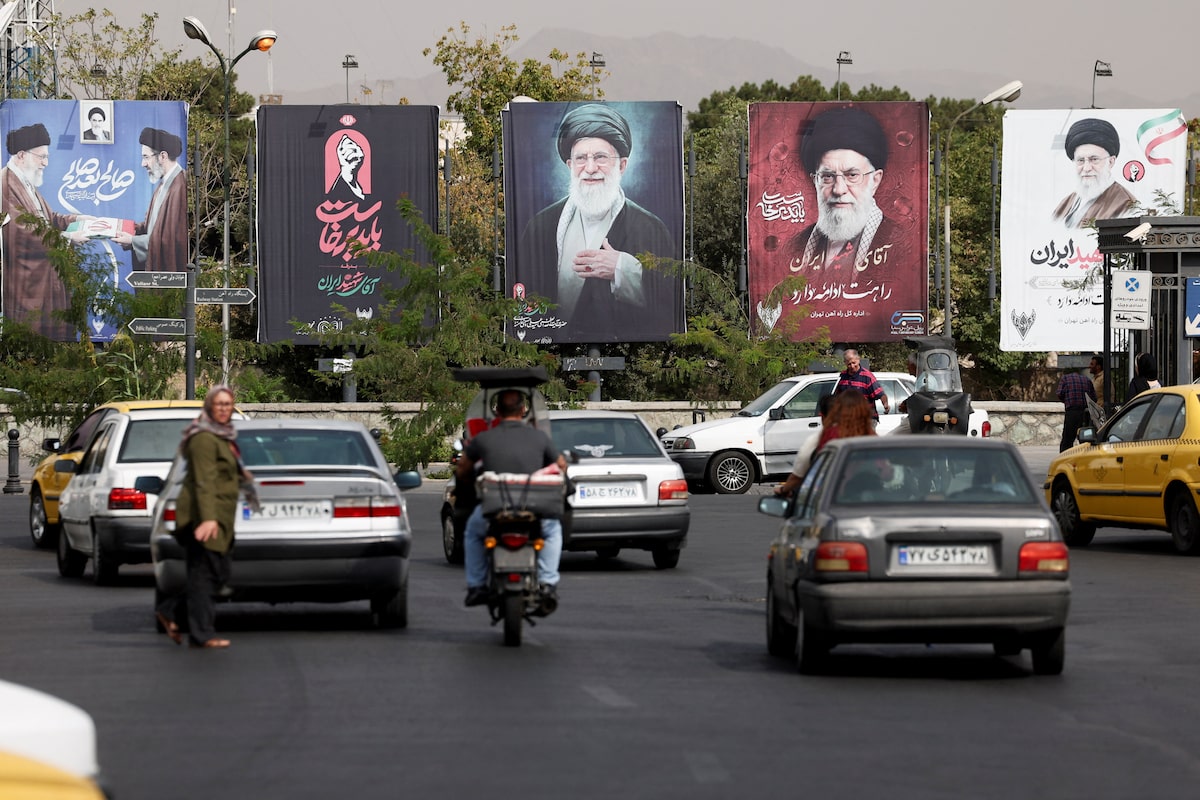
Open this photo in gallery:Banners with pictures of the late Supreme Leader of Iran, Ayatollah Ali Khamenei, are displayed on a street in Tehran on Aug. 22.Majid Asgaripour/ReutersIran pledged to fight back against expanded U.S. sanctions aimed at isolating its economy, expressing confidence that major trading partners would resist Washington’s pressure campaign. Almost six months into a conflict the U.S. has struggled to resolve, Treasury Secretary Scott Bessent unveiled the measures on Monday but stopped short of the most punishing sanctions.While he said countries that continued trading with Iran risked being forced out of the dollar-based financial system, he declined to give a timeline or identify which may be targeted, saying he would give them time to comply with the new directive.“Why would I want to blow up the global financial system?” he said when asked why the measures had not gone further.The Treasury Department did announce new sanctions on 60 individuals, entities and vessels, but the list did not feature any of the Chinese financial institutions suspected of facilitating Iran’s oil trade.“We want to make clear here today that no one is above the reach of U.S. sanctions,” Bessent said in response to a question about Chinese banks. China has been the biggest buyer of Iranian oil for several years, although the U.S. blockade of Iran’s ports has cut Iranian oil flows to China since Washington renewed it in mid-July.U.S. Treasury Secretary Scott Bessent has announced a new round of sanctions aimed at Iran's trading partners, as a warning for them to sever financial ties with the Islamic Republic or face retaliation.The Associated PressExperts say Washington is wary of Chinese retaliation for any sanctions on its banks ahead of expected talks next month between President Donald Trump and Chinese President Xi Jinping, with any curbs on China’s exports of critical minerals especially sensitive.China said on Tuesday that its co-operation with Iran is conducted within the framework of international law and should not be interfered with or disrupted. Oil prices fell for a second day as traders brushed off the impact of the sanctions, although market participants remained wary of Iran’s continued ability to disrupt shipping.Oil tanker struck near Strait of HormuzAn oil tanker was struck on Tuesday by an unidentified projectile and disabled about nine nautical miles (17 kilometres) northeast of Oman’s Ash Shishah, which lies at the entrance to the Strait of Hormuz, the United Kingdom Maritime Trade Operations said.Before news of the latest sanctions, Iran threatened both a possible military response and further reduction in oil exports from the Gulf in retaliation for any U.S. economic measures.After they were unveiled, Iranian Economy Minister Ali Madanizadeh said that Iran was prepared.“Our defense is no longer so defensive; the enemies should wait for an attack,” he told state television. Neither China nor Russia had “accepted” the U.S. measures, he added, predicting that other countries would resist them.Brigadier General Hossein Mohebbi, a spokesperson for Iran’s Islamic Revolutionary Guard Corps, vowed heavy blows to U.S. vital interests and energy chokepoints if Iran’s infrastructure is threatened, Press TV reported.Iran and the United States signed an interim deal in June aimed at ending the war that began with U.S. and Israeli attacks on Iran in February, but it quickly faltered and Iran resumed attacks which have blocked most energy exports from the Gulf. Mediator Pakistan made “significant progress” in the latest talks with Tehran that focused on preventing further escalation and the reopening of the Strait of Hormuz, the Pakistani military said on Tuesday.“We had a very constructive exchange,” Pakistani Interior Minister Mohsin Naqvi, who accompanied army chief Asim Munir to Tehran, said on X.An official at the Iranian president’s office, Mehdi Tabatabaei, said on X that Munir’s visit to Iran “yielded highly valuable diplomatic achievements, the results of which will soon be revealed.”The White House and the State Department did not immediately respond to requests for comment made outside business hours.Open this photo in gallery:Motorcycles and cars line up outside a gas station in Tehran, Iran, Tuesday, Aug. 25, 2026. (AP Photo/Vahid Salemi)Vahid Salemi/The Associated PressDespite no major strikes by either side in weeks, there is little sign of a diplomatic solution. Iran has spent decades under layers of U.S. and international sanctions that have battered its economy but have not deterred its leadership. U.S. public approval of the war fell to its lowest level since the conflict’s early days, with President Donald Trump’s popularity at a record low ahead of congressional elections in November, a Reuters/Ipsos poll that closed on Monday showed. Oil transits through the Strait of Hormuz were at five million barrels per day on Monday, provisional tracking from shiptracker Vortexa showed, down from more than 20 million per day before the war or about one of every five barrels consumed worldwide. Thousands of people have died in the conflict, most of them in Iran and Lebanon, while much of Iran’s conventional military capacity has been degraded, its economy is struggling and then-Supreme Leader Ayatollah Ali Khamenei was killed.But Iran is still able to attack Gulf neighbours and threaten oil tankers. The exact state of its nuclear program, which the U.S. and Israel aim to wipe out, remains unknown.Oil prices steadied on Tuesday, having fallen more than US$2 a barrel a day earlier.Asked why he stopped short of imposing penalties on Iran and declined to identify targeted countries, Bessent responded, “Why would I want to blow up the global financial system?”He said he wanted to give countries and companies time to sever ties. Bessent previously urged co-operation from China, the biggest buyer of Iranian oil for several years, although the U.S. blockade of Iran’s ports, renewed in mid-July, has already cut Iranian oil flows to China.Experts say Washington is wary of Chinese retaliation for any sanctions on its banks ahead of expected talks next month between Trump and Chinese President Xi Jinping, with any curbs on China’s exports of critical minerals especially sensitive.Asked about Chinese banks on Monday, Bessent said, “We want to make clear here today that no one is above the reach of U.S. sanctions.”The Chinese Foreign Ministry said sanctions and pressure tactics do not help and Beijing would do what was necessary to protect China’s interests.
Iran vows to retaliate against new U.S. sanctions
Full Article
Original Source
Read the full article at Theglobeandmail →KhanList aggregates and links to publicly available news content. We do not host full articles from third-party sources. Always verify important information with original sources.