
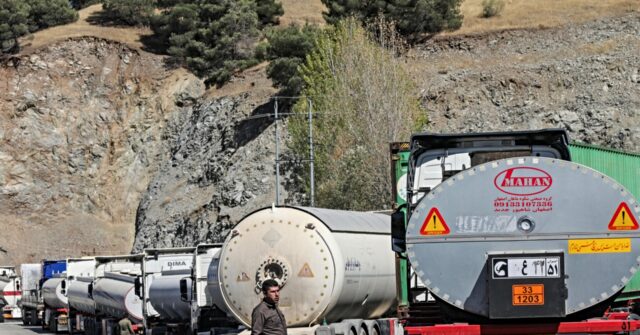
Truck drivers in Iran have been on strike for 6 days, protesting that their livelihoods have become financially unsustainable. Iran is facing record inflation of its currency, the rial, and high oil prices worsened by the conflict with America. Further complicating factors is the U.S. blockade on maritime shipping, making trucking especially important. Truck drivers associated with a major union in Iran entered their sixth day of a strike on Friday, reports from independent and dissident media shared, significantly threatening supplies for everything from farms to groceries to factories. The damage the strike is causing on the weakened Iranian economy is amplified by the fact that President Donald Trump has maintained a maritime blockade on Iranian ships for months in the Strait of Hormuz, which forced suppliers to turn en masse to land shipments to ensure supplies in the country. Iran is currently experiencing a major economic crisis caused both by the country’s decades of mismanagement under an Islamist terror state and by the consequences of its ongoing conflict with America, which include but are not limited to the Hormuz blockade. The national currency, the rial, is suffering from rampant inflation that has made the daily cost of living prohibitive for many Iranians. For truck drivers, the combination of rial inflation, skyrocketing fuel prices, and little to no government support has made their livelihoods unsustainable, according to reported messages from union strike organizers. According to the independent outlet Iran International, as of Thursday, the Union of Truck Drivers and Trucking Associations Across Iran documented strike activity in at least 18 cities nationwide, meaning that truck drivers typically active in those areas were no longer carrying cargo. The dissident People’s Mojahedin Organization of Iran (PMOI) claimed on Friday that affected cities included Tehran, Shiraz, Isfahan, Qazvin, Bandar Abbas, and Chabahar, and claimed a total of at least 20 municipalities impacted. The truck drivers’ union explained that their jobs had become unsustainable in a message on Thursday, as the rial could not keep up with skyrocketing diesel costs and other expenses associated with the industry. “Tires are priced in dollars, oil is priced in dollars, diesel is priced in dollars,” the union statement read in part. “So freight rates have to reflect reality too.” Truckers have also complained that insurance rates have skyrocketed in the context of the conflict with America and inflation has severely affected the cost of roadway tolls, mechanic repairs on their trucks, and other associated expenses. The latest message is consistent with the initial announcement reported of a strik on November 22, in which union leaders lamented the economic state of the country and condemned the Iranian terror regime for not acting to protect their ability to address their costs of living. The Union initially announced in a statement circulating on the encrypted messaging application Telegram that the strike was “a cry of protest from drivers who have spent years struggling under the weight of rising prices, injustice and neglect and can no longer endure these unbearable conditions.” A reported trucker commenting on the message at the time explained, “we went on strike because of these incompetent officials who do not care about the country or its people.” Some reports have estimated that freight rates for truckers have increased as much as 22.6 percent and the drivers are expected to make up the difference. The Iranian regime has not announced any specific relief efforts for truck drivers or those otherwise beholden to fuel prices. State media has largely ignored the strike reports, though President Masoud Pezeshkian acknowledged in vague comments that Iranians are facing an “economic war” that he blamed on America, without offering any relief for citizens. Independent reports suggest the trucker strike is having a significant impact on shipping that may be flowing out of Iran’s borders. The British outlet The Independent reported this week that trucks traveling into Iran from countries such as Kazakhstan are experiencing bumper-to-bumper traffic, potentially impacted by demand caused by domestic truck drivers going on strike. “Local authorities in the region have reported a near threefold surge in daily cross-border freight volumes compared with pre-war levels, with drivers waiting days to cross,” the newspaper observed, noting that road traffic had already increased significantly in response to American disruptions in Iranian maritime shipping. “Commercial traffic through the Strait of Hormuz remains roughly 65 per cent below pre-conflict levels, leaving hundreds of tankers and cargo ships anchored outside the Gulf,” the Independent observed. The United States is reportedly in some negotiations to end the conflict with Iran, but has continued pressuring the Iranian economy as its leaders have refused any meaningful compromise. On Monday, Treasury Secretary Scott Bessent announced sanctions on financial institutions that helped the country circumvent lready existing sanctions, describing the Iranian economy as being “underwater.” “Iran’s shadow banking system is the last financial lifeline of a bankrupt regime. Treasury will continue dismantling these illicit networks until we have buried the head of the snake,” he said in a statement. Follow Frances Martel on Facebook and Twitter.
Iran Trucker Strike Enters Sixth Day, Triggered by High Oil Prices and Rampant Inflation
Full Article
Original Source
Read the full article at Breitbart →KhanList aggregates and links to publicly available news content. We do not host full articles from third-party sources. Always verify important information with original sources.