
Iran threatened an “earth-shattering blow” against the United States and Israel on Saturday, warning that “red lines are a thing of the past” if either resumes military strikes against the Islamic Republic, as President Donald Trump weighs renewed action amid escalating threats from Tehran. The warning came as Iranian Supreme Leader Mojtaba Khamenei reportedly ordered his armed forces to prepare for retaliation without geographic limits, while Washington reinforced its military posture and regional mediators scrambled to secure an agreement ahead of Tuesday’s midterm elections. Iranian Foreign Minister Abbas Araghchi issued the threat in response to German Chancellor Friedrich Merz, who cited the conflict’s soaring energy costs for Europe while urging a diplomatic resolution. “100bn Euro is nothing compared to the Earth-shattering blow Iran’s Powerful Armed Forces will deal against those who dare harm our people,” Araghchi wrote on X. “Red lines are a thing of the past,” he warned. The warning came amid reports that Khamenei had ordered Iran’s military commanders to prepare an “immediate, effective response without geographical limitations” to any renewed American or Israeli attack, according to Iranian state media. The directive called for expanding Iran’s list of potential American and Israeli targets, including military installations and other strategic assets, as the regime threatened retaliation extending far beyond its borders. Khamenei, reportedly severely wounded in the opening strikes of Operation Epic Fury that killed his father and predecessor, Ali Khamenei, has neither been seen nor heard publicly since succeeding him as supreme leader. His purported communications have appeared exclusively in written statements, including Saturday’s directives, with no authenticated public audio or video of him. Iran’s armed forces chief, Gen. Ali Abdollahi, echoed the directive Saturday, announcing an expanded list of potential American and Israeli targets and threatening retaliation across a wider geographic area. Abdollahi also raised the prospect of preemptive Iranian military action, warning that Tehran would not necessarily wait for American or Israeli forces to strike first. “Whenever signs of hostile action by the enemy are confirmed, the armed forces will not wait for the enemy to launch an attack before deciding when and how to respond,” he declared. Tehran’s escalating threats come as Trump weighs renewed strikes against Iran, with Washington reportedly warning Gulf allies to prepare for a possible “short, intense” military campaign following Tuesday’s midterm elections. The Wall Street Journal reported Wednesday that Washington had alerted Gulf governments to the possibility of renewed military action, as American forces reinforced regional defenses, replenished munitions and positioned additional assets for a potential offensive. The preparations included deploying additional missile defenses to Israel, repositioning American personnel from vulnerable installations and readying military assets for possible operations against Iran. The military preparations were followed Thursday by a rare White House briefing from U.S. Central Command chief Adm. Brad Cooper, who personally briefed Trump on Iran as the administration weighed renewed military strikes and assessed the effectiveness of its ongoing naval blockade. Cooper, who oversees American military operations across the Middle East, was joined by War Secretary Pete Hegseth and Joint Chiefs Chairman Gen. Dan Caine for discussions that also addressed the continuing American military campaign against Tehran. Trump subsequently spoke with Israeli Prime Minister Benjamin Netanyahu on Saturday morning amid preparations for possible renewed strikes, the Journal reported. Details of their conversation were not disclosed. Trump nevertheless signaled Saturday that he was in no immediate rush to order another strike, citing the destruction already inflicted on Iran’s military during the American campaign. “We’re not in that much of a hurry from the standpoint that we’ve knocked down their Navy, we’ve knocked out their air force, we’ve knocked out their anti-aircraft,” Trump told reporters at his Mar-a-Lago residence. The president said negotiations with Tehran were “going fine,” but cautioned that the Iranian regime was “not very reliable.” The president, however, specifically identified Pickaxe Mountain, a heavily fortified underground facility suspected of housing elements of Iran’s nuclear program, among the remaining targets that American forces could strike. “We’ve knocked out their nuclear. We still have to take care of, I would say one or two sites, but we can do that in 10 minutes,” Trump said. “You probably could look at Pickaxe Mountain, and you have to take care of that. We can do that all very quickly,” he added. Secretary of State Marco Rubio underscored Saturday that Trump had yet to decide whether to resume strikes, while making clear that American forces were prepared to achieve the administration’s objectives if ordered into action. “We can achieve military objectives if we seek to. He hasn’t made a decision,” Rubio said, emphasizing that Washington would prefer a diplomatic resolution but remained fully prepared to act militarily. Rubio also blasted the Iranian regime for threatening to attack commercial shipping and destroy neighboring countries’ energy infrastructure if Washington refuses its demands, condemning Tehran’s attempts to intimidate the region into submission. “What the Iranian system, the Iranian regime is basically arguing is, unless we get what we want, not only will we blow up ships, but we will destroy the energy infrastructure of our neighbors in the entire region,” Rubio said. “That’s not normal behavior,” he added. Those diplomatic efforts have centered on an intensified mediation push by Qatar, whose representatives held more than 12 hours of talks in Tehran on Friday before continuing discussions with Iranian officials in Doha on Saturday. The talks remain stalled over disagreements concerning the nuclear restrictions and verification measures sought by Washington, while Iranian officials continue pressing demands for sanctions relief, access to frozen assets and an end to the American blockade. Mediators have nevertheless explored a revised arrangement that could shorten the timetable for reopening the Strait of Hormuz to as little as two days, although no agreement has been reached. The diplomatic push follows a letter delivered earlier in the week from Vice President JD Vance to Mohsen Rezaei, secretary of Iran’s powerful Supreme National Security Council and a former Islamic Revolutionary Guard Corps commander, exploring the possibility of renewed negotiations. Trump subsequently disputed reports that the letter represented a peace overture, saying it concerned humanitarian assistance, while Araghchi acknowledged Saturday that Tehran had reviewed the communication but ruled out immediate direct talks. Rezaei also disclosed Saturday that Iranian officials were discussing whether to abandon the regime’s stated nuclear doctrine if another confrontation erupts, raising the prospect of a shift in Tehran’s position on developing nuclear weapons. Although he said no decision had been reached, Rezaei acknowledged that renewed hostilities had prompted debate over whether Iran should maintain its existing policy. Iranian officials have long cited a purported religious prohibition against nuclear weapons, a claim central to Tehran’s public defense of its nuclear activities. Washington, meanwhile, has continued tightening its economic stranglehold on Tehran, with the U.S. naval blockade and Treasury’s Operation Economic Outcast cutting off Iranian oil exports and further crippling the regime’s already battered economy. Treasury Secretary Scott Bessent briefed Trump Thursday on the campaign’s mounting toll, including the collapse of Iran’s currency, soaring inflation and the near-total disruption of oil exports on which the regime relies for critical revenue. The findings have strengthened Bessent’s argument that the administration should allow the pressure campaign more time to weaken Tehran before launching another offensive, Axios reported Friday. According to the administration’s assessment, Iran had loaded no crude oil onto tankers since late August, while the rial continued collapsing against the dollar and inflation approached 90 percent in September. The blockade has continued tightening the economic squeeze, with U.S. Central Command reporting Saturday that American forces had redirected 144 commercial vessels since the operation began. Bessent highlighted the blockade’s continuing success Saturday, pointing to the flow of non-Iranian oil through the Strait of Hormuz while Iranian exports remained shut down. “The world can live without Iranian oil. Iran cannot live without oil exports,” he declared. Tehran has nevertheless continued demanding an end to the blockade as a condition for reopening the Strait of Hormuz, even as American forces maintain their maritime restrictions and Washington refuses to ease the pressure without an acceptable agreement. Trump framed the decision confronting Tehran in stark terms last Sunday, warning that the regime must either reach an agreement or face the prospect of further American military action. “Do I make a deal with them or do I finish them off? That’s the only question,” Trump said. With American military preparations advancing and the blockade continuing to squeeze Tehran, the White House reiterated that warning Saturday, leaving open the possibility of renewed strikes if diplomatic efforts fail. “Iran has been decimated, and things will go one of two ways; the easy way or the hard way,” a White House official told the Washington Post. “President Trump holds all the cards and will do whatever is best for the United States. Joshua Klein is a reporter for Breitbart News. Email him at jklein@breitbart.com. Follow him on Twitter @JoshuaKlein.
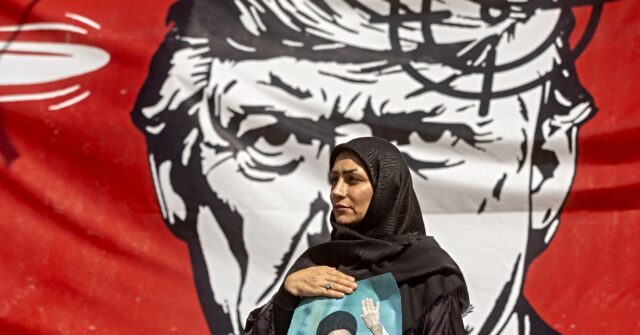
Iran Threatens ‘Earth-Shattering Blow,’ Vows ‘Red Lines Are a Thing of the Past’ -- Trump Weighs New Strikes
Full Article
Original Source
Read the full article at Breitbart →KhanList aggregates and links to publicly available news content. We do not host full articles from third-party sources. Always verify important information with original sources.