
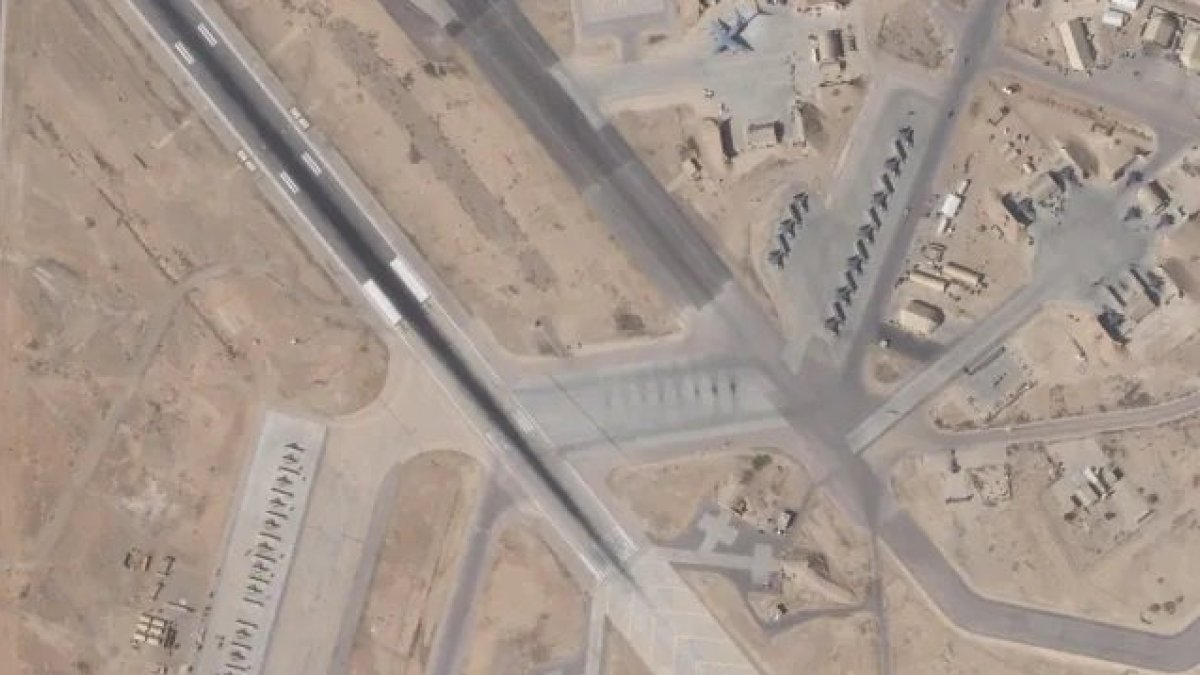
Iran is escalating its attacks on US and Gulf shipping, seeking to break the blockade of its oil exports and strike while the US is distracted by the midterm elections, experts have told The i Paper. Tehran claimed attacks on 10 ships this week, including two US vessels, as low-intensity warfare around the Strait of Hormuz has surged. It said the ships were violating the terms it was seeking to impose on the waterway. The US has denied any of its ships were struck, but said it had sunk five Iranian oil tankers. On Tuesday, Iran also launched one of its larges attacks of the war against a US military base, firing dozens of missiles at Muwaffaq Salti air base in Jordan. Nine warplanes were reportedly damaged. Shorts Meanwhile, an attack on a Saudi Arabian oil pipeline has raised fresh alarm. On Friday, Saudi Arabia temporarily closed the critical 745-mile East-West pipeline after it was attacked by drones. It has been used increasingly to bypass the Strait of Hormuz, a key waterway for oil exports that has been largely blocked by Iran since the start of the war. The drones were launched from Iraq, which has said it is investigating. On Saturday, Donald Trump said Iran was “probably” behind the attack. Dina Esfandiary, an Iran specialist and Middle East lead for Bloomberg Economics, said the shift in Tehran’s approach was clear. “Iran is definitely escalating,” she told The i Paper. “It’s doing this incrementally for now, but it is making very clear, noticeable escalations in the amount of missiles that it’s sending at different targets, and the kind of targets… no longer just limited to ships or the Gulf.” Some analysts point to the growing economic pressure on Iran as a driver of aggression. No Iranian crude oil has crossed the US blockade since it was reinstated in July, according to shipping intelligence firm Kpler. US forces, for their part, have been able to shepherd a limited flow of shipping past Iran’s own blockade. The loss of a vital source of revenue is hitting Iran’s economy. Inflation is running at about 88 per cent, according to official statistics, and the country’s GDP is set to shrink by 5.4 per cent this year, according to the International Monetary Fund. Michael Mulroy, who served as Middle East lead at the State Department during Trump’s first term, believes the regime’s new aggression is a sign of desperation. A still from a US military video showing a strike on an Iranian tanker this week (Photo: US Central Command/AFP) “Iran is feeling the economic pressure,” he said. “If this continues the regime will have an increasingly difficult time funding itself. Iran is attempting to ease the pressure on themselves by increasing the pressure on everyone else.” But Tehran also sees economic factors in its favour. Brent Crude oil prices have soared over $100 (£73.98) a barrel this week, with the average price for a gallon of petrol and diesel in the US passing $4 and $6 respectively. Trump has declined to apologise to voters, claiming higher prices were worth it so that a “very evil country” does not get a nuclear weapon. He also promised a $5,000 dividend to every American adult if Republicans hold the House and Senate in November’s midterm elections, and claimed the war would end “immediately” after the vote. The escalation of Iranian strikes has been accompanied by more aggressive rhetoric from Tehran. Mohsen Rezaei, the head of Iran’s Supreme National Security Council, said this week that the military was using anti-destroyer missiles for the first time to target enemy ships. The speaker of Iran’s parliament, Mohammad Bagher Ghalibaf, said the regime had abandoned a policy of “proportionate response.” According to experts, Tehran sees a limited window of opportunity to reset the terms of engagement at a time when the US is wary of escalation. The blockade of the Strait of Hormuz has hit Iran’s oil exports hard (Photo: Stringer/Reuters) “Iran feels like they’re in a stalemate and they need to break it,” said Esfandiary. “There is a growing realisation amongst some in the elites that this whole idea of calculated restraint hasn’t served Iran well. Iran is probably right in believing that after the midterms, Trump will feel unconstrained, so it’s better that they push their advantage now rather than be faced with a more dire situation in November.” Mulroy said that Iran appeared to be taking advantage of the US’s current reluctance to escalate, but he added that it was risking a major response after the midterms which could involve large-scale attacks on its energy sites and other infrastructure. Tehran has already signalled its willingness to embrace greater risk, notably through attacks on US ships enforcing the blockade. Analysts believe the regime has resisted this until now, to try to manage the potential escalation that could come with inflicting further casualties on US forces. Iran is also reportedly developing supersonic anti-ship missiles with Russia’s help. Andreas Krieg, a Gulf security expert at the War Studies Department of King’s College London, said the regime could also be escalating as part of efforts to secure a deal to end the conflict. “The Iranians are trying desperately to reset the balance of deterrence and coercion,” he told The i Paper. “They also want to show that they have bargaining power. But ultimately, those in charge in Iran have an interest in coming to the table.” Houthi gains in Yemen could strengthen Iran’s position (Photo: STR Photo/AP) Iran’s hand could be strengthened by events now taking place in Yemen, where the Tehran-allied Houthis made sweeping gains against Saudi-backed forces this week. The Houthis have taken control of strategic sites around the Bab al-Mandab Strait, which is a primary alternative route to the Strait of Hormuz for commercial shipping. Houthi control over Bab al-Mandab could increase Iran’s power over shipping in the region and its leverage over the US and its Gulf allies. The Yemeni faction has its own agenda, but relies on Tehran for weapon supplies, said Krieg. Saudi Arabia has accused Iran of providing weapons, intelligence and even manpower for the Houthis’ current offensive. One further complicating factor is Israel. Prime Minister Benjamin Netanyahu said this week that Israel’s “central mission” was to bring down the Iranian regime and this goal was “within reach”. Israel has increased attacks on Iran’s Lebanese ally Hezbollah, including blowing up the group’s complex under Ali Taher Ridge on Thursday, despite a ceasefire being in place. “Tonight we destroyed the largest Iranian outpost outside of Iran,” Netanyahu said after the strike. Israel is also facing its own divisive elections, which could see Netanyahu ousted next month. The regional picture is increasingly volatile. But after a series of surprise attacks by the US and Israel in recent years, Iran appears to believe it is better served by turning the tables, and striking while its enemies are distracted.
Iran sees a window to strike while Trump is distracted – but it could backfire
Full Article
Original Source
Read the full article at Inews →KhanList aggregates and links to publicly available news content. We do not host full articles from third-party sources. Always verify important information with original sources.