
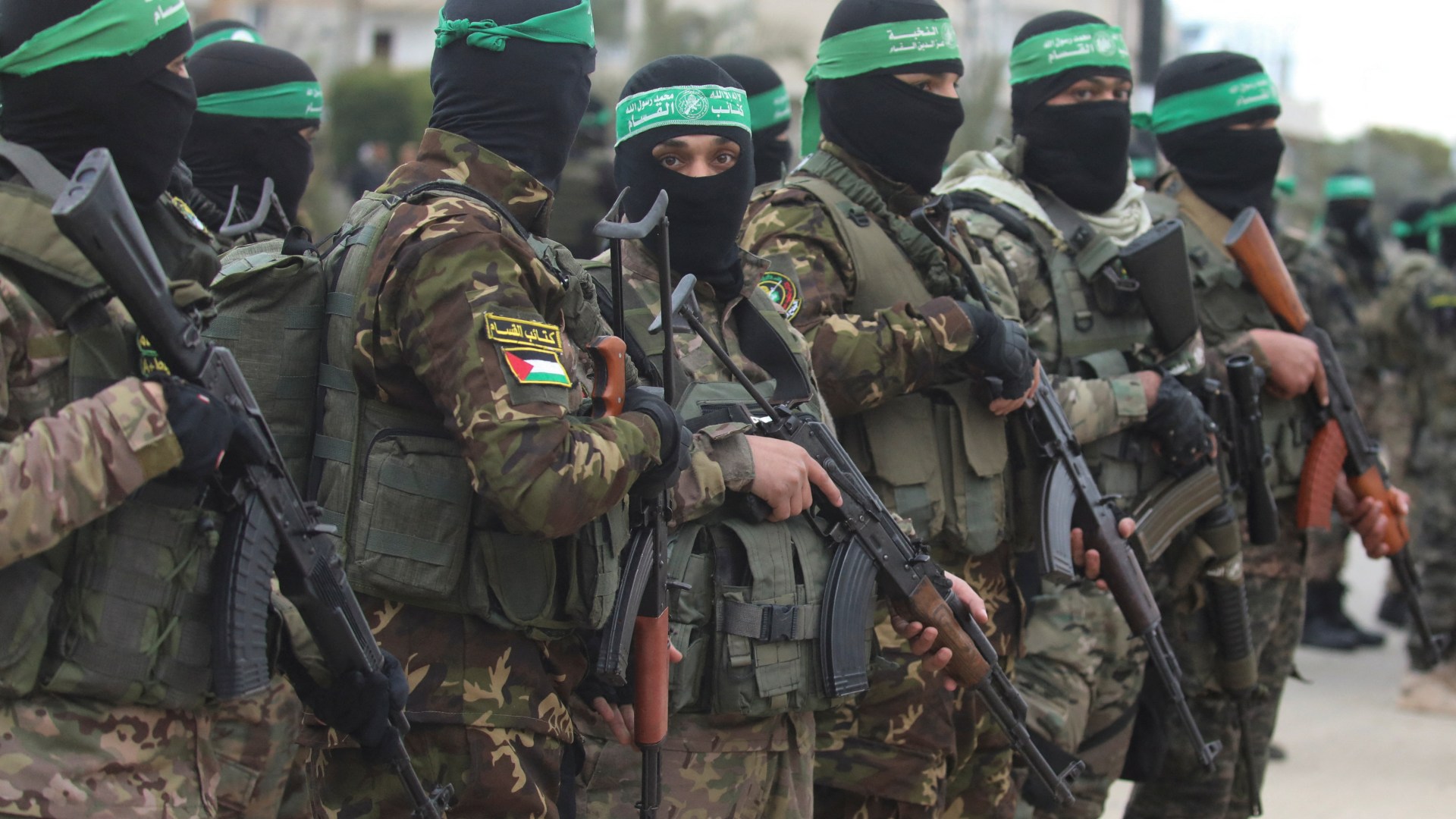
IRAN is plotting a terrifying October 7-style attack on Israel using its sprawling network of terror proxies, intelligence in Tel Aviv has claimed. The Islamic Republic has allegedly held meetings and training exercises with terrorist groups to prepare for a repeat of the horror Hamas’ attacks in 2023. Iran is reportedly plotting an October-7 style attack on Israel Credit: AFP Iran could use proxies such as the Houthis (pictured) and Hezbollah to strike Israel Credit: Reuters Hezbollah in Lebanon, Hamas, the Houthis in Yemen and regional militias will join forces with Iran’s army under the plans, the Jerusalem Post reports. Iran’s alleged plot comes as the regime’s war with the US continues to spiral out of control. Sign up for The Sun newsletter Thank you! The reeling regime is now looking to its regional allies to bolster its forces and weapon stockpiles. Israeli intelligence claims Iran has hosted multiple meetings with Hezbollah, Houthi and Iraqi militia leaders about an escalation against Israel. Hamas militants stand guard before they release hostages held in Gaza since the deadly October 7, 2023 attack Credit: Reuters A Hamas terrorist attacking civilians at the music event during their October 7 rampage The terrorist proxies have also reportedly taken part in joint training exercises with Iranian forces. Meanwhile the Islamic Regime has ramped up drone and missile production to replenish its dwindling reserves, the outlet reports. Hamas documents seized in the Gaza Strip after the attack on October 7, 2023, reportedly suggest plans sought to expand the confrontation after the initial attack. But Hamas launched its murderous rampage without the other fronts opening, the outlet reports. Most read in The Sun The attacks killed 1,200 Israelis, kidnapped 250, and left thousands of others wounded, sparking the ongoing Israeli-Palestinian war. One of the planning documents allegedly stressed the need to “connect and prepare the external fronts”. The document also discussed the need to agree on communication mechanisms for the allies in wartime, the outlet reported. The chilling warning comes as Iran said its forces struck an unmanned US vessel trying to enter the Strait of Hormuz on Sunday. CENTCOM said the tankers were part of a shadow network funding Iran’s Revolutionary Guard and its armed proxies Credit: x.com/@CENTCOM The history of Israel and Iran's relationship THERE'S been an ongoing conflict between Israel (left) and Iran (right). In 1947, Iran was among 13 countries that voted against the United Nations Partition Plan for the British Mandate of Palestine. Two years later, Iran also voted against Israel’s admission to the United Nations. After the 1979 Islamic Revolution, Iran severed all diplomatic and commercial ties with Israel, and its theocratic government does not recognise the legitimacy of Israel as a state. The turn from cold peace to open hostility began in the early 1990s, shortly after the collapse of the Soviet Union and the defeat of Iraq in the Gulf War, after which relative power in the Middle East shifted to Iran and Israel. CONFLICT ‘HEATS UP’ The conflict escalated in the early 1990s, as Yitzhak Rabin’s government adopted a more aggressive posture on Iran. Rhetorical conflict heated up during the presidency of Mahmoud Ahmadinejad, who made inflammatory statements against Israel. Other factors that have contributed to the escalation of bilateral tensions include Iran’s development of nuclear technology relative to Israel’s long-stated Begin Doctrine, Iran’s funding of Islamist groups such as Hezbollah, Palestinian Islamic Jihad and Hamas, as well as alleged involvement in terrorist attacks such as the 1992 attack on Israeli embassy in Buenos Aires and the 1994 AMIA bombing, and Israel’s alleged support for militant groups such as the People’s Mujahedin of Iran and Jundallah as well as alleged covert Israeli operations in Iran including multiple assassinations and bombings. ‘COMPLEX AND ONGOING’ Since 1985, Iran and Israel have been engaged in an ongoing proxy conflict that has greatly affected the geopolitics of the Middle East, and has included direct military confrontations between Iranian and Israeli organisations, such as in the 2006 Lebanon War. The conflict has played out in various ways, including through support for opposing factions in conflicts in Syria and Yemen. Iran has provided support to the Syrian government, while Israel has supported opposition groups. In Yemen, Iran has provided support to the Houthi rebels, while Israel has provided support to the Saudi-led coalition fighting the rebels. The conflict has also involved cyber attacks and sabotage against each other’s infrastructure, including attacks on nuclear facilities and oil tankers. Overall, the Iran-Israel proxy conflict is a complex and ongoing conflict that has had a significant impact on the political and security dynamics of the Middle East. INSIDE THE WAR In the Israeli–Lebanese conflict, Iran has supported Lebanese Shia militias, most notably Hezbollah. In the Israeli-Palestinian conflict, Iran has backed Palestinian groups such as Hamas. Israel has supported Iranian rebels, such as the People’s Mujahedin of Iran, conducted airstrikes against Iranian allies in Syria and assassinated Iranian nuclear scientists. In 2018, Israeli forces directly attacked Iranian forces in Syria. Iranian Islamists have long championed the Palestinian people, whom they perceive as “oppressed”. Scholars believe that by supporting the Palestinians, Iran seeks greater acceptance among Sunnis and Arabs, both of whom dominate the Middle East. Ideologically, Iran seeks to replace Israel with a one-state solution and has predicted Israel’s demise. Israel sees Iran as an existential threat, and accuses its regime of harbouring genocidal intentions. Consequently, Israel has sought sanctions and military action against Iran to stop it from acquiring nuclear weapons. Hours earlier, the US military said its forces blasted three Iranian oil tankers in response to a missile attack on Navy warships. US Central Command (CENTCOM) said the tankers were part of a shadow network funding Iran’s Revolutionary Guard and its armed proxies. The strikes came nearly a week after the US and Iran resumed attacks following a month of relative calm. As tensions flare, US President Donald Trump declared he may strike Iran’s Pickaxe Mountain nuclear site. Iran’s nuclear programme, the issue that sparked the war in February, was meant to be addressed in negotiations. But talks fell apart soon after the US and Iran signed a memorandum of understanding in mid-June. Instead, Tehran’s new leverage focuses on the Strait of Hormuz – a crucial waterway used to transport oil and natural gas. The US military has been helping guide ships through the strait as Tehran continues to assert its control and targets vessels. Comment now
Iran ‘plotting October 7-style attack on Israel alongside terror proxies Hezbollah, Hamas & Houthis’ as US war rages on
Full Article
Original Source
Read the full article at Thesun →KhanList aggregates and links to publicly available news content. We do not host full articles from third-party sources. Always verify important information with original sources.