
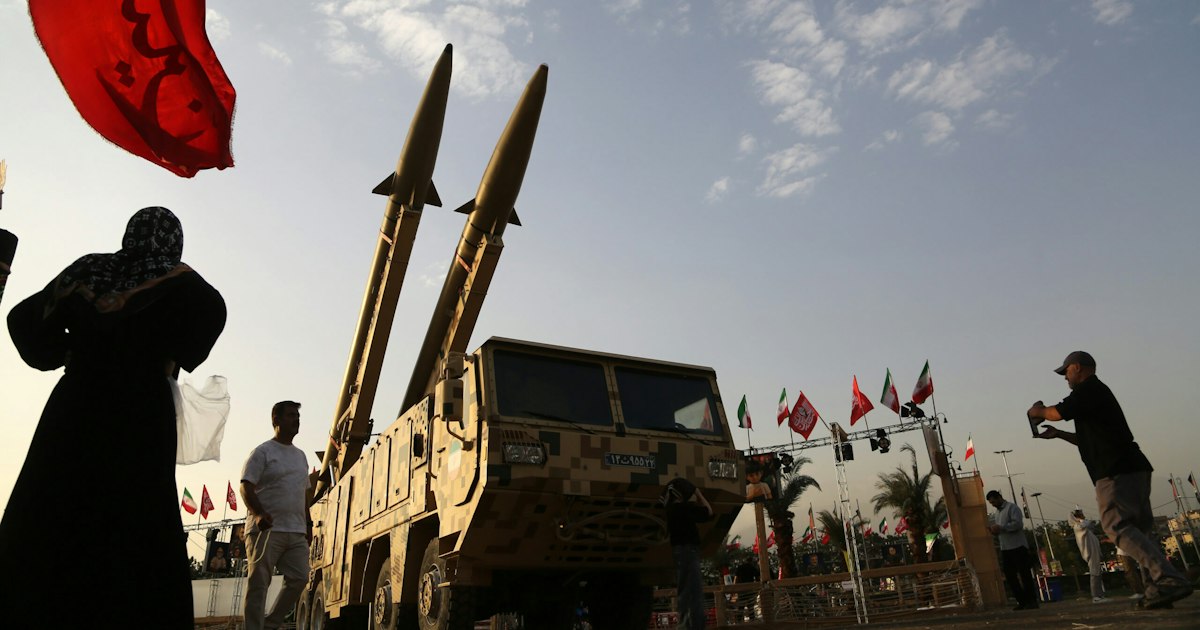
The Iran War Germany and the UK have facilitated the U.S. military campaign. Photo by Fatemeh Bahrami/Anadolu via Getty Images Well, the midterm elections are over, and the GOP got walloped—bigly. Now that voters have handed the Democratic Party both chambers of Congress—and handed Donald Trump a stinging rebuke—we can focus again on the most urgent question facing our republic-turned-predatory-empire: Will our imperial president renew his costly, illegal, and deeply unpopular war against Iran, which he wisely, though to little avail, had put on the backburner during the campaign season? If he does, analysts warn, Iran will mount a furious retaliation. The Islamic Republic has threatened to expand its target set to include digital infrastructure like internet cables and data centers, in addition to energy sites and military assets. That’s the main reason I’ve been skeptical, even amid myriad escalation signals, that Trump will authorize the “devastating strikes” that Israel’s Prime Minister Benjamin Netanyahu has been urging. Still, the Pentagon has been moving troops and materiel into the region, and Trump continues to hint that he’ll throw the “hammer” down. So what happens if I’m wrong? The Gulf states would probably get wrecked. And not just the Gulf states, perhaps. The Islamic Republic is growing ever more prepared, should Trump launch major strikes, to take aim at America’s European allies, Iran experts told The American Conservative. “Iran has explicitly warned that in a next round of war with the U.S., any country that facilitates those attacks will expose itself to Iranian counterattacks,” said Ellie Geranmayeh, an Iran expert at the European Council on Foreign Relations. “Tehran is looking to spread the war more horizontally to compound the global pain.” Sina Toossi, a senior non-resident fellow at the Center for International Policy, said he had been tracking recent Iranian threats and takes seriously the possibility of an attack on Europe. “European bases have reportedly been used to support operations against Iran, including British facilities,” Toossi observed. “So Tehran may increasingly see these bases as legitimate targets.” These expert analyses add to the accumulating evidence that Iran—if war resumes and especially if the next phase of fighting is intense and lasts a long while—will expand the conflict beyond the Middle East and into Europe. On Saturday, Iran’s Supreme Leader Mojtaba Khamenei instructed military commanders to drop any “geographical limitations” to their retaliatory strike plans, according to a statement released by his office. The same day, Iran’s Foreign Minister Abbas Araghchi issued a pointed criticism of Friedrich Merz, the chancellor of Germany, for having initially endorsed the American-Israeli attacks. “Red lines,” Araghchi cautioned, “are a thing of the past.” Those warnings, though stark, are nonetheless cryptic, but pro-regime Iranian journalists assessed that the supreme leader was readying a possible attack on Europe, and lower-level officials have made the subtext explicit. After news broke of Khamenei’s instructions, Manouchehr Mottaki, an Iranian lawmaker and former foreign minister, predicted the next round of war “will reach Europe.” Iranian media suggested Tehran possesses missiles that can reach as far as the UK. Indeed, early in the war, Iran was reported to have fired an intercontinental ballistic missile toward a U.S.-UK airbase in Diego Garcia, an island in the Indian Ocean. If true (and, granted, the report was never confirmed), the episode demonstrated Iran’s capability to launch missiles with a range of nearly 4,000 kilometers (around 2,500 miles), nearly doubling its previous self-imposed range limitation—and putting most of continental Europe in Tehran’s crosshairs. While the risks of Iranian attacks on Europe remain underdiscussed, Western media has done some good reporting on the matter. “Iranian forces have assessed striking US assets in south-eastern European countries such as Bulgaria, which last month approved the use of its Bezmer air base for US refuelling aircraft,” wrote Najmeh Bozorgmehr and Andrew England of the Financial Times in August. A British air base in Cyprus, they added, also had made the list of prepared targets. The more recent warnings from Iran envisage strikes on Europe beyond its southeastern region. Mottaki, the ex-foreign minister, singled out Germany, Italy, Portugal, and the UK—all of which, to varying degrees, have allowed U.S. bases hosted on their soil to be used for operations against Iran. Tehran’s missiles would suffer from poor accuracy at such ranges, but the Islamic Republic, one military expert told the FT, could “work through proxies” like Iraqi militias and Lebanese Hezbollah. Indeed, the latter group has already fired Iranian-made drones at targets in Cyprus as part of the current conflict, hitting a hangar at the British airbase there. Tehran, by escalating its threats of an even wider war, aims to deter a U.S. attack, but on that score, the strategy could fail if not backfire. Iranian strikes on Europe would increase the likelihood of an outcome for which Trump has repeatedly called—the direct entry of America’s Western allies in the war—mitigating the deterrence value and compromising the credibility of Tehran’s threats. But Iran is also trying to discourage Europe from letting its territory be used as a launching pad for U.S. attacks, and here its threats could prove more successful. “While some European countries may allow the U.S. to use bases in their territory to facilitate future strikes, many are likely to be even more hesitant than earlier this year,” said Geranmayeh. “They do not want to be embroiled in an American war in the Middle East that lacks an exit strategy.” Subscribe Today Get daily emails in your inbox Early in the war, Tehran hit U.S. bases in the Persian Gulf region to push back American forces. If conflict resumes, Iran could follow through on its threats against Europe, expanding its military reach to try further repelling America. “Whether it would actually go that far is uncertain, but the threat itself is meant to raise the perceived costs of another war for Washington and its allies,” Toossi said. The conflict has already brought significant harm to Europe, sparking an acute energy crisis that continues to strain government budgets and exacerbate civil strife. Nevertheless, most European leaders, wary of incurring Trump’s wrath, have stopped short of refusing basing access for the American campaign. The hawkish NATO secretary general—a former prime minister of the Netherlands—has even boasted that “5,000 sorties” of U.S. aircraft were launched from Europe. Yesterday, American voters soundly rejected a war of aggression that has harmed their financial interests without advancing their security. One wonders when European leaders—whose own citizens have suffered greater financial hardships and face far graver risks from that war—will do the same.
Iran More Likely to Strike Europe if Trump Attacks
Full Article
Original Source
Read the full article at Theamericanconservative →KhanList aggregates and links to publicly available news content. We do not host full articles from third-party sources. Always verify important information with original sources.