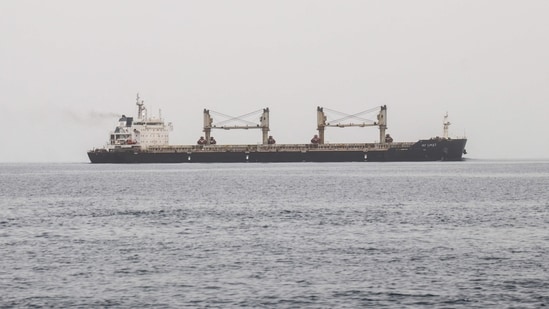
A lull in fighting between the U.S. and Iran has accelerated diplomacy aimed at a short-term fix for the most contentious issue of the war—restarting shipping through the Strait of Hormuz.Iran and Oman huddled throughout the weekend and into Monday to hammer out an arrangement for ships to safely pass through a waterway (AFP)Iran and Oman huddled throughout the weekend and into Monday to hammer out an arrangement for ships to safely pass through a waterway that carried 20% of the world’s oil production before the war slowed traffic to a crawl.The narrowly focused talks aren’t meant to end the U.S.-Iran conflict once and for all, but mediators hope even a temporary agreement on an important issue could cool tempers, allow a lifting of maritime blockades and ultimately juice talks on implementing a preliminary peace deal that Washington and Tehran reached in June.A U.S. official and mediators said Iran and Oman were still far apart on some issues, including whether to charge fees for transit. But both sides said there was progress, marking the first glimmer of hope for diplomacy since President Trump ordered a new round of military strikes on Iran more than two weeks ago in response to Tehran firing on commercial vessels in the strait.Trump halted those strikes on Friday evening, in part to give space to negotiations, U.S. officials said. That night, Oman sent a delegation to Tehran to begin talks on the strait.The goal of the Iran-Oman talks is to agree on which route vessels can take through the 22-mile-wide strait. Conflict erupted earlier this month after the U.S. began guiding ships through the strait by hugging the Omani coast, while Iran wants vessels to cross through its territory.Speaking to reporters on Air Force One Monday, Trump said he has “plenty of time” to deal with Iran and that “we are talking right now,” adding, “there’s a good chance that something could happen.” If not, he said, “we go back to doing what we were doing two days ago.”The U.S. isn’t directly part of the talks, though Oman is keeping Washington informed, said regional officials familiar with the talks.Iran’s foreign ministry said Monday that the U.S. had exchanged messages with Tehran but wouldn’t call it negotiations. But the foreign ministry otherwise gave a rare positive assessment of diplomatic efforts, saying there was progress over the weekend with Omani officials.“The two sides exchanged views on common principles and operational mechanisms for the safe passage of ships in the Strait of Hormuz,” Iran’s foreign ministry spokesman, Esmail Baghaei, said Sunday, according to the semiofficial Fars news agency.After weeks of tensions and fighting, the talks give both the U.S. and Iran a chance for a breather.The U.S. is wrestling with limited stockpiles of air-defense interceptors critical to the war effort, as Iran shows it still has a formidable arsenal of ballistic missiles and drones, according to U.S. officials. At the same time, Iran’s economy is reeling under sanctions, mismanagement and an American blockade of its ports.Both sides know the clock is ticking. Though oil prices fell to below $90 a barrel on news of the pause in fighting, there are looming problems that could send them back above $100, including diminishing stockpiles of crude and an effort by the Houthis, the Iran-backed Yemeni militants, to stop Saudi oil shipments from transiting the Red Sea.An Iranian diplomat said Tehran’s leaders want to reach a comprehensive peace deal with Trump some time before the November midterm elections, when they feel he will be under more pressure to make concessions.The Iran-Oman talks are also serving to ease tensions between two countries that have long had close ties despite larger disagreements between Tehran and the Arab world.Oman angered Iranian officials when it set up a U.S.-backed corridor for shipping that hugged its coastline without Iranian approval. The dispute prompted Tehran to resume attacks on ships transiting the strait without its permission, which in turn prompted the U.S. to launch multiple rounds of strikes against Iranian military targets.In Tehran this past weekend, Omani officials proposed establishing a Strait of Hormuz regional consortium that would oversee maritime security, search-and-rescue operations and other cooperation, said officials familiar with the matter. The proposal includes voluntary funding from regional countries and the shipping and oil industries, the officials said.Iran is engaging with the proposal but is still insisting on retaining control over the strait, including collecting fees, the officials said. Some Iranian leaders see some form of transit toll as a lucrative new revenue stream for a cash-strapped country with a huge postwar reconstruction bill.Oman and the U.S. are opposed to compulsory fees for vessels transiting the waterway.Mediators are trying to get the U.S. and Iran to agree to a formal 10-day truce, with Tehran reopening the Hormuz and the U.S. lifting its blockade of Iranian ports. The priority is to resolve ambiguities in last month’s agreement, among them language that Iran has interpreted to say it has the right to control the strait and charge fees for its use, a position the U.S. opposes.The document also mentioned the release of frozen Iranian funds, which Tehran thought would be immediate. The U.S. says the cash will be freed up only on the condition that Tehran behaves itself, including by keeping the strait open.Write to Summer Said at summer.said@wsj.com and Lara Seligman at lara.seligman@wsj.com
Iran and Oman Seek Agreement on the Hormuz in Bid to Jumpstart Peace Talks
Full Article
Original Source
Read the full article at Hindustantimes →KhanList aggregates and links to publicly available news content. We do not host full articles from third-party sources. Always verify important information with original sources.