
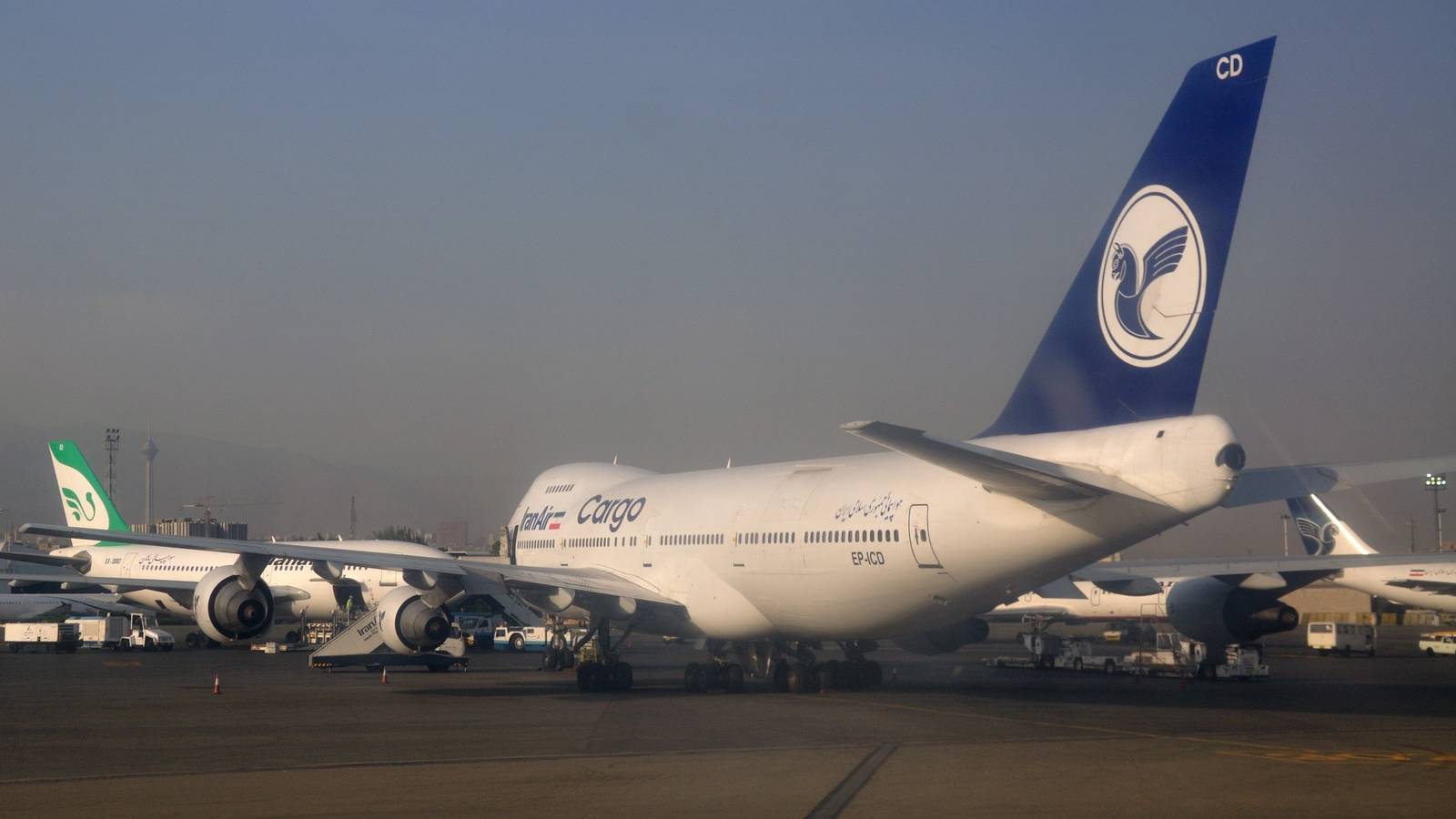
Published Oct 27, 2026, 6:57 AM EDT A graduate in German, Jake has a passion for history and regional aviation, and enjoys sampling new carriers and aircraft. He has visited OEM facilities as far and wide as Bristol, Toulouse, and Seattle, and recently enjoyed the milestone of flying his 150th sector as a passenger. Based in Norfolk, UK. Keeping its fleet going tends to be a challenging undertaking for Iran Air at the best of times, with the carrier forced to rely on older aircraft due to Western sanctions. This year, the commercial aviation sector in Iran as a whole has been hit hard, with the country having had to come to terms with both military attacks and further sanctions. Iran Air, however, is confident that its sole 747 will soon fly again. The aircraft in question, a Boeing 747-200 Combi that bears the registration EP-ICD, last flew in mid-September, and the airline has now confirmed that it will be grounded for several months due to hitting the cycle threshold for heavy maintenance checks. According to reports by aeroTELEGRAPH, this will represent the first time that such heavy maintenance, including a D-Check, has been done in Iran. Multiple Months Of Maintenance Credit: Bjoern Wylezich | Shutterstock Coverage of the matter by aeroTELEGRAPH and ch-aviation highlights the fact that the plans for EP-ICD were recently made public on Telegram by Iran Air CEO Taher Abdolhai, following a press conference on the matter last week. The work on the aircraft began in late September, and, despite the extensive nature of the maintenance and the rarity of such procedures in Iran, it should fly again in 2026. Abdolhai said on this front of the Boeing 747 that "this aircraft has reached the threshold of 20,000 flight cycles and must undergo the necessary repair steps to continue operating." This work, he added, will take 1.5 to two months. However, per aeroTELEGRAPH, an updated schedule from Iran Air has put the timescale closer to six months. Commenting on the general state of Iran Air, Abdolhai said that: "IranAir is facing fleet limitations, accumulated debts, and a reduction in international routes, while the return of grounded aircraft and the development of flights depend on the supply of parts, financial resources, and compliance with safety requirements." EP-ICD Last Flew In Mid-September EP-ICD is 38.1 years old, having first flown back in September of 1988. According to ch-aviation, it had already racked up some 86,039 flight hours across 17,320 cycles by the time it left Martinair in late 2007. It has now spent close to two decades at Iran Air, and data from Flightradar24 shows that, up until it was flown to Tehran's Imam Khomeini International Airport (IKA) for maintenance, it stayed busy. In recent months, the jet was primarily deployed between Tehran and Tianjin Binhai International Airport (TSN) in China. However, August, which was a particularly busy period for the plane, also saw it fly to Macau International Airport (MFM) on multiple occasions. Following the US and Israeli attacks on Iran in late February, it was stored in Tehran until May 9, 2026, after which its first flight took it to Yerevan (EVN). More recently, Iran Air appeared to be winding EP-ICD's activity down as it prepared for the aircraft's extended period of maintenance at its Tehran base. In September, it operated just round trips from there to Tianjin and back, with the first departing on September 9. The second took off on September 16, with the aircraft touching back down in Tehran for the final time (for now) on the morning of September 18, 2026. A Long & Diverse Career While EP-ICD is now configured to exclusively fly cargo, it was built as a Boeing 747-200 Combi aircraft with which operators could fly a mixture of both passengers and freight. According to Planespotters.net, the 38-year-old double-decker widebody quadjet entered service with Martinair in September 1988, with the Dutch carrier swapping between a cargo layout and 530 economy class seats on board. During its time at Martinair as PH-MCF, the jet was also leased to Australian flag carrier Qantas to carry mixed loads of passengers and cargo, before the Dutch airline committed to an all-cargo layout in 2006. After leaving Martinair in October 2007, it briefly served Turkish carrier Ankair as TC-AKZ in May 2008, before joining Iran Air as EP-ICD a month later. It will be interesting to see when it will fly next.
Iran Air Attempts Unprecedented Boeing 747 Overhaul Amid Sanctions
Full Article
Original Source
Read the full article at Simpleflying →KhanList aggregates and links to publicly available news content. We do not host full articles from third-party sources. Always verify important information with original sources.