
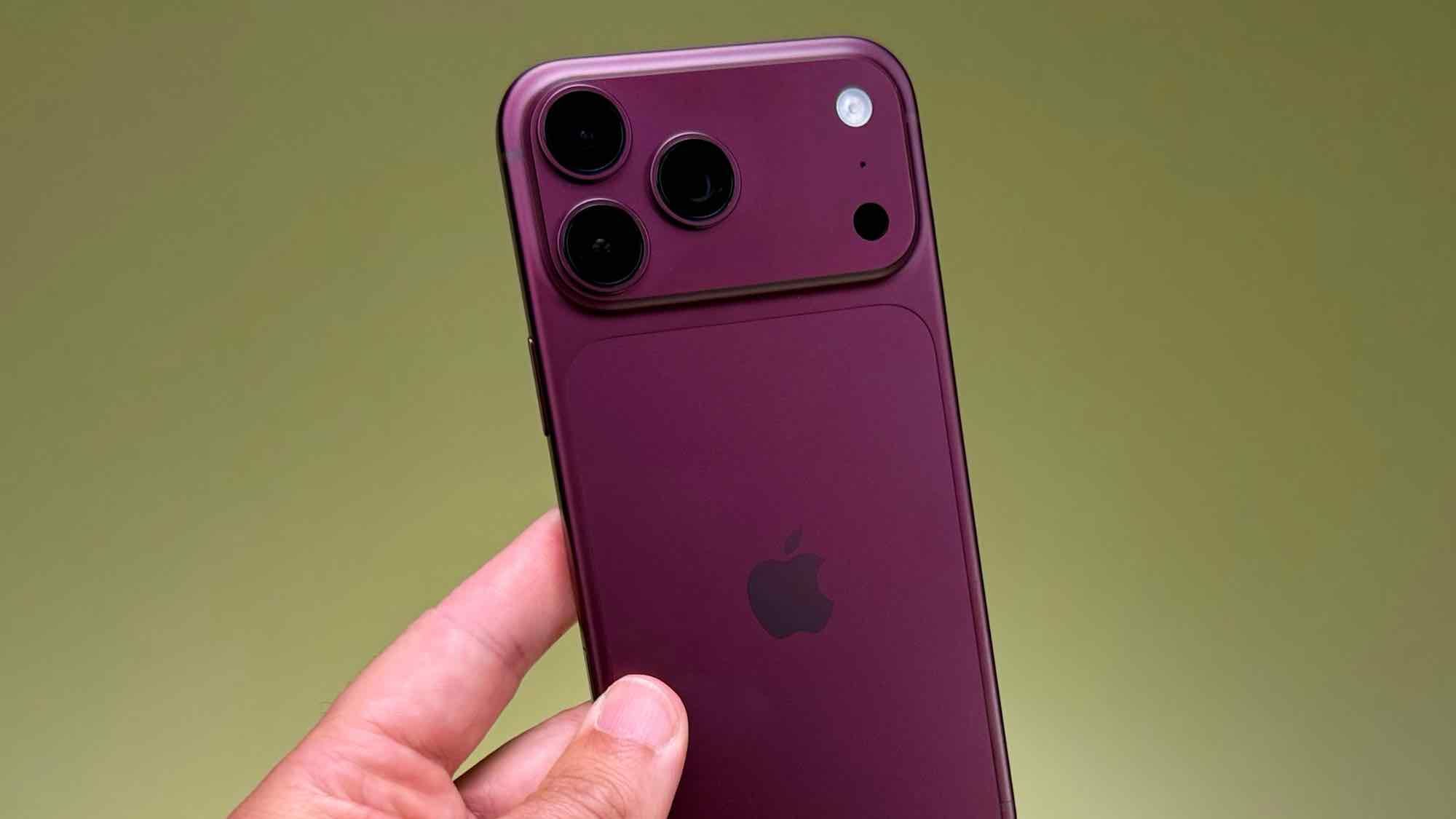
(Image credit: Future) The quality of AI-generated and altered imagery has gotten a lot better over the past few years. We're currently at the point where it is terrifying how realistic they are, and it always leaves doubt as to whether images are genuine or not. That's why we're starting to see tools and systems designed to identify AI-generated imagery, including Apple's new "Reference Image" camera mode.Apple did explain the basics of how the system works during the iPhone 18 Pro launch event. But if you want a full explanation of how Reference Image works, and why Apple has decided to release it now, the company has released a full blog post explaining everything.Why Apple has done this (Image credit: Future)The reasoning behind Apple's decision should be obvious, but the blog does confirm that it all comes down to the ease with which people can create AI-generated images. Apple also notes that since a lot of cameras now rely on post-shot image processing, a lot of which involves AI and machine learning, claiming a photo is AI-free is not that simple.Apple does admit that the C2PA industry standard can help, since it adds the relevant metadata after the image is captured and certifies the image edits that happen thereafter. However, the always-security-conscious Apple claims that this system is "vulnerable to compromise at any point in the editing chain," and there's no way to tell if the edit history has been tampered with or not.Apple also claims that it may create a privacy risk, since images could be tied to specific devices or individuals.Since iPhones are so popular, Apple says that it is "uniquely positioned" to try and solve the problem. This is why it's developed a system that ties the camera to "a platform that sets the industry’s highest standards of security from the silicon up."The system behind Reference Image's authentication (Image credit: Future)According to Apple, the Reference Image "offers a trustworthy, scalable guarantee that a reference is what it claims to be." In other words, it's a way to prove that an image has been taken by an iPhone camera at a specific time. On top of that, "dedicated secure hardware" helps protect the integrity of the image itself, while Apple's Private Cloud Compute promises to protect user privacy during the processing stage.Sign up to the Tom's iGuide weekly newsletter with coverage on everything from product launches to software updates, this is your go-to source for the latest updates on all the best Apple content.During the Apple event, Apple said that Reference Image was an iPhone 18 Pro feature. However, the blog post isn't so limiting, and confirms three core requirements for a camera to be compatible with Reference Image.Semantic authenticity relates to the reference image "faithfully" showing what the camera sensor saw. Any alterations made before the image was ready to view must be publicly verifiable. Also required is resilience to compromise, ensuring that image authenticity can't be affected by tampering with the camera. Listed examples include software-level jailbreaks or "common cryptographic attacks."Finally, there's privacy preservation, which is meant to ensure "outside observers" can't figure out whether reference images were taken by the same device. It also means Image contents can't be revealed to Apple or another third party.While the language suggests this isn't necessarily an Apple-only system, Apple does say that it believes the custom image sensors in the iPhone 18 Pro and Pro Max are designed to ensure reliable image data. Apple believes that "no other commercially-available photographic provenance system meets these strict requirements."In other words, don't expect this system to appear on other phones, even older iPhones. I don't see Android phone makers jumping to partake in Apple's standard, assuming Apple would even let them. These requirements are no doubt in place to reassure people that Apple is doing its due diligence, not just slapping an extra sticker onto any old iPhone camera.What capturing a Reference Image actually does (Image credit: Future)The beginnings of snapping a Reference Image happen as soon as the camera sensor initializes while the phone is being manufactured. The system generates a signing key pair and only releases half of it to the factory recording station. The station then signs it with a factory certificate authority (CA) and then records both to your hardware manifest.The other half is kept private and is used to sign every image your phone takes in reference Image mode. That links the pixel data and sensor metadata to a single camera sensor — all before any other processing takes place.Apple also uses a cryptographic timestamp to mark a window in which a photo was taken, rather than relying on the time in your device's operating system — which Apple says can be compromised. To narrow that window down, iPhones will occasionally reveal secure timestamp tokens, which serve as a lower bound. A second secure timestamp token is requested after each photo capture, which establishes the upper bound, allowing Apple to verify that a photo was taken between the two timestamps.Apple's Secure Enclave then plays a part by signing metadata that comes from outside the camera sensor. This is verified by Private Cloud Compute, which confirms that both the sensor and Secure Enclave belong to the same phone. Timestamps are then checked, and a secure digital negative is developed.This negative is then processed by Private Cloud Compute and turned into a JPEG Reference Image that's signed by a mix of traditional and post-quantum cryptography. This, Apple says, future-proofs the image to ensure it's verifiable against future quantum computing-based attacks.The whole process is a lot more complicated than this, and you can read it all in depth over on Apple's Reference Image blog post. It's safe to say that Apple has gone to a lot of effort to ensure that new iPhones are able to take photos that can be verified as legitimate, and not doctored in any way. However, the fact that this is currently limited to two devices, and probably won't be applicable to non-iPhone photos in the future, means that its scope is limited — even if iPhones' popularity means it'll be incredibly widespread in the future.At least in this instance, Apple is still supporting other anti-AI standards, including C2PA and SynthID. This wasn't always the case in past instances of Apple developing its own alternatives to industry standards. Just look at how long it took to add RCS messaging to iPhones. Follow Tom's Guide on Google News and add us as a preferred source to get our up-to-date news, analysis, and reviews in your feeds. More from Tom's GuideWhy your iPhone says 'Optimizing Search and Siri' in iOS 27 — and how to speed it upAppleCare One Family now live for $50 a month in time for iPhone 18 Pro launch — here's what it actually coversiPhone Duo vs Samsung Galaxy Z Fold 8: Which foldable phone will win? Tom is the Tom's Guide's UK Phones Editor, tackling the latest smartphone news and vocally expressing his opinions about upcoming features or changes. It's long way from his days as editor of Gizmodo UK, when pretty much everything was on the table. He’s usually found trying to squeeze another giant Lego set onto the shelf, draining very large cups of coffee, or complaining about how terrible his Smart TV is.
iPhone 18 Pro's Reference Image mode helps verify if an image has been altered by AI — here's how it works
Full Article
Original Source
Read the full article at Tomsguide →KhanList aggregates and links to publicly available news content. We do not host full articles from third-party sources. Always verify important information with original sources.