
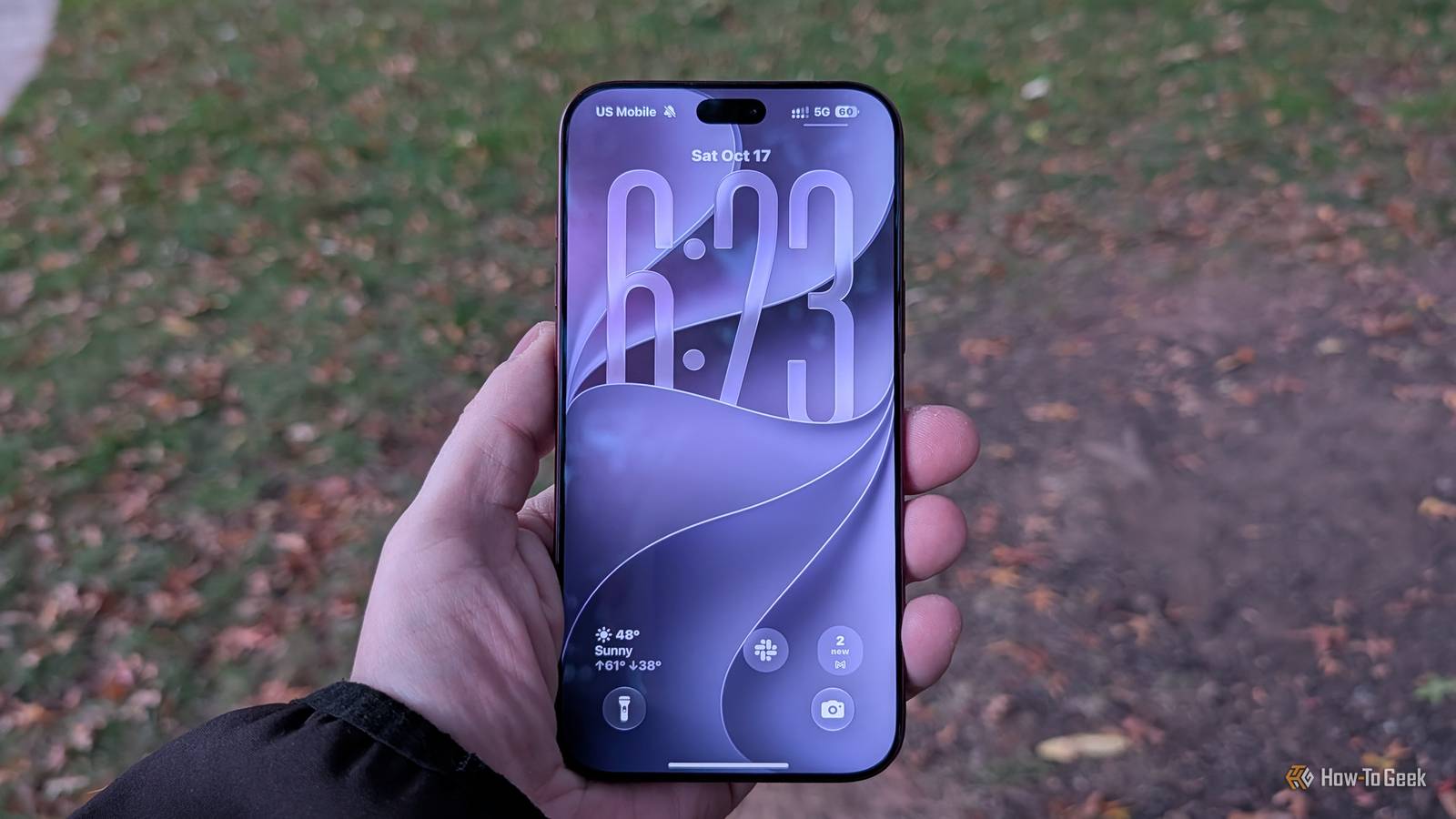
Published Oct 19, 2026, 9:00 AM EDT It's still the phone I'd buy if I was due for an upgrade The iPhone 18 Pro Max is basically an iPhone 17 Pro Max, but that's fine Let's face it. Apple simply isn't targeting yearly upgrades like it did years ago. It's not surprising; smartphones aren't as exciting as they were back then. There are no game-changing features to debut anymore. Enter the iPhone 18 Pro Max. It's clearly not targeted at iPhone 17 Pro Max users. It's mostly the same, with camera improvements being the main change. When I got my iPhone 17 Pro Max a year ago, I thought the camera changes were so game-changing that it was a proper upgrade for iPhone 16 Pro Max users. That hasn't changed, and that's why I'm recommending the iPhone 18 Pro Max. It's still, in my opinion, the best phone on the US market. The camera improvements feel pretty moderate, and while I think Siri AI is headed somewhere that makes a lot of sense, I don't think it's quite ready yet. Apple sent us the iPhone 18 Pro Max for review. It had no input on the content of this article. iPhone 18 Pro Max 9.5/10 Brand Apple SoC A20 Pro Display 6.9-inch Super Retina XDR display Storage 256GB, 512GB, 1TB, or 2TB The iPhone 18 Pro Max has all the tech of the iPhone 18 Pro, just with a bigger screen. Pros & Cons It's pretty much the best phone you can buy Excellent camera, and lossless zoom Great battery life Bold new colors Heavier than last year Camera Control doesn't control new camera controls iPhone 18 Pro Max pricing and availability The iPhone 18 Pro Max was announced on September 9, 2026, and it was released on September 18. You can find it pretty much everywhere, including but not limited to retailers like Amazon, Best Buy, and the Apple Store, and carriers like AT&T, Verizon, and T-Mobile. Many MVNOs offer it as well, although you probably wouldn't get a financing plan. It starts at $1,299 for the iPhone 18 Pro Max ($1,199 for the Pro), $100 more than last year's model. Colors include Burgundy, Glacier, Silver, and Black. iPhone 18 Pro Max Specifications Brand Apple SoC A20 Pro Display 6.9-inch Super Retina XDR display Storage 256GB, 512GB, 1TB, or 2TB Battery Up to 44 hours Operating System iOS Front camera 18MP Center Stage camera ƒ/1.9 aperture Rear camera 48MP Fusion Main with variable aperture (ƒ/1.48, ƒ/1.8, ƒ/2.8, ƒ/4.0) Colors Burgundy, Glacier, Silver, Black Weight 8.78 ounces (249 grams) Wide-Angle Camera 48MP Fusion Ultra Wide: 13 mm, ƒ/2.2 aperture and 120° field of view Telephoto 48MP Fusion Telephoto: 100 mm (4x), ƒ/2.8 aperture Finally embracing color It's a bold new world out there The new iPhone 18 Pro series comes in Black, Silver, Glacier, and Burgundy. The only one of those that was present in the iPhone 17 Pro series is Silver, with the three new colors replacing Cosmic Orange and Deep Blue. The new Burgundy color is bold, reminiscent of the Dark Cherry color that Apple used in accessories a couple years back. However, it does pick up fingerprints pretty easily. You can stop into an Apple Store to see all four colors (always advisable), and it'll become pretty clear right away that the other colors aren't fingerprint magnets in the same way. It's delightful to see Apple finally embracing colors in the iPhone Pro lineup. We've seen this trend from Apple for decades where it makes colorful products for the entry level, and uses neutral colors like silver and gray for "pro" products. It's always been confusing to me, because the word "pro" isn't applying to professionals in this case. If it was, I'd understand. Look at laptops. HP went wild on its Spectre x360 design for a few years, while its business-focused EliteBooks were almost completely silver. But when it comes to iPhones, the Pro series is really just for people that want a better phone. Why would anyone assume that those particular consumers don't like colors? The Dynamic Island is smaller It's fine I guess The Dynamic Island on the iPhone 18 Pro series is a bit smaller than the one on the 17 Pro series, and that's pretty much all I have to say about that. We've had display cutouts in phones for a while now. I don't think anyone is looking at the previous Dynamic Island and thinking it should be smaller. Apple did this by moving the infrared sensor that's used for Face ID to the corner of the screen, under the display. I should comment on this bit, because I've seen a lot of feedback that Face ID is slower or less accurate. Honestly, if no one said that to me, I'd never notice it. And even having heard that, I still haven't noticed it. Face ID seems to work totally normally to me. The new Siri is on the right track, but it's not there yet It struggles in key areas I really, really like where Apple is heading with Siri AI. It's just not reliable yet. The concept as it stands is that Siri is still a personal assistant, which is what it felt like we were promised 15 years ago when it launched as a built-in feature on the iPhone 4s. It's just way smarter now. It can understand context of the window your in, and it can find things from your messages, emails, and more. The problem is that you'll still run into various limitations, which is frustrating when using a tool that's basically promised to be omniscient. But that's the problem with all new AI products, right? We live in an unprecedented era where a new generation of products are shipping that aren't just not ready, they're broken. Before AI made all answers questionable, a company would look at something and say, "Well, we're promising it knows your messages history. What if someone asks about Telegram messages and that doesn't work? We can't ship it this way." Yes, that is a scenario when this did not work for me. People don't just use iMessages, as much as Apple probably wishes they did. Most people use a broad variety of messaging platforms. That all has to work. I also had a problem with Notes. A common things I do at events is record keynotes, sessions, and interviews in the Notes app, and then use it to automatically transcribe and summarize it. Siri AI couldn't access my recordings, even if I specifically asked, "What did this person say about this thing during the session I recorded in Notes at this time?" It works for the things you'd definitely expect. My whole family communicates via iMessages. If I ask, "When was I supposed to RSVP for my sister's party," it definitely knows the answer. It knows my calendar too. Like I said, I like the direction. This is what I think AI on mobile devices should be, compared to the much heavier tasks we use it for on desktop devices. Apple has MacBooks for those types of things. The camera is still my favorite It's a big upgrade over the iPhone 16 Pro Max During the iPhone 18 Pro announcement, the new camera was called the biggest upgrade in years. A bold claim, I thought, given that I genuinely felt that way about the iPhone 17 Pro's camera. Unsurprisingly, I still think that last year's improvements were genuinely game-changing, while this year's are more incremental, and that all leads to the same conclusion as everything else in this review: the iPhone 18 Pro series is an absolutely worthy purchase if you're on iPhone 16 or earlier, or switching from Android. The big change is variable aperture in the main sensor. It's not a new concept; Samsung and Huawei have both done it. It has some benefits, and you're also not missing anything if you don't have it. One of the promises is faster night mode, and this is somewhat true. I took an iPhone 17 Pro Max and the iPhone 18 Pro Max, pointed them at various dark objects, and yes, sometimes the iPhone 18 Pro Max would show a shorter time for capturing a photo. However, if you're the parent of a four-year-old like I am, you're still not mastering the art of taking a picture in low light of a kid that won't stay still. I also asked, why not just use a sensor with a larger aperture and apply effects computationally? Haven't we had that for adjusting portrait mode photos forever? The answer should have been obvious, since it's a common answer for these types of things. Doing it with hardware is just better. Look, the camera is great. It always is. Apple has its ups and downs when it comes to camera tech, sometimes falling behind competitors like it did back in the days of the iPhone X and XS. More recent years have seen more of a focus. For comparison, I consider the camera quality to be roughly on par with a Pixel 11 Pro, although if I had to pick a winner, it would probably be the Pixel. Compared to a Galaxy S26 Ultra, I'd take the iPhone 18 Pro Max. The company added new camera controls, and yes, you can manually adjust the variable aperture. However, you can't adjust it with the Camera Control button. It actually feels pretty random now what you can control with it and what you can't. It almost seems like Apple added this stuff to the Camera app and just forgot that Camera Control exists. Finally, Apple added 4K 60fps cinematic video capture with the iPhone 18 Pro Max. It's something I was hoping to see, as someone that really enjoys recording cinematic video, but also really enjoys shooting in 4K 60fps. Performance and battery life are stellar No surprise there The A20 Pro is once again the most powerful smartphone chip on the market, a feat Apple manages to pull off every year. If you're using it for intensive tasks like a lot of mobile games and such, this matters. If not, you can probably skip this section. Honestly, you should always skip this section in an iPhone review every year, and we reviewers should stop writing it, because we write the same thing every year. The new chip is faster than the old one, it's the best in the market until Qualcomm ships its new Oryon chip this year, and flagship smartphones are in a place where there's way more performance than you need anyway, have been for years. If any of that changes, we will let you know. I promise. But alas, I ran benchmarks anyway. iPhone 18 Pro Max iPhone 17 Pro Max Galaxy S26 Ultra Geekbench 7 (single / multi) 4,029 / 11,525 3,207 / 9,039 3,111 / 10,107 AnTuTu 11 3,475,896 2,413,385 N/A I didn't run AnTuTu on the Galaxy S26 Ultra, because version 11 was what was in the App Store, and version 12 is what's available for download on Android. I ran some 3DMark stress tests as well. It's a bit fun to see that the iPhone 18 Pro Max's lowest score is two points higher than the 17 Pro Max's highest score. I'm not a big fan of discussing battery life in reviews, considering that we reviewers don't spend 1-2 years with a device like you the consumer does. Battery life is always better in the first few days of testing. I'm not surprised that this product gets better battery life than my iPhone 17 Pro Max. Charging while I slept, it was never below 35%. That includes some days when it spent around eight hours recording sessions from an Nvidia event. To be clear though, these were audio recordings, but the phone was awake. It's not for people with an iPhone 17 Pro Max It's great for everyone else My colleague Patrick O'Rourke referred to this as an 'S year' in his iPhone 18 Pro review on XDA. I disagree with that. The S year, which commonly refers to the old Apple model of changing the design every two years and releasing a phone without a design change in-between, gets a reputation for being the "minor" upgrade. This isn't and has never been true. The iPhone 4s, 5s, and 6s introduced features that laid the foundation for modern smartphones. The iPhone 4s was the first to have Siri, and iOS 5 added iCloud. Say what you want about Siri's history, but adding an assistant to phones is something that's a staple today. The iPhone 5s added the first 64-bit processor and Touch ID. If you were following back then, the general consensus was that a 64-bit chip in a phone was "overkill". Imagine. And while there had been fingerprint sensors on phones, this was the first time we had biometric authentication that was fast and convenient, while also being secure. Before that, it was common for people to not even have a PIN on their phone. Then, the iPhone 6s added Apple Pay and 3D Touch. OK, 3D Touch didn't work out, and frankly, I don't know why Apple ever thought that it would. But Apple Pay sure did. Tap to pay is everywhere now, and most of us couldn't imagine owning a phone without it. Do you remember what was new in the iPhone 5? You don't, because it was pretty much a new design and a slightly larger screen. Those were the old days. One year was a cool new design, one year was about cool new features. It's not like that anymore. Apple knows that no one is buying phones every year anymore, and it's not planning for it. This isn't the wild west era of smartphones anymore when there was some crazy new feature to introduce every year. What we're seeing now across the industry is less of a focus on cool new camera capabilities and more of a focus on software, mainly revolving around AI. Siri AI is nice, but it's also available on previous generations of the product that have Apple Intelligence. Should you buy the iPhone 18 Pro Max? You should buy the iPhone 18 Pro series if: You have an iPhone 16 Pro series phone (or non-Pro iPhone 17) or earlier You want a more intelligent phone that understands context more without using the cloud You just want a great phone You should NOT buy the iPhone 18 Pro series if: You already have the iPhone 17 Pro series You're in the market for a foldable The iPhone 18 Pro Max feels so similar to the iPhone 17 Pro Max that if I was in the market for a new phone, I just might look for a discounted iPhone 17 Pro Max, or even a refurb. I've purchased every iPhone since the iPhone 6 except for the iPhone 16 series and now iPhone 18 series. But that's OK. Apple really isn't targeting yearly upgrades like it used to. So the iPhone 18 Pro Max is one of the best phones on the market, and if you've got a device that doesn't come in Cosmic Orange, I definitely recommend it. iPhone 18 Pro Max 9.5/10 Brand Apple SoC A20 Pro Display 6.9-inch Super Retina XDR display Storage 256GB, 512GB, 1TB, or 2TB The iPhone 18 Pro Max has all the tech of the iPhone 18 Pro, just with a bigger screen.
iPhone 18 Pro Max review
Full Article
Original Source
Read the full article at Howtogeek →KhanList aggregates and links to publicly available news content. We do not host full articles from third-party sources. Always verify important information with original sources.