
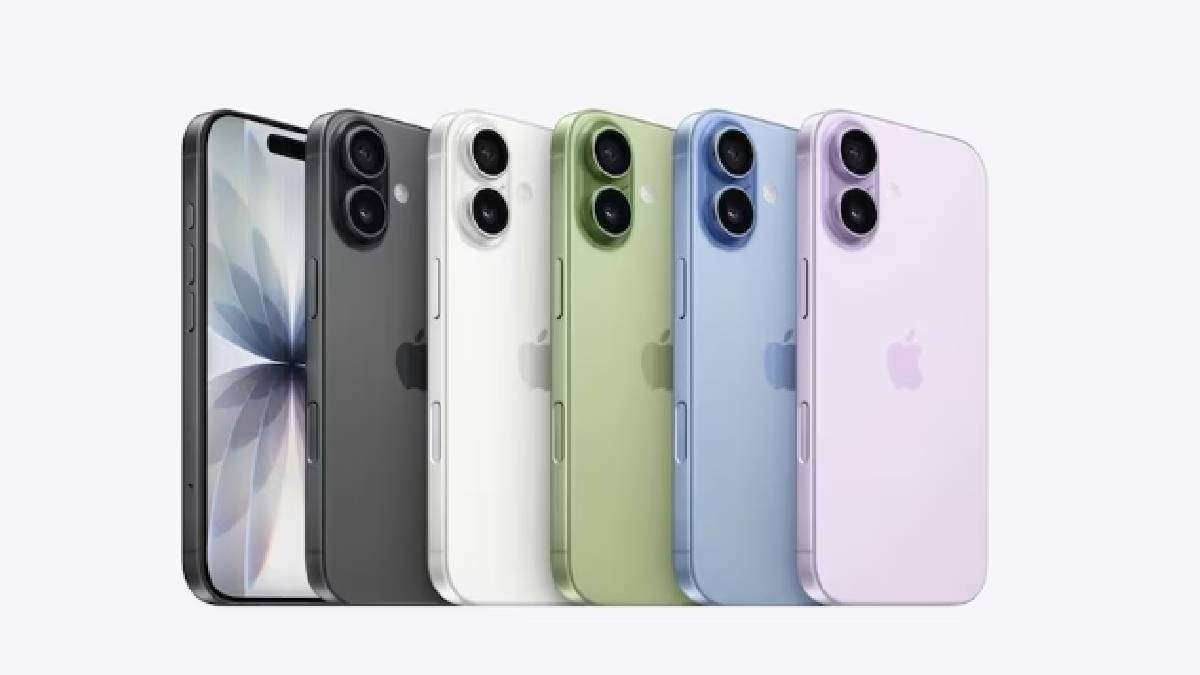
The Indian smartphone market has seen a decline of 11.1 per cent in shipments in the second quarter of this year, hitting the lowest point in five years as per IDC. At the same time, the iPhone 17 has retained its place as the most-shipped smartphone.The iPhone 17 is still selling well even when the Indian smartphone market is seeing a decline in shipments. (Photo: Apple)The memory shortage is taking a toll on the Indian smartphone market. As phonemakers struggle to keep costs in check due to rising prices, sales are taking a hit. So much so, that the Indian market just went through its lowest quarter in smartphone shipments in five years. Despite this decline, the iPhone 17 continues to be the most shipped smartphone.As per IDC’s Worldwide Quarterly Mobile Phone Tracker, India's smartphone shipments fell 11.1 per cent year on year to 33.2 million units in the April-June quarter of 2026. While in the combined first two quarters, the shipments stood at 64.2 million – a decline of 7.9 per cent – marking the lowest point in five years.“Demand hasn’t gone away, people are simply waiting longer to buy, and those planning an upgrade may want to move sooner rather than later, before prices go up further,” IDC senior research manager Upasana Joshi said.At the same time, the market value of shipments increased by 3.6 per cent year on year due to rising costs. In case you are unaware, several companies including Xiaomi, Oppo, Vivo, and Nothing, have raised smartphone prices in recent weeks. iPhone 17 is the most shipped deviceThe report says that the pressure was not spread evenly across the market. Average selling prices rose 14.4 per cent year on year to a record $315 (roughly Rs 30,000) in Q2 2026, while vendors cut back on discounts to protect margins.Apple and Samsung were among the few brands to hold shipments broadly flat in the shrinking market. Apple also remained constrained by supply shortages on the iPhone 15, 16 and 17, though the iPhone 17 was the most-shipped device in both Q1 and Q2 of 2026. Apple stands sixth in the Indian market with a 8.5 per cent market share. Though Upasana Joshi believes that Apple may also take a hit soon, at least when it comes to older iPhones. She adds, "Apple faces a similar supply led squeeze, with older iPhones set to get costlier and no attractive festive discounts expected like in previous years. As a result, iPhone shipments are likely to decline mid-single digits in 2026 from 14.3 million units in 2025."Vivo remains market leader, Samsung close secondVivo remained the market leader in India, despite seeing a drop in market share from 19 per cent to 18.4 per cent year on year. Samsung saw a marginal increase in shipments and stood second with a 16.4 per cent share, up from 14.5 per cent.Oppo held third place with a 13.8 per cent share, while Xiaomi was fourth at 9.7 per cent and Realme fifth at 9.3 per cent.Among other brands, iQOO saw the biggest hit in shipments, down by 61 per cent, while Poco saw a decline of 12.3 per cent.As per the report, Chinese brands were hit harder because of their stronger presence in low-end and mass-budget segments, where higher memory and component costs have made things particularly difficult.Meanwhile, Samsung benefited from a diversified portfolio and greater scale, which helped it absorb rising costs without sacrificing volume or margins. Apple, despite missing the top five by unit shipments, continued to lead the market by value with a 27.0 per cent share, up 22.2 per cent year on year.Entry-level smartphones hit the hardest, 4G phones gain shipmentsThe sharpest hit came at the bottom of the market. Shipments in the sub-$100 (roughly Rs 9,500) segment fell 74.3 per cent year on year in Q2 2026, and the segment's share shrank to 4.5 per cent from 15.6 per cent. The report added that sustaining profitability in this tier had become increasingly difficult, leading to fewer launches and weaker channel support.At the same time, brands also reintroduced or extended 4G models as a temporary response to costlier entry-level 5G devices, lifting 4G's share to 11.1 per cent. Once that inventory runs out, the report says, buyers will have little choice but to move to more expensive 5G models.The $100-200 (roughly Rs 9,500 to Rs 19,000) segment remained the market's largest at a 46.8 per cent share and stayed broadly flat. This became the go-to segment for price-conscious buyers. Many buyers also moved up the smartphone ladder, with the $400-600 (roughly Rs 38,000 to Rs 57,000) band growing 60.3 per cent year on year and its share rising to 8.6 per cent from 4.8 per cent.The sales channel mix also shifted. Online shipments fell 19.8 per cent year on year, and the channel's share slipped to 41.9 per cent from 46.4 per cent, as discounts and offers became scarcer and entry-level models weakened in the online mix. Offline shipments declined 3.6 per cent year on year, but the channel's share rose to 58.1 per cent from 53.6 per cent as brands relied more on physical stores to manage pricing pressure.Smartphone shipments may dip furtherThe report says that things may only get tougher for smartphone brands in the second half of the year. Phonemakers will likely run out of lower-cost inventory and face the memory shortage through the festive season with limited room for discounting. IDC expects shipments to decline by more than 15 per cent in the second half, taking full-year volumes to roughly 128-130 million units.Separately, a report from Counterpoint Research stated that India's smartphone shipments fell 10 per cent year on year in the last quarter. Globally, smartphone shipments have hit the lowest since 2013 according to reports.- EndsPublished By: Armaan AgarwalPublished On: Aug 11, 2026 11:14 IST
iPhone 17 is selling very well in India, even if smartphone shipments overall are at 5-year low
Full Article
Original Source
Read the full article at Indiatoday →KhanList aggregates and links to publicly available news content. We do not host full articles from third-party sources. Always verify important information with original sources.