
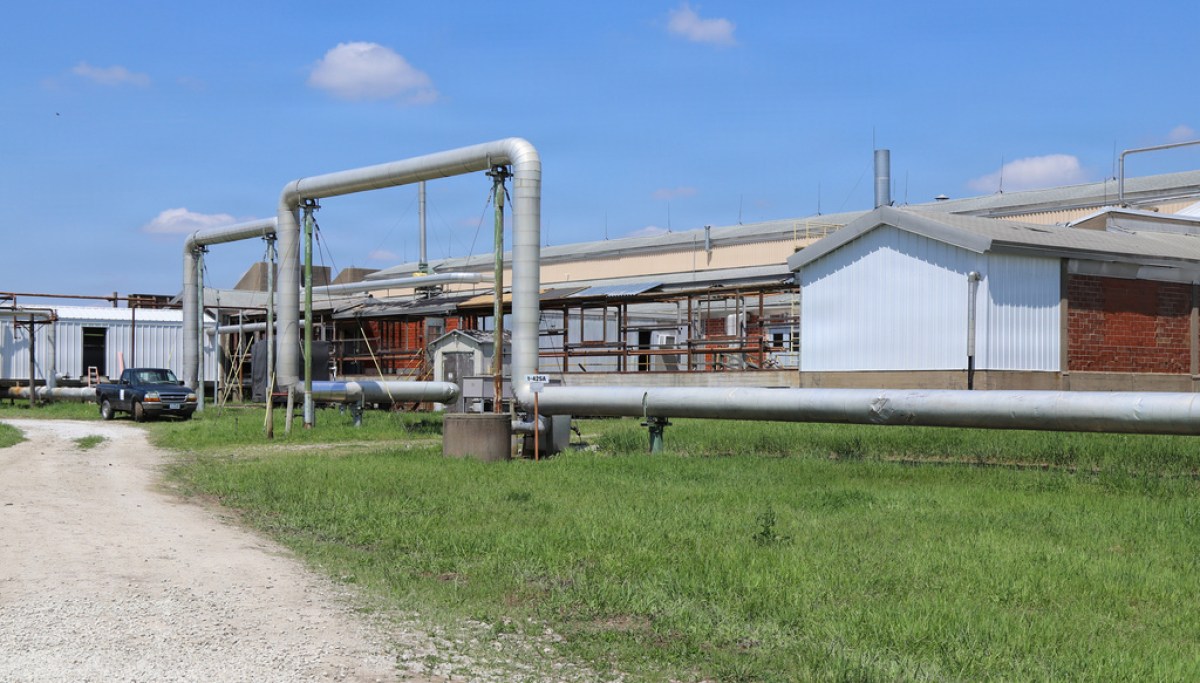
The Army announced on Sunday that it will detonate 5 tons of degraded lead azide Wednesday at a World War II-era ammunition plant in Iowa, marking the latest development in a saga that sparked intense debate over the merits of the planned operation.The operation at the Iowa Army Ammunition Plant in Middletown was originally scheduled for Friday but was delayed until Monday as the 8th U.S. Circuit Court of Appeals weighed a lawsuit. A judge issued a temporary stay on the Environmental Protection Agency permit allowing the blast, with the Army later changing the planned detonation to Tuesday, and finally Wednesday “to allow for optimal weather conditions and all mitigation measures to be emplaced.”Though the blast at the plant could send a plume of toxic lead dust into the air that could potentially settle on homes and farmland miles away, the Pentagon said it would carry out the detonation on an emergency basis, arguing that the EPA’s regulations allow the Army’s planned action without the need for a permit. What is lead azide? Lead azide is used to detonate explosives in military munitions. The chemical compound is made of lead and nitrogen.There are 68 barrels of degraded lead azide at the Middleton site, which officials say cannot be relocated for detonation elsewhere because the material is unstable.The blasts could send lead dust carried by the wind across eastern Iowa and into western Illinois. The dust could settle across an area about 25 miles long and 5 miles wide, according to the Army’s modeling.This photo provided by the U.S. Army shows the Iowa Army Ammunition Plant in Middletown, Iowa, on May 14, 2024. (Shawn Eldridge/U.S. Army via AP) Why is it unstable? Lead azide is easily triggered by heat, shock, and friction. As the material ages, it can become even more unstable if it forms a crystalline substance during degradation.The kegs of lead azide have been sitting at the Iowa Army Ammunition Plant for years, allowing it to recrystallize within its containers. That means the kegs are in danger of exploding at any time, according to the EPA. Frigid weather makes the material even more unstable, leading officials to warn that the planned detonation in Iowa must take place imminently before temperatures in the area drop below freezing.“The choice therefore is not between a detonation and no detonation. It is between a planned detonation (timed for favorable weather, preceded by public notice, and followed by monitoring and cleanup) and an unplanned explosion that could come at any moment, with no warning and no safeguards,” Justice Department lawyers wrote in court documents. “EPA’s regulations allow the Army’s planned action without the need for a permit.”The legal battle: environmental concerns The EPA issued a permit effective Nov. 13 that authorized a controlled detonation “to safely manage the explosive hazard and mitigate the imminent threat to the surrounding community and the environment.”Two environmental groups swiftly sued to stop the planned detonation, claiming that the Army did not promptly and accurately inform the public of the detonation and its impact. The Iowa Environmental Council and the Sierra Club filed a lawsuit in the U.S. Court of Appeals for the 8th Circuit, arguing the Army would put communities at risk by detonating the lead azide “in the open.”Though the court granted the emergency stay on the detonation on Nov. 19, the Army said in a Nov. 21 filing that it would use emergency powers to continue with the blast, citing the “immediate risk” posed by the unstable lead azide. “[It] could be the case that the U.S. Army has no other safe alternative to disposing of the toxic lead azide,” Iowa Environmental Council Executive Director Sarah Green said last Thursday. “But our federal government needs to do better at communicating the potential health risks of lead contamination in our communities and providing more time to keep our communities and vulnerable groups safe, like children and pregnant women.”What are key politicians saying? Outgoing Gov. Kim Reynolds (R-IA) has backed the Army’s decision to detonate the material. She activated Iowa’s State Emergency Operations Center on Friday, spearheading meetings with state and federal partners ahead of the operation. The state’s Department of Natural Resources will independently review environmental monitoring data collected before, during, and after the detonation, according to Reynolds.“While the detonation is a federal operation, it’s important for the state to be engaged in the preparation process so we can support the work of our federal partners in responding to the needs of Iowans,” the governor said over the weekend. “Protecting the health and safety of our people and communities is our highest priority.”Gov.-elect Rob Sand (D-IA) condemned the Pentagon for creating a situation where “no good options exist,” while Zach Lahn, the Republican candidate who lost the gubernatorial race to Sand earlier this month, has been vocal about why “the problem compounded for decades.”“Because of the decisions that have already been made over the course of months, if not years, no good options exist and the situation is more dangerous and unpredictable than it ever should have been,” Sand said Sunday. “Iowans deserve transparency over how we got here, then answers and accountability to stop this from ever happening again.”Lahn said he believes the government is “looking at every available alternative” after speaking with Health and Human Services Secretary Robert F. Kennedy Jr., the White House, and Vice President JD Vance’s team.Both of the state’s U.S. senators have also weighed in on the situation, expressing concerns and questions about why the lead azide was allowed to recrystallize.“The Army is responding to the questions and concerns I’ve shared from Iowans. I’ve emphasized the need for increased communication,” Sen. Chuck Grassley (R-IA) said.MIDWEST GOVERNORS REASSURE PUBLIC AS ARMY PLANS IOWA LEAD EXPLOSION“I remain concerned about the potential health risks resulting from the U.S. Army’s planned detonation in Middletown and the lack of clear communication and transparency from the U.S. Army,” Sen.-elect Josh Turek (D-IA) said Sunday evening. “We need a full investigation into why this stockpile of lead azide, which has been at IAAAP for decades, was allowed to degrade into this critical state.”The fact that this explosion is taking place in Iowa is particularly notable. Iowa has the second-highest rate of new cancer diagnoses in the country and is one of just three states seeing a rise in diagnoses, according to the Iowa Cancer Registry. Questions about agricultural chemicals and contaminants in Iowa’s water were major issues during the midterm elections and contributed, in part, to Sand and Turek’s wins.
Iowa lead explosion: How did we get here?
Full Article
Original Source
Read the full article at Washingtonexaminer →KhanList aggregates and links to publicly available news content. We do not host full articles from third-party sources. Always verify important information with original sources.