
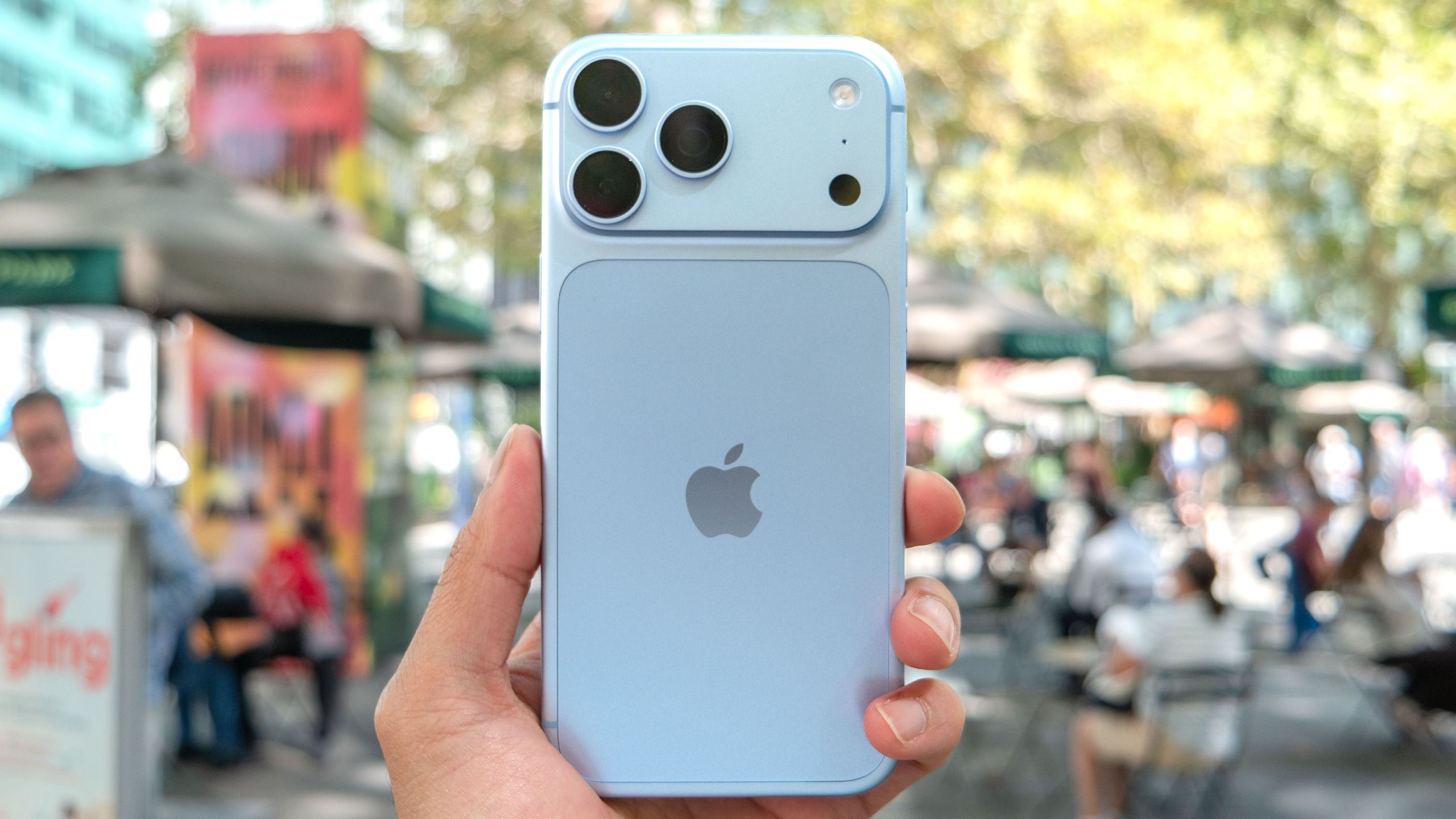
(Image credit: Tom's Guide) Back in March we heard rumors that Apple could add an important anti-theft feature to iPhones: the ability for iOS to lock everything down in the event your phone is snatched out of your hands. While I had hoped that such a feature could launch with iOS 27, that hasn't happened — but it doesn't mean anti-snatch protection is dead in the water.Code discovered in the newly released iOS 27.2 beta reveals that Apple could still be working on this feature — as well as what signals could end up triggering it in the real world.Google launched something similar last year, known as Theft Detection Lock, and I'm glad to see that Apple is still powering ahead with its own version. Considering how much we have on our phone, and how easy they are to steal, there's no such thing as having too much protection from thieves and other criminals.How Apple's anti-snatching feature might work (Image credit: Tom's Guide)Android's Theft Detection Lock works by detecting sudden changes in your device, using the internal sensors. So if it notices your phone suddenly jerks in one direction and takes off at speed, odds are someone has snatched your phone and started running off with it.We assumed that Apple's version would work in a similar manner, but the uncovered code offers a little bit of detail about how iOS will register possible thefts.Code snippets seen by 9to5Mac shows that the theft detection is internally known as "AutoLock," though there's no guarantee that Apple will actually use that name for the public launch. The code also suggests that AutoLock will rely on five key signals to determine whether a phone has been stolen or not.The first trigger is the presence of a "sharp acceleration" that is "consistent with a phone being snatched." Or, in other words, the internal sensors detecting your phone moving in a way that is inconsistent with typical use. Connectivity to the Apple Watch is also considered, including a paired watch not being reachable for an extended period, and general loss of connectivity to that watch. Presumably if that loss of contact is very sudden, then the AutoLock feature will realize something is up.Sign up to the Tom's iGuide weekly newsletter with coverage on everything from product launches to software updates, this is your go-to source for the latest updates on all the best Apple content. (Image credit: Tom's Guide)The code also refers to being disconnected from the network for extended periods. This would be consistent with thieves switching a phone into Airplane mode in an attempt to evade Find My Device — either for tracking or remotely locking down the phone.Finally it's said that AutoLock could engage when a device has been unlocked beyond a specific time interval. This suggests that there may be circumstances where AutoLock can engage after being snatched, rather than during the process — the way Android's version of the feature does.The code also makes reference to safeguards designed to avoid false positives, including location-based systems that would prevent AutoLock engaging in familiar locations like home ort work — similar to how Apple's Stolen Device Protection works. Other safeguards mention a veto system, in which certain features can override a request to AutoLock, biometric authentication, and a "backoff mechanism" that temporarily prevents automatic locks after repeated AutoLock events.Naturally, this feature is still a work in progress, and that means things can (and likely will) change between now and the official release. So don't expect the final feature to arrive in this exact form, whenever that day might actually be.Why it's important to have(Image credit: Future)I doubt there's anyone reading this that hasn't heard about phone snatching, and many of you may have experienced it first hand. It's become quite a problem, especially in big cities and places with lax enforcement of rules regarding ebikes and mopeds.It certainly doesn't help that we use our phones so much, and some people tend to wander around with their phones out, oblivious to the fact that they're putting their device at risk. Last time my wife and I both went to London, I repeatedly had to tell her to put her phone away because she has the awful habit of absentmindedly wandering around with her phone by her side. It's a problem made worse by the fact it's so hard to find women's clothing with phone-friendly pockets.Really, we should know to keep our phones more secure. Not only are they expensive devices, the amount of data we keep in them is arguably worth more than the hardware itself. Banking apps, social media, personal photos and videos, the list is endless. The last thing you need is for someone to snatch your phone and gain access to all that data, simply because your phone was unlocked at the wrong moment. (Image credit: Tom's Guide)Obviously staying vigilant, and ensuring your phone is not exposed unnecessarily is always going to be the best way to avoid drive-by phone snatching. But it's foolish to assume that you can stay safe 100% of the time, and there will be points where you need to use your phone and your guard is down just enough for an opportunistic thief to swoop by and grab it from your hands.Having a system that locks your phone down means it's that bit harder for a thief to access your data, or attempt to wipe the phone and sell it on for a profit. Crucially it gives you a little more time to find a way to get into Find My Device and lock the device down — significantly reducing its value to the potential thieves.AutoLock wouldn't be the only system helping to safeguard your data. Stolen Device Protection has measures to stop potential thieves from accessing key areas of your device — including Find My settings, your Apple account and factory reset. Most importantly, it also works if the thief knows your PIN, since it relies on biometric security. Apple also forces your iPhone to restart after 72 hours of inactivity, which encrypts your device and makes it even harder for thieves to try and break in.Replacing a phone sucks, especially if it isn't covered by AppleCare+ or some other form of insurance. But the cost of a new phone pales in comparison to the cost of losing control of your accounts and data.Bottom line (Image credit: Shutterstock)It's important to keep tabs on your phone, no matter where you are or how secure you might feel in the moment. Constant vigilance is a nice idea in theory, but it's not realistically possible. For that reason, it's great that phone companies are continually adding features to keep your devices secure, and lock everything down in the event that your phone is stolen.I'm mainly an Android user, and I've lost track of the number of times I've looked at my phone and been met with a notification telling me the screen has auto-locked because it thought someone was stealing it. Some may find that slightly irritating, but not me. Considering how easy it is to unlock a smartphone with biometrics (be it a fingerprint or Face ID), I'd rather the software be a little more cautious and ask me to unlock my phone again than face the alternative.And the sooner Apple implements that feature on iPhones, the better. (Image credit: Future)Follow Tom's Guide on Google News and add us as a preferred source to get our up-to-date news, analysis, and reviews in your feeds. Make sure to click the Follow button!More from Tom's Guide Android president on Apple's iPhone Duo: 'I'm glad to see more people joining what is now the obvious party'Forget iPhone 18 Pro — 9 reasons to wait for the iPhone 20I finally unlinked my iPhone alarm from my ringer volume — here is where Apple hid it in iOS 27 Tom is the Tom's Guide's UK Phones Editor, tackling the latest smartphone news and vocally expressing his opinions about upcoming features or changes. It's long way from his days as editor of Gizmodo UK, when pretty much everything was on the table. He’s usually found trying to squeeze another giant Lego set onto the shelf, draining very large cups of coffee, or complaining about how terrible his Smart TV is.
iOS 27 didn't add this anti-snatching feature to iPhone, but that doesn't mean it's been cancelled — here's why it's important
Full Article
Original Source
Read the full article at Tomsguide →KhanList aggregates and links to publicly available news content. We do not host full articles from third-party sources. Always verify important information with original sources.