
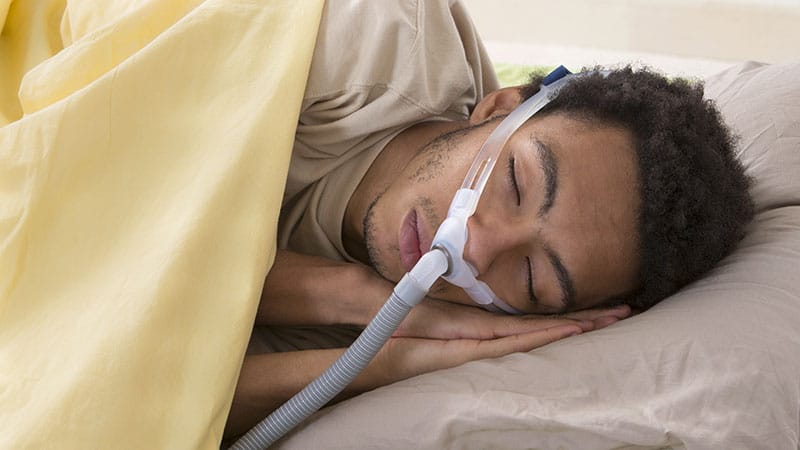
The investigational weight-loss drug retatrutide (Eli Lilly) significantly reduced obstructive sleep apnea (OSA) severity in adults with overweight or obesity, with or without type 2 diabetes, in two phase 3 randomized trials.At 80 weeks, patients receiving once-weekly subcutaneous retatrutide had substantially greater reductions in breathing interruptions during sleep than those receiving placebo, along with marked weight loss.“Retatrutide treatment enabled more participants to have remission of OSA or mild OSA without excessive daytime sleepiness,” reported the investigators, led by Ronald R. Grunstein, MD, PhD, of the Woolcock Institute of Medical Research and Macquarie University in Sydney, Australia.The results were published online on October 21 in The New England Journal of Medicine and presented at the 28th Congress of the European Sleep Research Society.Significant Reductions in Sleep ApneaRetatrutide is a triple hormone receptor agonist targeting GIP, GLP-1, and glucagon receptors.The two double-blind, placebo-controlled trials — TRIUMPH-1-OSA and TRIUMPH-2-OSA — enrolled adults with moderate-to-severe OSA and BMI ≥ 27. TRIUMPH-1-OSA included 243 participants without type 2 diabetes, while TRIUMPH-2-OSA included 448 participants with type 2 diabetes.Participants were randomly assigned to receive once-weekly subcutaneous retatrutide at doses of 4 mg, 9 mg, or 12 mg, or placebo, plus lifestyle counseling. The primary endpoint was change from baseline to week 80 in the apnea-hypopnea index (AHI) for the 9-mg and 12-mg doses.At baseline, most participants had severe OSA, with a mean AHI of 58.6 events per hour in TRIUMPH-1-OSA and 55.9 events per hour in TRIUMPH-2-OSA.Among those without diabetes, AHI decreased by an average of 34.3 events per hour with retatrutide 9 mg and 31.7 events per hour with 12 mg compared with a reduction of 9.9 events per hour with placebo (P < .001 for both comparisons).For patients with type 2 diabetes, the corresponding decreases were 24.7 and 25.4 events per hour with the two higher doses, respectively, compared with 10.3 events per hour with placebo (P < .001 for both). The 4-mg dose also significantly reduced AHI compared with placebo in both trials.At 80 weeks, 51.6% of participants without diabetes receiving the 9 mg dose achieved OSA remission (AHI < 5 events/h) or mild OSA (AHI 5-14 events/h) without excessive daytime sleepiness compared with 12.5% of those receiving placebo. The corresponding proportions among participants with diabetes were 39.5% and 12.6%.Benefits Beyond Weight LossRetatrutide also produced substantial reductions in body weight. Among participants without diabetes, mean weight loss at 80 weeks was 22.2% with the 9-mg dose and 20.6% with the 12-mg dose compared with 4.8% in the placebo group. Among those with diabetes, mean weight loss was 17.9% and 18.5%, respectively, compared with 5.6% in the placebo group.The drug also significantly reduced sleep apnea-specific hypoxic burden, a measure that captures the frequency, duration, and depth of oxygen desaturation associated with respiratory events during sleep. At the 9-mg and 12-mg doses, hypoxic burden fell by approximately 63%-75% across the two trials compared with 26%-30% with placebo.Higher hypoxic burden has been associated with increased cardiovascular morbidity and mortality, the authors noted. However, whether the reductions associated with retatrutide translate into improved long-term cardiovascular outcomes is currently unknown.Patient-reported sleep-related impairment also improved significantly with the two higher doses of the drug vs placebo in participants with type 2 diabetes, but not in patients without diabetes.The safety profile was generally consistent with previous retatrutide studies. Gastrointestinal adverse events, including diarrhea, nausea, and constipation, were most common and generally mild to moderate. Serious adverse events occurred in 8% of retatrutide groups in each trial compared with 10% of placebo recipients. One case of adjudication-confirmed pancreatitis occurred with retatrutide.Is Continuous Positive Airway Pressure (CPAP) Still Necessary? The new findings build on the SURMOUNT-OSA trials, in which tirzepatide, a dual GIP and GLP-1 receptor agonist, significantly reduced both sleep apnea severity and body weight in adults with obesity and OSA who did not have type 2 diabetes.Sanjay R. Patel, MD, MS, pulmonologist with expertise in obesity and OSA based in Pittsburgh, said the TRIUMPH OSA trials “largely reinforce the importance of weight loss as an important treatment strategy” for this patient population.The trials extend earlier evidence to patients with type 2 diabetes and demonstrate sustained benefits through 80 weeks, said Patel, who wasn’t involved in the trials.He noted that without head-to-head trials it’s not possible to know whether retatrutide offers any advantages over tirzepatide. “Both seem to work well in producing weight loss and thus reducing OSA severity in patients with OSA and obesity.”Indira Gurubhagavatula, MD, MPH, who also wasn’t involved in the trials, said pharmacologic weight loss represents an important advance for patients with OSA, particularly because sustained weight loss is difficult to achieve through lifestyle changes alone.“Medical management of obesity is a meaningful advance for our many patients who struggle to lose weight,” said Gurubhagavatula, professor of sleep medicine at the University of Pennsylvania’s Perelman School of Medicine in Philadelphia.For patients whose OSA improves substantially with weight loss, Patel suggested pausing CPAP for about 2 weeks to reassess symptoms. If sleep quality worsens, daytime fatigue increases, or snoring returns, then it should resume.If they feel well after 2 weeks without CPAP, a home sleep test to reassess OSA severity would be reasonable before deciding next steps, Patel said.Gurubhagavatula cautioned that substantial weight loss alone doesn’t necessarily mean OSA has resolved.“We don’t want to miss residual OSA,” she said, noting that even mild disease can fragment sleep, activate the sympathetic nervous system, and cause persistent symptoms. She recommended repeat sleep testing after significant weight loss to guide future treatment decisions.She also called for more research to better understand why weight loss substantially improves OSA in some patients but not in others and whether incretin-based drugs ease poor sleep quality or daytime sleepiness through mechanisms independent of weight loss. The studies were funded by Eli Lilly, which participated in trial design, conduct, data analysis, and manuscript preparation. Several coauthors are Eli Lilly employees. Additional author disclosures are available with the published article. Patel reported receiving consulting fees from Apnimed, SleepRes, Bayer Pharmaceuticals, and Powell Mansfield, among other industry relationships. Gurubhagavatula had no relevant disclosures.
Investigational Med Tied to Major Reduction in OSA Severity
Full Article
Original Source
Read the full article at Medscape →KhanList aggregates and links to publicly available news content. We do not host full articles from third-party sources. Always verify important information with original sources.