
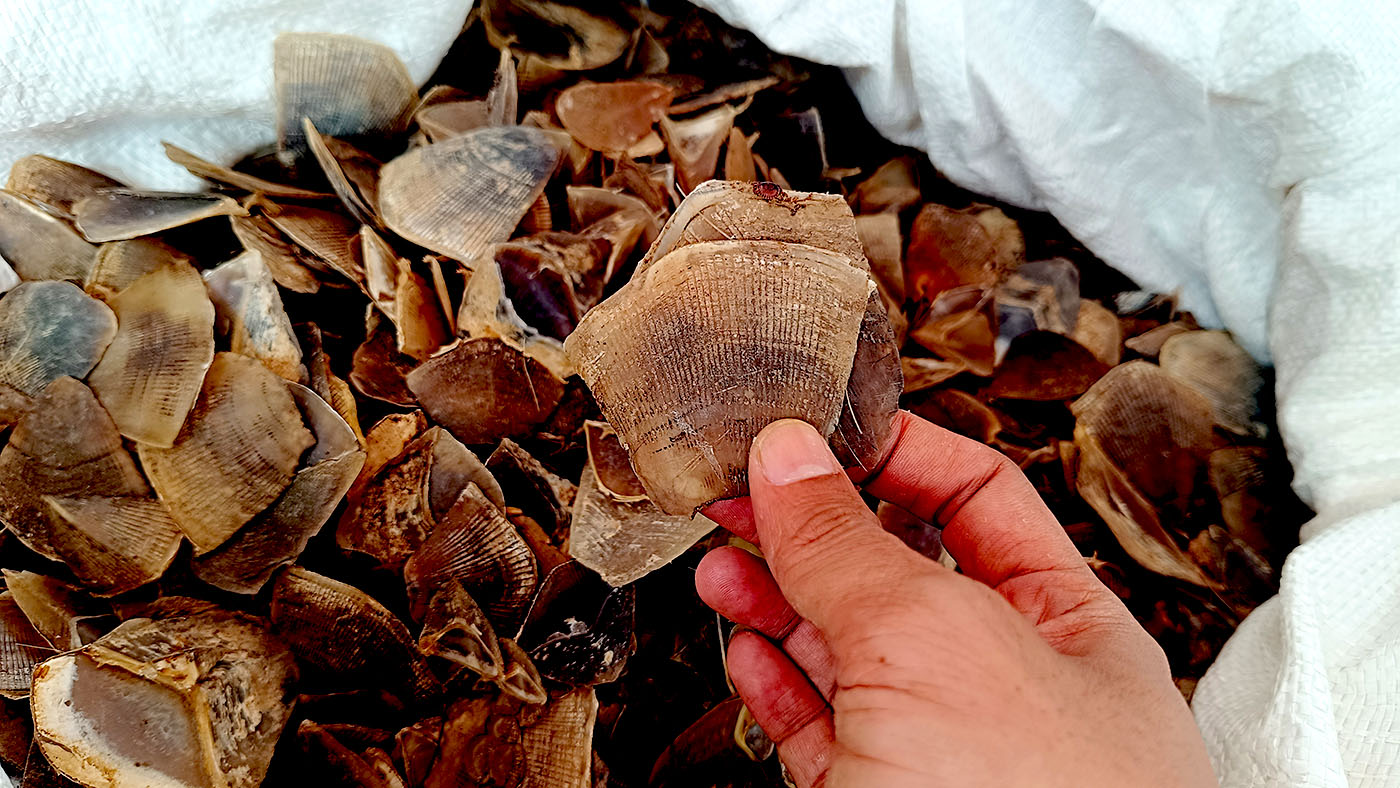
Authorities in Indonesia have secured a conviction and previously arrested a Vietnamese national as part of an investigation into alleged smuggling of wildlife across borders in Southeast Asia.In February, customs officials at Tanjung Priok port in Jakarta uncovered more than 3 metric tons of pangolin scales in a shipping container en route to Cambodia from Indonesia’s largest seaport.All eight species of pangolins are threatened and their trade is proscribed by CITES, but demand for pangolin scales by Chinese traditional healers has created a major hunting market and criminal supply chain across much of Africa and Asia. JAKARTA, Indonesia — Indonesian investigators say they expect further developments in a major wildlife trafficking case after an intermediary was sentenced to nine years in prison over the discovery of 3.05 metric tons of pangolin scales at the country’s largest port in February this year. “We’re continuing to expand the investigation to dismantle this illegal trade network, including the actors behind it,” said Bambang Ari Wibowo, investigation lead for Java, Bali and Nusa Tenggara at Gakkum, the law enforcement division of Indonesia’s forestry ministry. In October, a court in Indonesia’s capital handed down a nine-year custodial sentence to Tonny Tumbelaka, a middleman in an organized crime group’s attempt to smuggle more than 3 metric tonnes of pangolin scales from Jakarta to Cambodia through Tanjung Priok port. Prosecutors proved that Tonny arranged for the pangolin scales to be transported to a warehouse in Cakung, in east Jakarta, for concealment among sea cucumbers and instant noodle cartons before planned export to Cambodia. Tonny also received a 1 billion rupiah fine, equivalent to around $55,000. The sentence was two years shorter than the 11-year prison term sought by prosecutors, who also recommended a fine of 2 billion rupiah. Tonny Tumbelaka, a defendant in the smuggling of 3,053 kilograms (6,731 pounds) of pangolin scales, was sentenced to nine years in prison and fined 1 billion rupiah (around $55,000) at the North Jakarta District Court. Image by Muhammad Wildan Al Gifari. Test of law enforcement Civil society organizations noted that the nine-year term was lengthy by the standards of wildlife-trafficking cases in Indonesia. On Feb. 18, Indonesian customs officials inspecting a suspicious shipping container declared to hold sea cucumbers and instant noodles found 99 boxes containing 3,053 kilograms (6,731 pounds) of dried pangolin scales. The consignment, which customs valued at the time at 183 billion rupiah ($10.1 million), had been concealed in separate storage compartments. Pangolins are trafficked for traditional medicine in China and parts of Southeast Asia. The animals’ scales are made of keratin, the same protein found in human hair and nails, and have no medicinal benefits. All eight known species of pangolin are classified as threatened on the IUCN Red List and are protected under Appendix I of the CITES treaty, which prohibits all international commercial trade in the animals. Researchers at Indonesia’s Bogor Institute of Agriculture and the Ministry of Forestry estimate each kilogram of pangolin scales represents perhaps five animals, suggesting the seizure of more than 3 metric tonnes in February could have come from as much as 15,000 dead pangolins. In Indonesia, the critically endangered Sunda pangolin (Manis javanica) is protected by law, making trade in the species a criminal offense. Civil society on alert Geopix wildlife campaigner Annisa Rahmawati told Mongabay Indonesia that confronting the illegal wildlife trade required a change in public awareness, action to prevent the trade being conducted on social media platforms and a crackdown on criminal actors. “A true deterrent effect is created when no-one in the trafficking chain feels safe,” Annisa said. The conviction of Tonny Tumbelaka in Jakarta in October was the first major outcome of an investigation into the network behind the 3-ton pangolin scale shipment. “The defendant was merely responsible for arranging the shipment of the pangolin scales,” said presiding judge Sorta Ria Neva, as she read out the verdict in October. “The defendant is of advanced age, and he has no prior convictions,” Sorta added. The conviction of Tonny followed the arrest of a Vietnamese national in the city of Pontianak in West Kalimantan province in August. “We also continue to pursue the other perpetrators,” investigator Bambang told Mongabay Indonesia. An officer displays seized pangolin scales that were intended for smuggling to Cambodia. Image courtesy of Tanjung Priok Customs. Detectives have previously issued summons to another person of interest for questioning in the case, but that individual has so far failed to appear. “The plan is to pick him up to be brought before investigators,” Bambang told Mongabay Indonesia on Oct. 27. Solu Batara, lead at the environment ministry’s law enforcement agency, Gakkum, for the same region, said investigators were coordinating with other agencies to identify senior figures in the trafficking network. “Of course, we will work with other agencies to pursue the main actors,” Solu told Mongabay Indonesia. The 3-ton case follows other significant pangolin trafficking raids in 2026, including a 780-kg (1,720-lb) seizure by the Indonesian Navy in April. In 2025, serving military and police officers were convicted for stealing pangolin scales from a police evidence room in Asahan, North Sumatra province. Separately, authorities in North Sumatra province on Nov. 5 destroyed 779 kilograms (1,717 pounds) of pangolin scales and other wildlife parts seized in illegal hunting and trafficking cases across North Sumatra in recent years. The evidence also included body parts of Sumatran tigers and sun bears. Geopix’s Annisa said that in addition to prosecuting everyone responsible in the Jakarta smuggling case, investigators must raise the capacity of law enforcement to make future trafficking harder, adding that the 3-ton case in Jakarta reflected an extraordinary ecological crime. “Tens of thousands of pangolins, an animal of this country, have died horribly, slaughtered and had their scales removed,” Annisa said. “Pangolins have no say in their fate; we are the ones who can speak out and bring justice to them.” Banner image: Pangolin scales totaling 57 kilograms (123 pounds) seized from a perpetrator in South Kalimantan. Image by Rendy Tisna/Mongabay Indonesia. This story was first published here in Indonesian on Nov. 1, 2026. Pangolin scale lawsuit in Indonesia could shake up how wildlife traffickers pay Jakarta port authorities seize 3 tons of pangolin scales in Cambodia-bound container Credits Topics
Investigation continues in Indonesia after first conviction in 3-ton pangolin trafficking case
Full Article
Original Source
Read the full article at News →KhanList aggregates and links to publicly available news content. We do not host full articles from third-party sources. Always verify important information with original sources.