
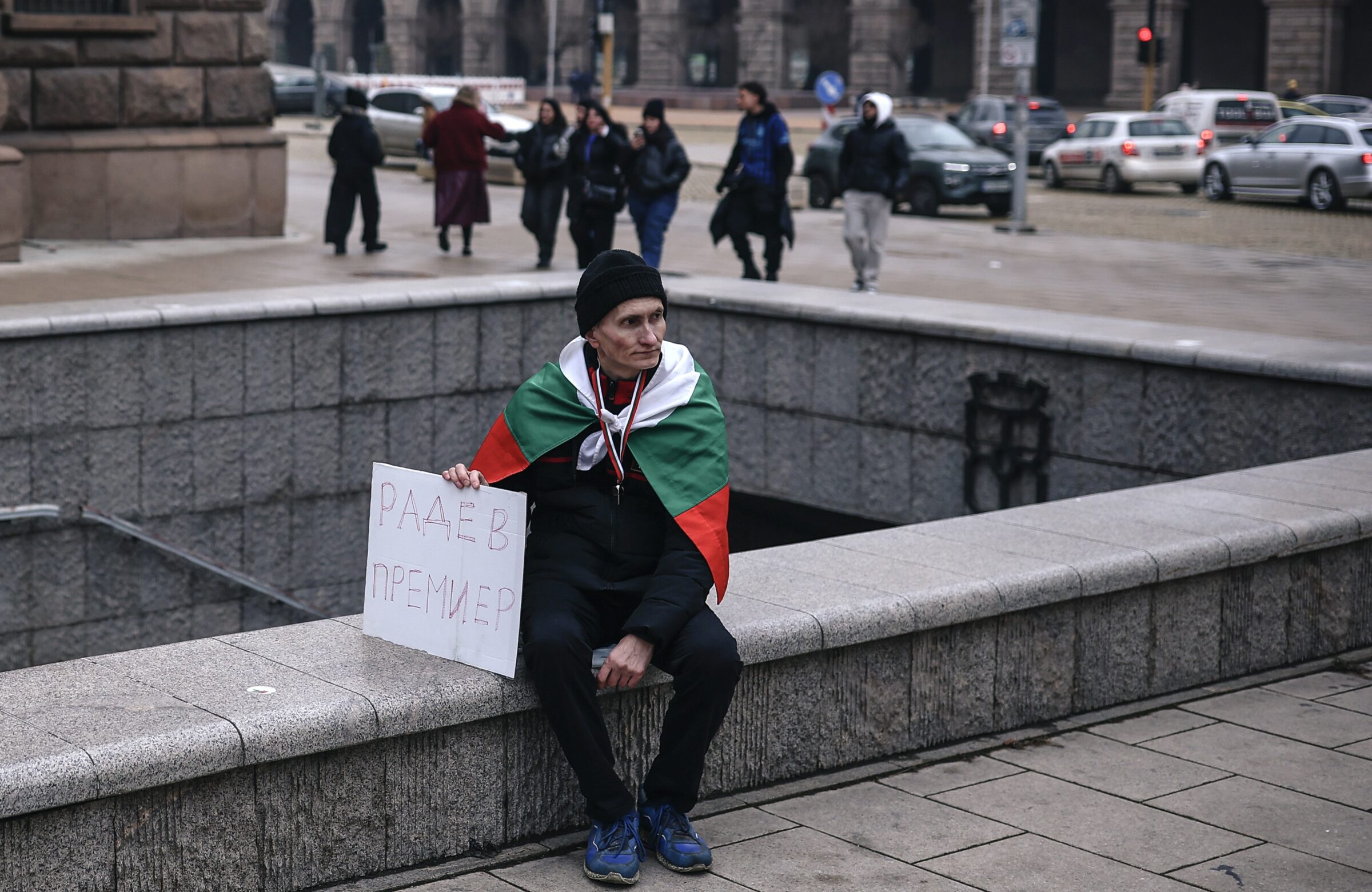
Incumbent president Iliana Yotova is leading Bulgaria’s 2026 presidential election race, alongside her running mate, Kiril Vulchev, securing 47.3 percent support among likely voters, according to a poll released on Wednesday (21 October). Andrei Gyurov, a former caretaker prime minister, and his running mate, Georgi Kandev, rank second with around 30 percent. Leaving the pro-Russian Kostadin Kostadinov and Petar Volgin is in third place on just over ten percent. Bulgaria is voting on Sunday (25 October) and the vote can be seen as “a test of the government’s stability”, according to Ivaylo Iliev, a political scientist, with whom we analyse Bulgarian presidential elections in three points. 1. A test of the government’s stability The election could consolidate political influence around prime minister Rumen Radev, or expose the limits of his camp’s support. The PM’s Progressive Bulgaria, which secured a parliamentary majority in April 2026, is facing criticism over its budget plans and handling of security threats. Recent attacks on merchant vessels in the Black Sea have raised questions about Bulgaria’s ability to protect its interests and reassure its allies. Iotova, who served as Radev’s vice-president for nine years, is closely associated with the prime minister. And her victory could be interpreted as an endorsement of the governing camp. “Radev has his candidate in these elections and he is obviously the favourite to win a second round,” Iliev says. However, the Black Sea attacks have “definitely negatively affected both” Iotova’s campaign and public confidence in the government’s security response, he adds. The government’s response, alongside its nuanced position on Russia’s war against Ukraine, may appeal to voters sceptical of confrontation with Moscow. At the same time, it also risks complicating Bulgaria’s relations with its European and Nato partners. "Radev demonstrates two different types of behaviour", says Iliev. On the domestic front, he is "balanced", "vague" or even "without specifics", Iliev says. For Radev does not want "to cause discontent among his pro-Russian voters". On the foreign policy however, Radev is more seeking to get as close as possible to the European consensus, but "with a minimal effort." 2. Taking the government to account? The second question is whether the presidency can act as a counterweight to the executive or will reinforce the same centre of political influence. Gyurov’s campaign has warned against putting “all the eggs in one basket”. Concentrating power around Radev and Iotova could weaken independent scrutiny he says. A Gyurov victory could give the presidency a more "independent voice", says Iliev. However, institutional checks and balances do not necessarily translate into electoral support.
[Interview] Bulgaria’s presidential election becomes a test of Rumen Radev’s grip on power
Full Article
Original Source
Read the full article at Euobserver →KhanList aggregates and links to publicly available news content. We do not host full articles from third-party sources. Always verify important information with original sources.