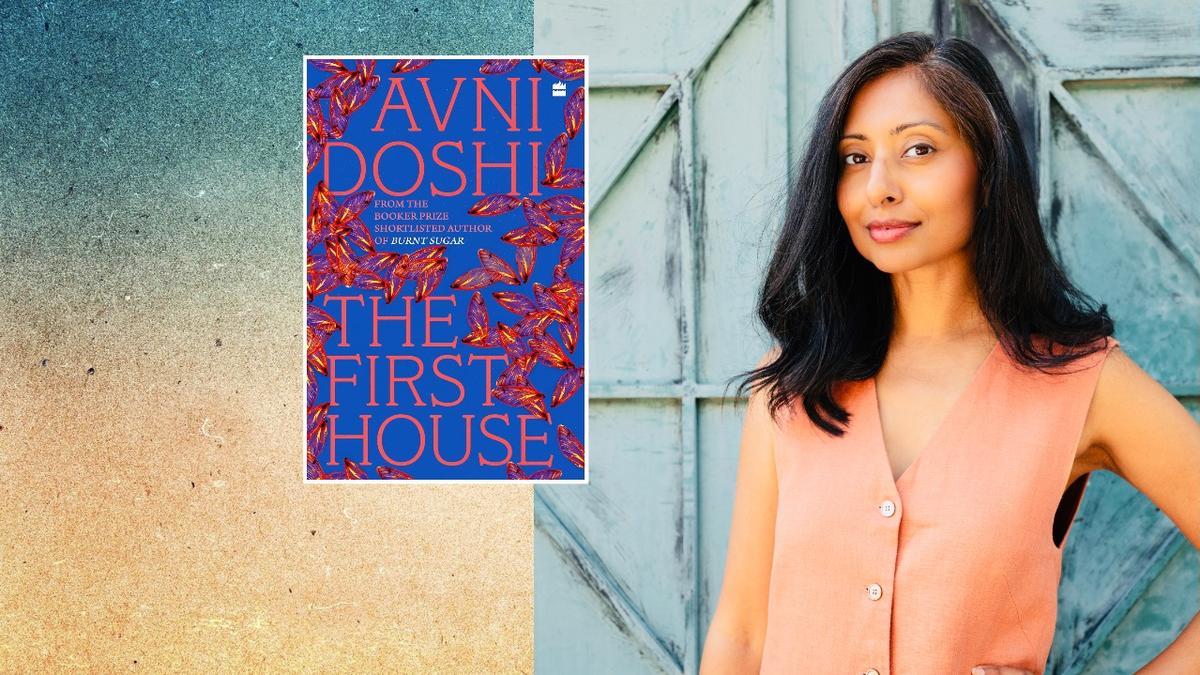
The Booker-shortlisted author of Burnt Sugar (2019) returns with a hypnotic second novel rich with mythological goddesses, headless women and astrological motifs. In The First House (published by HarperCollins), Avni Doshi, who is based in Dubai, lays bare the anatomy of intimate relationships and the upheaval of self-transformation that looks to deities and nature for meaning. Edited excerpts from an interview: How did the novel come about? I had an idea about a family and a divorce, and there were various elements I had a sense of. I was living in this strange mid-life moment, seeing everyone around me in various forms of crisis, and what became apparent was that something shifts at mid-life. This one way in which we live, which is outwardly focused, ticking all the boxes, doing everything your parents wanted you to do or doing everything society wanted you to do, suddenly no longer has any meaning. I wanted to write about this in a more dramatic form, which included this divorce and this relationship with the family. In the novel, there is this idea of the process of transformation being ugly, with cicadas as a reference over the typical butterfly from a cocoon. Can you elaborate on this? There are so many interesting things about their metamorphosis. They don’t disappear into this polite cocoon that is almost like a dressing room, where they can close the door, and there’s nice lighting when they emerge, and it is elegant. With cicadas, there is this vampire, horror-film quality. The back breaks; the cicada almost stands upright like Dracula coming out of the coffin, like it is being raised from the dead. Even the way the exoskeleton remains — like a phantom of the old self. It’s still there; you’re still haunted by the old self. I thought this is what it looks like when we change. Given the themes in the novel, what are your thoughts on women being boxed into domesticity and how that relates to labour? There are many feminist writers that have influenced me. I’m really interested in Silvia Federici. I think it is this interesting, insidious trick of capitalism where everything is labour, all labour has a value, and we are all paid for our labour. The only arena where that is not the case is motherhood. Motherhood stands apart from every other sort of actor within the capitalist system. Motherhood and the raising of children, which is, if you look at it, the raising of citizens, is held apart. I was interested in playing with this way in which we essentialise nature into beauty, the way we essentialise beauty and womanhood, and motherhood into the natural. It is this trick, this conditioning, this way of framing that positions women and their work that it can never be compensated. That there can be no remuneration for work that is of one’s nature. To me, it is sort of a setup to keep women enslaved by their biology under patriarchy. Were there any goddesses and myths that inspired you while writing ‘The First House’? With mythology, when I was younger, I thought a lot about the Ramayana. Something shifted when I started to hear more of the stories from the Shakta traditions. The story of Shiva and Kama — that has been a kind of interesting story to me. When I heard the story then told from the Shakta tradition, it became something totally different. I was interested in the Egyptian goddesses, the myth of Chhinnamasta — she beheads herself. All the Dasa Mahavidyas are fascinating. I am promiscuous, I’ll go any direction, any face the great mother wears, if that makes sense. After ‘Burnt Sugar’ (published in India as ‘Girl in White Cotton’), did you want to do family dynamics again? There is, of course, pressure when the first one does well, but when you are writing, the pressure evaporates. I am interested in very political things. One of the most fascinating ways to see a character’s politics is through their intimate relationships. You can stand up in front of people and give a great speech; you can get on a radio show and talk about politics, but how do you treat your wife at home, how do you raise your daughters? Family is where we are the most honest. I find that family dynamics are often the most interesting way of getting into the reality of a character. The interviewer is a writer and consulting editor exploring stories on books, culture and art. Published - July 31, 2026 06:05 am IST
Interview | Avni Doshi on midlife reinvention and family politics in ‘The First House’
Full Article
Original Source
Read the full article at Thehindu →KhanList aggregates and links to publicly available news content. We do not host full articles from third-party sources. Always verify important information with original sources.