
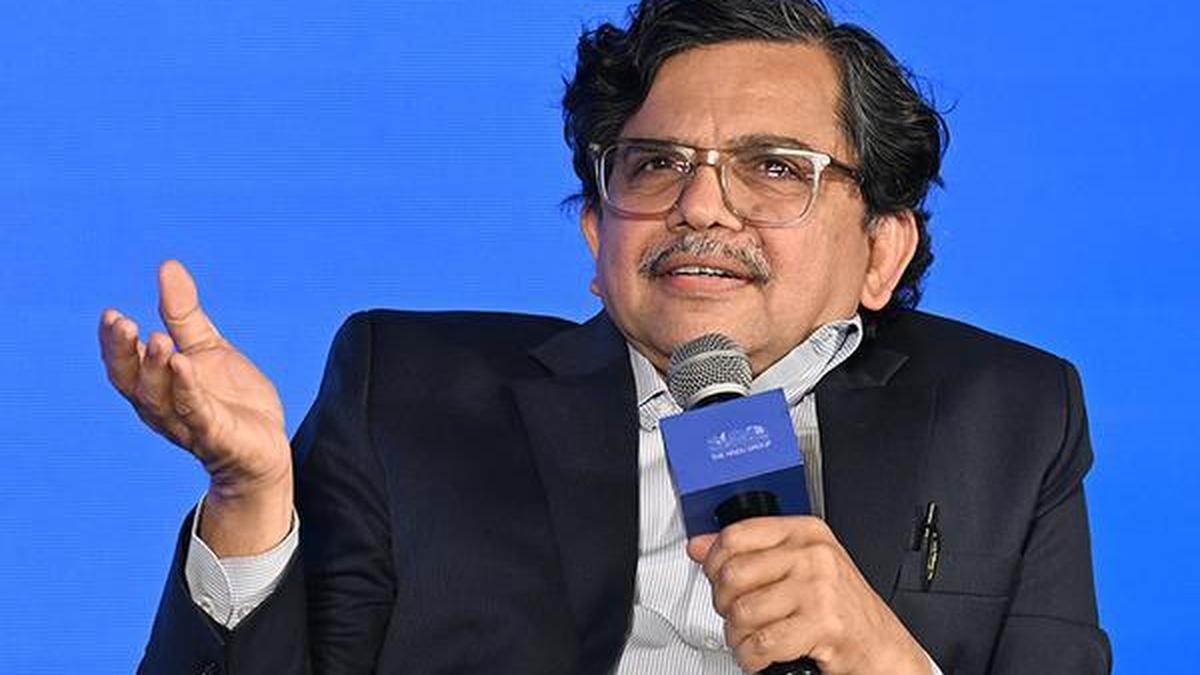
S. Muralidhar, former Chief Justice of Orissa High Court (file) | Photo Credit: R V Moorthy The unchecked expansion of digital technology is posing an increasingly serious threat to privacy, autonomy and civil liberties, former Chief Justice of Orissa High Court S. Muralidhar cautioned on Friday (September 4, 2026).He called for urgent intervention by human rights institutions to address the risks posed by the internet and artificial intelligence.Saving faces: On protests, biometric surveillanceInaugurating a colloquium on ‘Law, Technology and Human Rights’, organised by the Kerala State Human Rights Commission (KSHRC) in Thiruvananthapuram, Mr. Muralidhar said technological advances had brought enormous benefits, but had also made individuals increasingly transparent to governments and corporations.“The internet secures the past, makes the present vulnerable and the future unsafe for all of us,” he said.Also Read: Secret threats: On state surveillance and democracy He said the internet “remembers, it never forgets”, making it virtually impossible for individuals to erase mistakes, opinions, photographs or other personal information once they enter the digital ecosystem.Mr. Muralidhar expressed particular concern over the ability of governments and private corporations to build detailed profiles of the people from their digital footprints. Location, browsing habits, financial transactions, health information, personal preferences and social interactions could all be combined to create highly nuanced profiles, he said.“The net seems to know more about us than we know about ourselves,” he said, warning that such information could be used to target people and potentially weaponise law and state power.Slams DPDP ActHe also criticised the Digital Personal Data Protection (DPDP) Act, claiming that the exemptions available to the Central government raised serious questions about whether the legislation was genuinely centred on citizens’ rights.“The DPDP Act, since it exempts the State and gives power to the State to exempt certain entities from complying with its requirements, is really not a people-centred, user-centred Act at all,” he said.‘Civil death’The former Chief Justice added that the increasing dependence on digital identity systems could also result in “civil death”, where a person physically exists but loses access to essential welfare and services because their digital identity cannot be authenticated.“You may be physically alive, digitally dead. You may be physically dead, digitally alive. These are realities,” he said.He called for greater public awareness, particularly in local languages, about data protection and privacy rights. Human rights institutions, he said, should work with educational institutions, communities, software engineers and young people to spread awareness.Mr. Muralidhar also highlighted a growing global pushback among youngsters against smartphone dependence, including the formation of “offline clubs”. Urging students to reclaim time from their devices, he proposed an offline hour every day, gradually increasing it and encouraging young people to meet, play sports and interact without phones.“Don’t surrender yourself to the internet,” he said. “There are many more challenges in life.”Prominent human rights activist and lawyer Henri Tiphane also delivered an address. KSHRC chairperson Alexander Thomas presided over the programme. Commission judicial member K. Byjunath, member V. Geetha and secretary K.S. Sreeja also spoke on the occasion. Published - September 04, 2026 03:38 pm IST
Internet leaves citizens vulnerable to profiling and surveillance, says former Orissa HC Chief Justice S. Muralidhar
Full Article
Original Source
Read the full article at Thehindu →KhanList aggregates and links to publicly available news content. We do not host full articles from third-party sources. Always verify important information with original sources.