
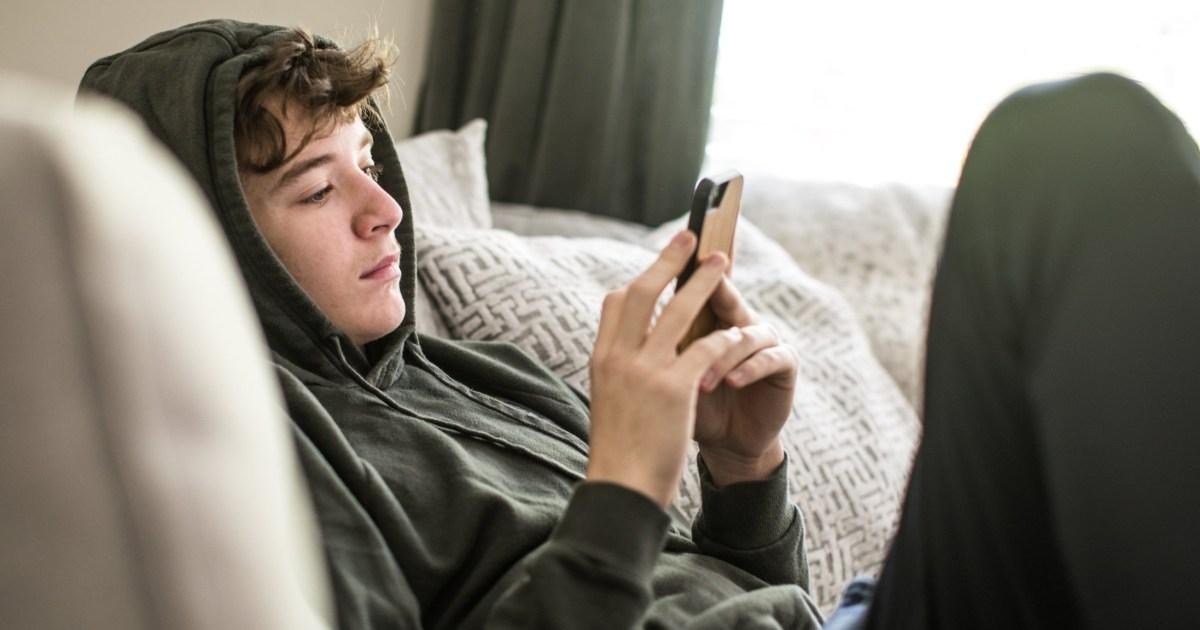
Social media can be very difficult for teens to navigate (Picture: Getty Images) Social media is awash with influencers who churn out misinformation to millions of users every month. Alarmingly, 94% of people have been exposed to these false claims online, and young people (10 to 21 year olds) are particularly vulnerable, given 96% of them use apps like TikTok, Instagram, Snapchat and X. In fact, 30 million people across the Britain now use teen app of choice, TikTok, each month. As a result, adolescents may find themselves unknowingly becoming victims of ‘internet introjects‘. The concept of introjection isn’t new. It was originally coined by Hungarian psychoanalyst Sándor Ferenczi in the early 1900s, before being built upon by psychologists like Sigmund Freud. Simply put, it’s when a person unconsciously internalises ideas, voices, messages, feelings or values from other people which, according to BACP psychotherapist Amanda McDonald, then ‘become their inner voice’. An introject is the person whose voice we are internalising and whose judgements or ideas we are adopting as our own. While obvious introjects are our parents, carers and friends, they can come in the form of internet influencers, who can spread positive, or indeed harmful, messages. And as teenagers, Amanda explains they’re particularly susceptible to introjection, because they’re trying to work out who they are. Your child can internalise values that are different from your own which is a natural part of their development (Picture: Getty Images) ‘As children grow up into adolescents, they’re developing their own values, but they have a real need to belong, and their need to belong is greater than any other point in life,’ Amanda tells Metro. ‘They’re looking for this outside of their family and it’s a necessary developmental stage.’ Ask Metro Use AI to go deeper into the stories you care about – powered by Metro and trusted publications. Andrew Tate is the obvious example, the manosphere influencer exploded in popularity on TikTok in 2021, and while he’s faded into the background in recent years, almost half (45%) of teachers across primary and secondary schools in the UK have described misogynistic attitudes and behaviour among boys as being a problem, in his wake. As a result, 54% of secondary school teachers also say that boys very or fairly often openly express misogynistic attitudes or behaviour in school. But it’s not just young boys falling victim to internet introjects. Young girls are listening to influencers who believe that physical appearance is the most important attribute a woman can have, with 17 and 18 year old girls saying they ‘must look flawless, with the right outfit, makeup and background’. ‘When we think about social media influencers, they can have this way of feeling like information has to be imparted really quickly and in a very binary tone,’ Amanda explains. Things are often presented as right or wrong, without any nuance, and will provide a single answer to a question. Influencers will say in a short sound bite: ‘Do you find yourself thinking this? It’s because of this.’ ‘When you’re watching social media in your own little micro world, it can feel deeply personal and intense, there’s a hook that makes it feel like “oh, yes that happens to me”,’ Amanda adds. ‘But it’s really helpful to have a moment to put a bit of separation between yourself and what you’re hearing from other people when it comes to values and messages, and how we absorb those. ‘Introjects come from an external source and they’re not part of our authentic sense of self.’ Of course, introjects can be positive, too, but it’s the ones you disagree withas parents that are worrying. ‘When teens feel like they don’t have a sense of belonging they look for a belonging on social media, which can make you feel like you’ve found your people, but it’s so important to understand your own values,’ Amanda adds. Parents should be comfortable openly discussing their child’s views with them and offering different perspectives (Picture: Getty Images) How can I tackle negative internet introjects as a parent? While as a parent you’ve had time to discover your own personal values and beliefs, it can be difficult to watch your child consume ideologies and beliefs that are different from your own. But there are ways to navigate this with your teenager. ‘When a teenager’s values start developing and they’re looking for their own sense of self, for some young people that means pushing away from their parents’ beliefs and values, which can cause fallouts and arguments,’ Amanda explains. But the psychotherapist wants to encourage you to be open to debate and discussion, and get into the habit of sharing different opinions. ‘The internet isn’t always great about encouraging critical thinking, people can fall down on something is good or bad, so being curious about your young person’s different opinions is really helpful,’ she adds. ‘Ask them how they reached that conclusion, be interested and curious, model being able to disagree with someone and have a different opinion. ‘Talk about evidence and being able to support an argument or challenge it.’ Do you have a story you’d like to share? Get in touch by emailing MetroLifestyleTeam@metro.co.uk Arrow MORE: Hidden health risk to children from the hottest summer on record Arrow MORE: Molly-Mae’s struggle with this common but ‘savage’ baby issue is surprisingly relatable Arrow MORE: Martin Lewis reveals ‘shock’ amount parents need to save for each child’s uni costs
Internet introjection is the worrying phenomenon every parent should know about
Full Article
Original Source
Read the full article at Metro →KhanList aggregates and links to publicly available news content. We do not host full articles from third-party sources. Always verify important information with original sources.