
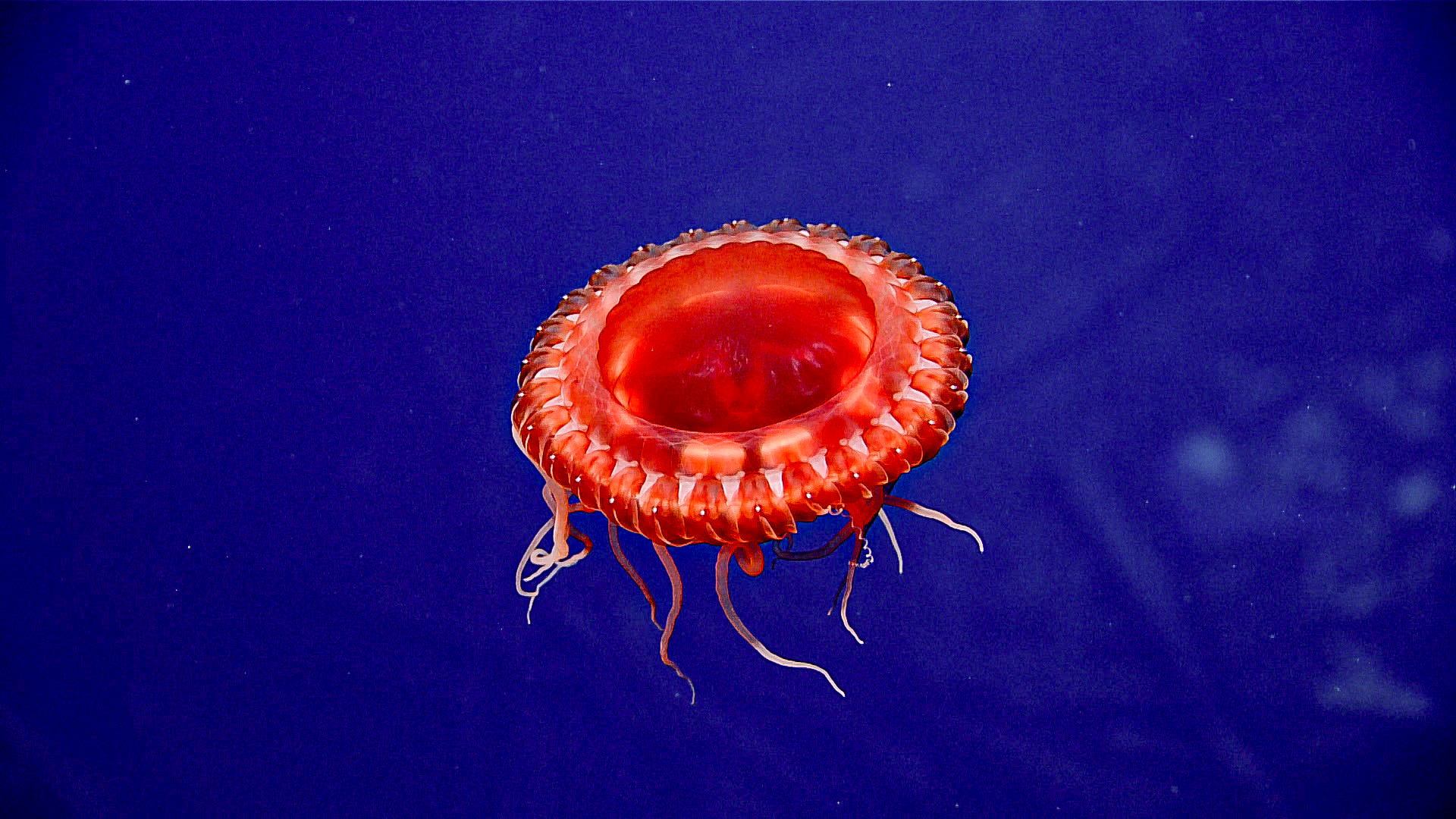
More than 800 people gathered Nov. 17-20 in Bruges, Belgium, for the 7th World Conference on Marine Biodiversity.The conference covered a wide range of science and conservation topics, including the impacts of deep-sea mining; it featured a screening of a documentary that follows scientists on a deep-sea mission to an area in the Pacific Ocean targeted for deep-sea mining.The conference took place just after the midway point of the U.N. Ocean Decade, which runs 2021-2030, and the organizers called it a chance to take stock of progress. BRUGES, Belgium — More than 800 people gathered for the 7th World Conference on Marine Biodiversity, held Nov. 17-20, in Bruges, Belgium. The conference took on topics as varied as deep-sea mining impacts, ocean-related art, citizen science, methods for working with large datasets, environmental DNA and taxonomy. Yet it also raised broader questions about how people value the ocean and whether current approaches serve the health of marine ecosystems. David Obura, founder of Kenyan marine research nonprofit CORDIO East Africa, gave the opening keynote, calling for a shift in thinking about how people use the sea. “If we just use the same values that have historically driven current markets to maximise further benefits from oceans … we just drive oceans farther into decline,” Obura told Mongabay in an email recapping his talk. “We’ve seen this already. Instead we need to apply values that prioritise balance and sustainability across multiple co-benefits, and deliver long term security and prosperity over short term gain.” Many participants emphasized the need to catalog the world’s marine biodiversity and draw attention to overlooked species or those not yet described. “We want to see how many species are there because we want to know what we need to conserve,” Bert Hoeksema, a guest researcher at Naturalis Biodiversity Center, a museum in the Netherlands, told Mongabay. Hoeksema has studied corals for more than four decades and recently published a paper identifying key countries involved in the marine aquarium trade. “There are so many species that are not known.” The conference took place just after the midway point of the U.N. Ocean Decade, which runs 2021-2030. The initiative, decided by the U.N. General Assembly in 2017, aims to promote ocean science and use it to guide policy to support ocean health. “It’s an excellent moment to take stock,” Leen Vandepitte, a conference organizer and project manager of the Flanders Marine Institute’s (VLIZ) data center, told Mongabay. “Where are we? Where do we still need to go?” David Obura, an NGO founder and chair of the Intergovernmental Science-Policy Platform on Biodiversity and Ecosystem Services, gave the opening keynote at the conference. Image © VLIZ. Conference attendees take a break. The conference was held at Concert Hall Bruges, which has a chamber music hall and contemporary art installations. Image © VLIZ. Worming out The conference has its roots in the European marine research community. The first edition took place in Valencia, Spain, in 2008, near the end of a five-year EU-funded research project on marine biodiversity. The 2026 conference happened to follow a marine conservation conference held Nov. 13-16 in Edinburgh. For the seventh edition, scientists, conservationists, policymakers and industry members gathered in Bruges, in Belgium’s Dutch-speaking Flanders region. They addressed issues such as plastic pollution in the ocean, how climate and fisheries impacts interact, and mangrove restoration in Latin America and the Caribbean. VLIZ, the conference’s organizer, hosts the World Register of Marine Species (WoRMS), an inventory of the more than 250,000 marine species that are currently known to science. About 350 taxonomists help maintain WoRMS, adding some 2,000 newly described species each year, while estimates of the total number of marine species that exist range from 500,000 to 2 million, according to VLIZ. The Flanders Marine Institute (VLIZ), which organized the conference, is home to the World Register of Marine Species (WoRMs). Image by Edward Carver for Mongabay. Among the overlooked animals discussed at the conference were nematodes, small roundworms that live in the seafloor in astonishing numbers, which serve a key role as nutrient recyclers. Lara Macheriotou, a postdoctoral researcher at Ghent University, spoke about how a deep-sea mining trial affected nematode diversity, drawing on samples collected before, during and after. The Flanders-based company Global Sea Mineral Resources conducted the trial in 2021 in the Clarion-Clipperton Zone of the Pacific Ocean, a deep-sea abyssal plain located between Hawai‘i and Mexico. Ghent University, which is also in Flanders, is home to several researchers studying the potential impacts of deep-sea mining for polymetallic nodules, which are potato-sized lumps containing sought-after metals such as manganese. Many animals, like nematodes, live on them or in their crevices. Deep-sea mining hasn’t been done at a commercial scale. Ann Vanreusel, an emeritus professor of marine biology at Ghent University who attended the conference, said the prospect of deep-sea mining was “concerning because you’re impacting a pristine untouched environment.” It also changed the nature of her work, which had been pure research aimed at building core knowledge of the sea and then became more oriented around mining-related questions. “I could do 30 years of fundamental research with not any societal connection, and then all of a sudden you get deep-sea mining,” she told Mongabay. Megan Williams, a fisheries scientist at Ocean Conservancy, a U.S.-based NGO, spoke about the potential impacts of deep-sea mining in Alaska. Image by Edward Carver for Mongabay. Many sessions at the conference dealt with scientific methods such as environmental DNA (eDNA) analysis, which can detect the presence of species — many species, all at once — from traces of DNA they leave in the water. Such powerful molecular techniques can save scientists a lot of time and money. Yet several scientists stressed the continued importance of old-school taxonomic work that involves examining specimens to identify and describe them. Vanreusel said she was worried that this taxonomic expertise was being lost. One session focused on the need for greater support and investment for taxonomic work in Africa. “The state of taxonomy itself is facing a crisis,” Keider Neves, a scientific program coordinator at the Cabo Verde-based marine conservation NGO Biosfera, told attendees. He recalled the first species he identified as a taxonomist, a “beautiful” sea snail in the genus Diodora. The conference featured a screening of the 2025 documentary How Deep is Your Love by London-based filmmaker Eleanor Mortimer, which follows scientists on a deep-sea mission to the Clarion-Clipperton Zone. Vandepitte of VLIZ said showing people the beauty of deep-sea life can build support to protect it. “If you can show someone what the deep sea creature looks like in its natural habitat — the colors, the grace by which it moves through the water, that is a lot more spectacular and means a lot more,” she said. Otherwise, people won’t know “how critical it is to preserve it,” she added. Banner image: A jellyfish that may be new to science photographed during a 2025 U.S. National Oceanic and Atmospheric Administration expedition in Papahānaumokuākea Marine National Monument near Hawai’i. Image courtesy of NOAA Ocean Exploration. Citation: Hoeksema, B. W. (2026). An unseen threat to coral reef biodiversity: The international trade of live corals for the aquarium industry as reflected by CITES records (1990–2021). Ocean & Coastal Management, 276, 108111. doi:10.1016/j.ocecoaman.2026.108111 Feedback: Use this form to send a message to the author of this post. If you want to post a public comment, you can do that at the bottom of the page. Cite this articleEdward Carver (2026). International marine biodiversity conference emphasizes the unsung and the unknown. Mongabay Conservation news. DOI: https://doi.org/10.66709/news-337090 Credits Topics
International marine biodiversity conference emphasizes the unsung and the unknown
Full Article
Original Source
Read the full article at News →KhanList aggregates and links to publicly available news content. We do not host full articles from third-party sources. Always verify important information with original sources.