
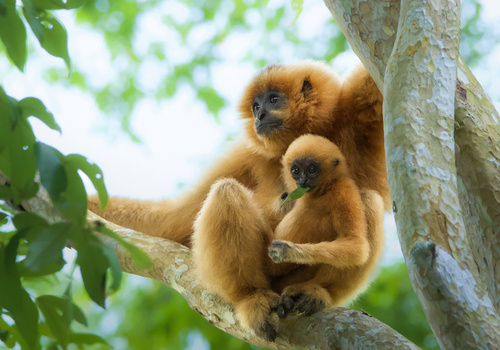
Twenty species of gibbons swing through the tropical forests of Asia, all are threatened by human activities like deforestation, hunting and trafficking baby gibbons for the exotic pet trade. In recognition of International Gibbon Day on Oct. 24, here are three recent Mongabay stories about the threats gibbons face and the people working to protect them: A growing demand for the exotic pet trade In 2025, gibbon trafficking seizures reached an all-time high; 336 individuals were recorded between January and August alone, Mongabay’s Ana Norman Bermúdez reported. A Malaysian woman who asked to be called Esther (not her real name) unwittingly became part of the illegal trade. “When we first got Joy, we thought she was a monkey,” Esther said. A hunter had come to Esther’s village on the island of Borneo, to sell wild meat. He showed Esther and her husband a weeks-old primate with long arms, dark skin and large, round eyes. Worried the animal might otherwise be killed for food; Esther decided to take her home. It was only later that she realized Joy was not a monkey, but a gibbon. Gibbons are small apes, more closely related to chimpanzees and humans than to monkeys. They are highly social animals and will defend their young to the death, so the capture of an infant gibbon often represents the annihilation of an entire family group. Trafficked baby gibbons overwhelm rehabilitation centers in North Sumatra To capture baby gibbons for the illegal pet trade, hunters often shoot mothers in treetops and wrest the baby from her body when she falls to the ground, Mongabay’s Carolyn Cowan reported. Many babies are injured in that process or sickened during transportation to markets. “Most gibbon babies die — that’s the sad reality,” said Sinan Serhadli, a support officer with the gibbon rehabilitation and release program. “Probably only one in 10 actually makes it to an end buyer. But the traffickers take that into account, right? They calculate losing about 80-90% of them.” Hundreds of the small apes have been confiscated by authorities across the region in the past decade and inadequately funded rehabilitation centers are struggling to keep up with the number of animals in need of rescue and care. In Java, a women’s collective is helping save gibbons through forest-inspired textiles Roughly half of the world’s remaining Javan gibbon population are believed to survive in Gunung Halimun-Salak National Park on the Indonesian island of Java. There, a local women’s textile-printing collective is creating fabrics inspired by local plants and gibbons, Mongabay’s Falahi Mubarok reported. Local women said that through the collective they’ve learned more about the animal’s ecological role as “forest farmers,” or seed dispersers. The project is building local appreciation for the forest and its wildlife while creating opportunities for women. For younger readers, Mongabay Kids has an explainer about gibbon social lives and their forest habitats. Banner image: Southern yellow-cheeked gibbon. Image courtesy of Next Continent: Wildlife, Photography and Natural History Tours via iNaturalist (CC BY-NC 4.0) Credits Topics
International Gibbon Day: Stories of threats and survival
Full Article
Original Source
Read the full article at News →KhanList aggregates and links to publicly available news content. We do not host full articles from third-party sources. Always verify important information with original sources.