
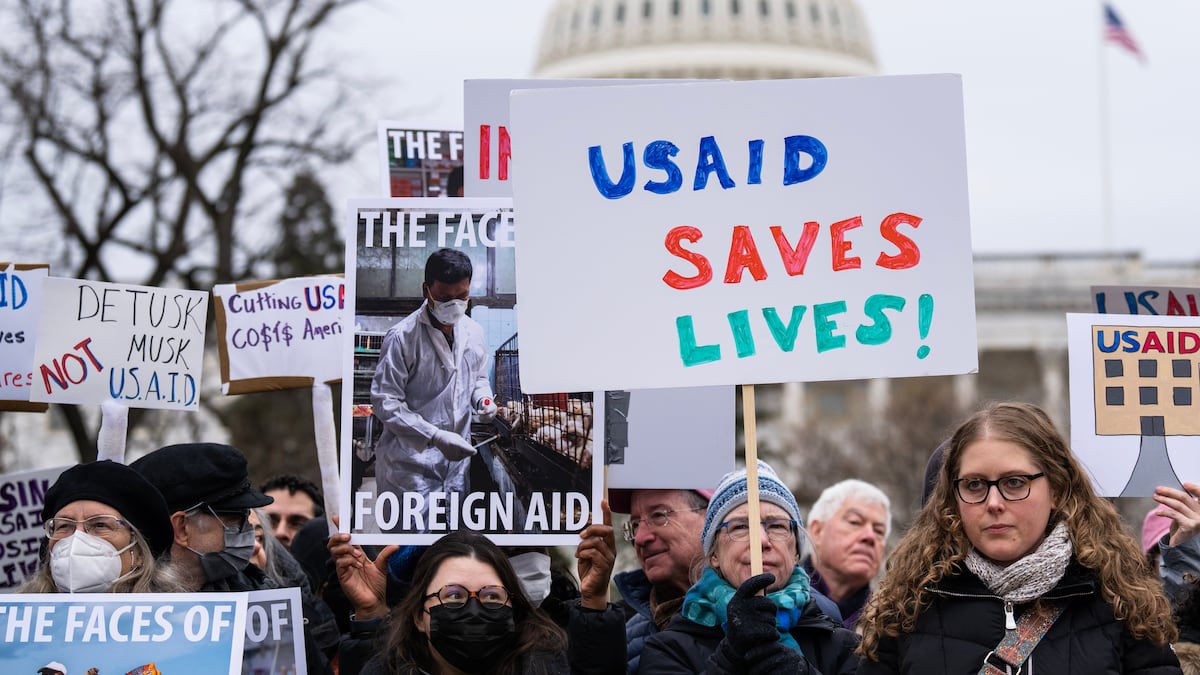
Political leaders, civil society representatives and business figures are meeting this week in New York as part of the United Nations General Assembly. They are trying to patch up the chaos caused by a frontal attack on the multilateral system by some members, including a drastic cut to international cooperation by major donor countries, led by the United States. Estimates calculate that the largest cut in history — 23.1% in 2025 according to the Organisation for Economic Co-operation and Development (OECD) — is on course to cause millions of deaths. A study published in The Lancet puts the toll at 22.6 million additional deaths by 2030 as a result of the funding reductions.On the ground, crises are deepening: Sudan, Gaza, Somalia, and Yemen expose the inability of the international community and UN institutions to respond to emergencies and to prevent humanitarian catastrophes from taking shape, as this week marks the 40th anniversary of the adoption of the right to development. Of the sustainable development goals the international community set for 2030, barely 36% show some progress, while 15% have regressed.Meanwhile, in official offices and the headquarters of large international organizations a heated debate is intensifying, precipitated by the abrupt funding cuts and starting from one premise: the development cooperation we knew is gone — what now? “For many it’s clear the previous model is already obsolete. In the past, donor-recipient agreements could work, but no one wants that dependency anymore,” Yemi Osinbajo, former vice president of Nigeria, said in London.For many it’s clear the previous model is already obsolete. In the past, donor-recipient agreements could work, but no one wants that dependency anymore Yemi Osinbajo, former vice president of NigeriaOsinbajo is touring the world alongside Arancha González Laya, dean of the Paris School of International Affairs, on behalf of the Future of Development Cooperation Coalition, one of the bodies now trying to find answers to the aid crisis, created after the IV Financing for Development Conference in Seville in June 2025. The response they find in numerous capitals is very similar: development cooperation has entered a new era — more transactional, less dependent, and more complex. “We are not just talking about the end of USAID. We are talking about fraud, remittances, technology, debt. You can’t just patch things up, the system has to change,” González Laya says, who, like other experts consulted for this report, emphasizes the opportunities now opening up: “There are pockets of wealth waiting to be mobilized through technology.”The challenges are monumental, beyond the dismantling of USAID. European donors such as the United Kingdom or France have followed the U.S. lead, but above all, Osinbajo explains, the international context has changed radically: the climate crisis, vulnerable economies amid a trade war, the pullback of Chinese investment in Africa and the growing presence of Gulf countries, Turkey, and Brazil on the continent all contribute to the great shake-up. “There is a shift in mindset and recipient countries already think they can say no because there are other partners available,” explains Alexia Latortue, head of the secretariat of the Future of Development Cooperation Coalition and a former member of the U.S. Department of Commerce in the Biden-Harris administration.The cuts, combined with international volatility and the need for deep reforms that cooperation has been carrying for years, have culminated in a perfect political storm: the far right and populists spearhead campaigns against foreign aid and use disinformation to discredit it. And from sections of the left — especially from politicians in Global South countries — voices are growing that demand an end to a system of dependency that Generation Z wants no part of.“Trust and legitimacy have been broken. There is a questioning of the legitimacy of the humanitarian system,” says Hibak Kalfan, director of the NEAR Network for Empowered Aid Response, which groups together 370 local NGOs from 45 Global South countries. Kalfan says that what the organizations they work with are experiencing in this new context is a more transactional, more centralized, and more conditional approach. Evidence of this are the bilateral agreements the U.S. has signed with African countries as part of its new America First Global Health Strategy, under which health support comes in exchange for citizen data or natural resources.Values vs. interestsMeanwhile, the EU is stepping up its investments in the Global South with the so-called Global Gateway, which brings together public and private capital in key infrastructure across Africa, Latin America, and Southeast Asia and aims to embody a new form of cooperation. Sources familiar with internal discussions within European institutions explain that “they used to think it was all about values, and now, suddenly, it’s all about interests.”Trust and legitimacy have been broken. There is a questioning of the legitimacy of the humanitarian systemHibak Kalfan, director of the NEAR Network for Empowered Aid Response“After the shock, the big organizations have contracted and focused on survival. We are terrified of going back to the 1980s,” Kalfan admits during another international meeting that brought together the sector’s leading figures, held before the summer in London. Her coalition argues the opposite: more power for local organizations to set the development agenda. “The intermediary does not have to be a northern NGO; it can be Southern platforms.” Kalfan explains that sometimes a project must pass through six layers before reaching the local actor. “Why are there so many intermediaries?” she asks, aware of the answer.“The solution lies in the territories,” agrees Asier Hernando Malax-Echevarria, founding member of the Latin American Permanent Forum for the Decolonization of Cooperation, a movement of 350 organizations and academics that proposes a new cooperation paradigm: bottom-up. “Because we are still doing things the way we did 30 years ago,” he says.Kalfan, like many other African experts, stresses that despite this bleak picture — or paradoxically because of the crisis — there is a certain optimism. “The interesting thing is how the Global South has mobilized. There is a new confidence,” Kalfan says; her platform has launched a fund managed exclusively by and for Southern organizations. “There are organizations that lost 70% or 80% of their funding with USAID’s closure and had to lay people off. It’s not so much what happened as how it happened, how abrupt it was,” recalls Charles Kojo Vandyck, head of the Capacity Development Unit at the West Africa Civil Society Institute (WACSI). That shock has made local organizations in the Global South — the recipients — more assertive and proactive in seeking other sources of funding so they can stop being mere implementers of projects conceived by others.A clear example is health in Global South countries, the major victim of the wave of cuts and, in a way, the laboratory for how this new era of self-reliance is taking shape. The World Health Organization director, Tedros Adhanom Ghebreyesus, recently explained that many African leaders view the crisis “as an opportunity to leave behind the era of dependency and realize the long-held dream of African health sovereignty.” “The most efficient and equitable source of health financing is the national budget,” he added. Some countries are working, for example, on new taxes on tobacco and sugary drinks. Meanwhile, efforts to produce vaccines locally are multiplying, and national budgets are being reworked to depend less on external funding.Ultimately it means looking outward less, and inward more. “For the first time we see Africa tapping its own capital to finance its development, rather than waiting for it to come from outside,” says Carlos Lopes, professor at the University of Cape Town, by videoconference. Africa, a continent with a very young population, aspires to follow the path China or India took in this new era, dispensing with donors from the Global North and aided by regional and development banks, pension funds, trade agreements, and remittances. “Development aid has so far been a kind of distraction for some African countries, which will increasingly need less external financing,” Lopes believes. The drastic funding cuts have been a major catalyst: “The African leaders I speak with have moved on because they cannot base their strategic transformation on such a narrow revenue source. They no longer talk about aid.”Sign up for our weekly newsletter to get more English-language news coverage from EL PAÍS USA Edition
International cuts to development aid foreshadow profound changes to the system: ‘We are terrified of going back to the 1980s’
Full Article
Original Source
Read the full article at English →KhanList aggregates and links to publicly available news content. We do not host full articles from third-party sources. Always verify important information with original sources.