
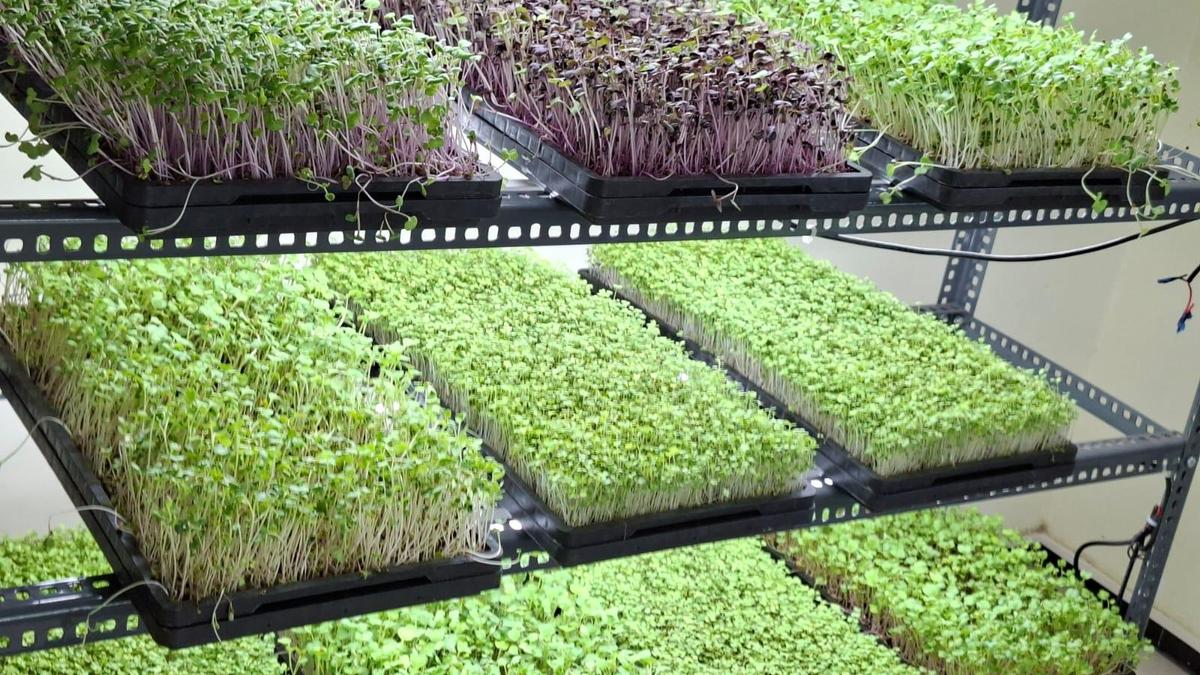
Microgreens being grown in a temperature-controlled unit in Tiruchi. | Photo Credit: SPECIAL ARRANGEMENT Enterprises in Tiruchi are cashing in on selling microgreens as interest grows in pesticide-free and nutritious ‘super foods’ among city residents.Microgreens are the first true edible leaves produced by the seedlings of vegetables and herbs that are harvested within one to three weeks after germination. They offer a higher nutritional value as they contain a more concentrated version of vitamins, minerals, and antioxidants than the mature plants.The cultivation of microgreens has been prioritised by the State government’s Agriculture Budget under the ‘Thalirkeerai’ Scheme with an allocation of ₹1.20 crore for 2026-27.“As awareness has increased in urban areas about the benefits of consuming microgreens, we have seen a good response to our courses on their cultivation,” a senior official of Entrepreneurship Development and Innovation Institute-Tiruchi Agri Business Incubation Forum (EDII-TABIF), told The Hindu on Thursday.The EDII-TABIF conducted two awareness sessions on the cultivation of microgreens of millets, pulses, and vegetables in Tiruchi recently.“Earlier, microgreens were seen as a gourmet food available only in high-end restaurants. However, with more people getting involved in their cultivation, it has become possible to create value-added products with microgreens. We have introduced microgreens in dishes such as samosas, cutlets, puffs, and salads to make them more affordable and appealing to the youth,” said K. Anand, who co-founded Divaa Microgreens with partners S. Meha and Chandan in Tiruchi.Microgreens of broccoli, green pea and bok choy (Chinese cabbage) are supplied on a monthly subscription basis by Divaa Greens. The company offers training and consultancy services in microgreen cultivation for a fee.Microgreens are seen as an easy business opportunity for home-based entrepreneurs as their cultivation can be set up indoors on trays lined with cocopeat blocks. The returns on the sale of microgreens can be upward of ₹150 for 100 grams.The plants are usually harvested by hand, above the root, and have a shelf life of five to seven days under refrigeration.“The cultivation is done in a temperature-controlled environment, with monitored humidity. Since the plants are at a sensitive stage, it is better for growers to limit the number of handlers to ensure hygiene. At present, we offer at least 20 varieties of microgreens, including broccoli, radish, mustard, and sunflower to retail and commercial customers,” said G.K. Vendhan, proprietor, Vendhan Naturals, Thiruvanaikoil. Published - October 22, 2026 07:09 pm IST
Interest in microgreens grows among health-conscious consumers
Full Article
Original Source
Read the full article at Thehindu →KhanList aggregates and links to publicly available news content. We do not host full articles from third-party sources. Always verify important information with original sources.