
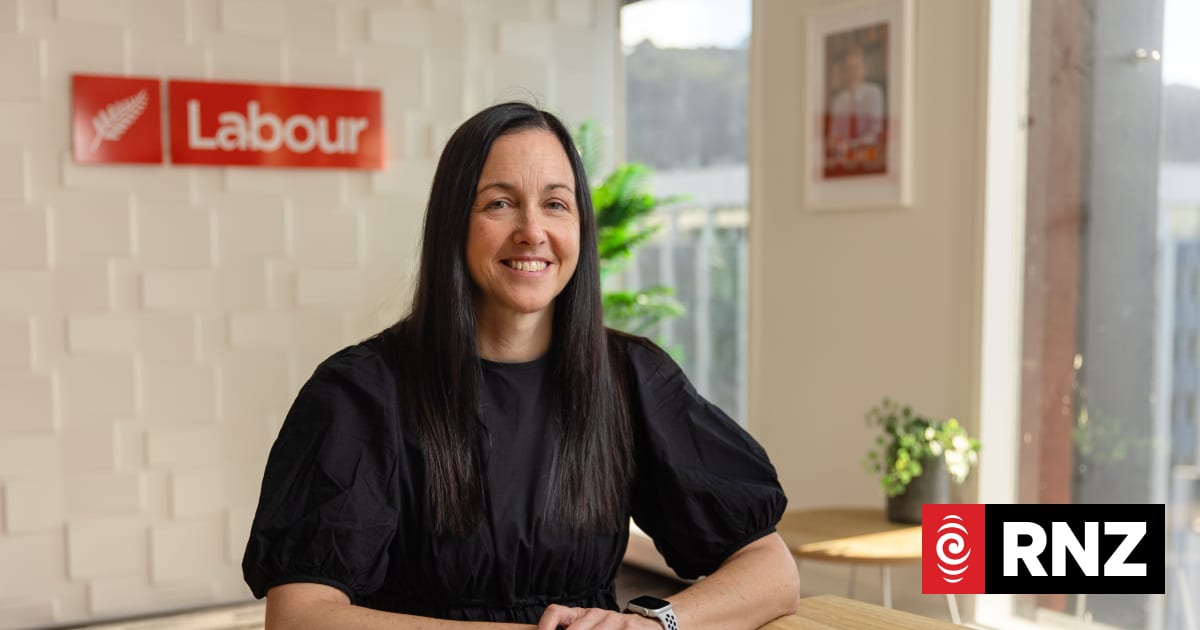
For mainstream political parties, a credible election campaign costs millions of dollars. How do they pay for it all?First, there's the cost side."An election costs us around about $5 million to run," says Labour Party president Jill Day.On top of this she says there are annual operating costs of $1.5m to $2m to cover. In a three-year cycle, that's about $11m to keep the party running and competitive.Then there's the revenue side."The only public funding we get towards that is about $900,000 from the broadcasting allocation," Day says. "So, the rest of that we have to fundraise."Fundraising - including political donations - pays for advertising, as well as activities which fall outside the $4m election campaign spending cap. These can include polling and research, transport, and even food for volunteers."It's often like, hot chips and pizza," Day says. "We're generous within the way that we can be, but we are also aware of the fact the money people give us is to make sure we are getting our message out there."Labour has raised $890,391 in large donations this year, well short of the $4.1m it needs to plug the gap between broadcasting allocation and its estimated costs. Its total is well below National and ACT's $2m- plus amounts.The Greens also sit well behind the leading parties for large donations, currently with $395,000. Its broadcasting allocation this year was just under $400,000.Green Party general manager and party secretary Miriam Ross didn't share the exact figure she anticipates the party will spend campaigning this election, but says 2023's campaign cost $2m, and running expenses added a further $2m to the year's costs.She expects this campaign will cost a similar amount, "but adjusted for inflation".Along with donations, Ross says the Greens use membership subscriptions and the sale of merchandise to stay afloat. MPs also tithe a portion of their salary.She's noticed the impact the cost of living is having on donations. Some members have dropped to a lower subscription, she says."All the indicators are that people are struggling, able to give less. We're always really clear that we only want people to give what they can, and we appreciate everything, be it $1, $2, $3, but I would say it has had an impact."Large donations - over $20,000 - have gone the other way, overtaking the amount raised in 2023 more than a month out from polling day. Two of New Zealand's richest men have given more than $1 million combined to National and ACT.Rank Group, led by Graeme Hart, has given $500,000 to National and $200,000 to ACT. Nick Mowbray has given $250,000 to National and $225,000 to ACT. The next biggest donation was a bequest of $219,178 by a former union official to Labour.RNZ requested interviews with the National, ACT, NZ First and Te Pāti Māori party presidents to ask about the importance of donations for running an effective campaign.National Party president Sylvia Wood declined to be interviewed, but sent a response: "Donations are key to National's ability to run a strong campaign. We receive donations small and large from thousands of Kiwis around the country who want to help us continue to fix the basics and build the future for all New Zealanders."ACT's party president also declined an interview. NZ First and Te Pāti Māori didn't respond. Opportunity Party board member and largest donor, Alan Wilderland, spoke to RNZ in August.How National wins the donations battle - and the warDonation totals published during an election year only capture donations of more than $20,000. These must be declared within 20 working days of being received. Donations below this amount are declared the following year in party annual returns.But even when the full figures are released, and smaller donations included, there's a disparity between parties. In 2023, National was well ahead of other parties."It's fairly obvious that it's not an even playing field. That does cause some concern for us," says Labour's Day.A shift to "constant campaigning" has seen advertising start well ahead of the start of the official campaigning period, where spending caps are enforced to even the playing field."Before the regulated period we're seeing a huge spend coming from other political parties on billboards and social media that well outspends what we spend, so there are some issues around equity in the system," Day says.Does it feel like an arms race?"We just need to focus on what we can do and hope that we can be effective," she says.Social media has added another pressure on the party's advertising funds in the past two decades."It's really important that we are seen there, particularly in the age of misinformation and disinformation. We need to be there so that people can tell the difference between us and people maybe trying to pretend to be us."Day says the broadcasting allocation hasn't changed to reflect the additional costs parties face and its meant funds are spread further."We still need to be on televisions, on the radio, in the newspaper, and being seen out in the community."The Green Party's Ross argues the way the broadcasting allocation is calculated bakes in inequity.The Electoral Commission's allocation of money to be used on promoting party messaging is based on previous election results, the number of MPs, polling and public support. This means smaller parties get less money than larger parties.This year National received more than $1m, compared to the Greens' $410,042 and ACT's $345,254."What does that mean in terms of widening democratic participation and leveling the playing field for smaller parties when the only funding mechanism that is available is so heavily weighted towards the two major parties?" asks Ross.More donations, less cashTo date, more than $7m has been raised in donations over $20,000 this year.What we're unable to see until 2027 when full donation returns are lodged with the Electoral Commission is the number or value of smaller donations.Labour had more donors than National in 2023 with 53,709 people and entities giving to it, compared to National's 44,188. However, all of Labour's extra donors are clustered at the small end of the donation scale - and even at that end, they give less per person.Labour received 53,499 donations of $1500 or less, about 10,000 more than National's 43,481. National still raised more from them, receiving $4.3m to Labour's $2.7m. Its small donations averaged $99 each, nearly double Labour's $50.In every other donation band RNZ analysed, National had more donors - and more cash - than Labour.The average size of Labour's donations overall ($88) is less than half of National's ($232).At the big end of the donation scale is where Labour suffers most. Its largest donations often come from unions. This year unions have donated $210,000 to the party so far. In 2023 their donations totalled $335,000."Unions, obviously, are part of us," Day says. "The values of unions are shared by us."Some affiliate with the party, and Day says they do discuss donations with them.This year, Labour's largest donation came from the estate of Murray Jones. A Facebook post recognising his passing described him as a former union official. The donation of almost $220,000 was unique according to Day because of its size.The party does receive the "odd bequest", but she says the party doesn't push people to do so.She says big donors often approach the party, rather than the party making an approach to them. If an approach is made, it's done carefully."You never want to make assumptions about what people can give."The party also holds fundraising events, including a day-long business event where people pay for tickets which are in the $1000 price range.The most successful way the party has found to drum up donations is emails."The biggest donations come from when we are reminding people of what's happening at the moment, what this government is doing and how that is impacting New Zealanders in their everyday lives."There's also a 'Victory for Labour' facility on the party's website where people can commit to giving a monthly amount, with options starting at $5.The Greens' Ross says donations are vital to the party's survival and it's the small donations that are the "bread and butter" of the party finances.But like Labour, even those small donations were on average smaller than National's, coming in at an average of $56 compared to National's $99 for donations under $1500 in 2023.Like other parties, the Greens have a database of supporters it emails. It also has fundraising events, which she says can range from a pub quiz to an art auction and it receives ongoing donations.Big donors tend to approach the party she says, but they do look for people that have shared values to see if they are interested in giving.One thing both Ross and Day are clear about is the influence donors have on policy. The party's policies are already on the table and donors are encouraged to back those plans."We never have a scenario in which we go out to somebody saying, 'Hey, what could we do to get your money?'," says Ross.Labour's policy process is "robust" Day says, and she hasn't experienced an issue where a donor expects something in return for a donation."No one gets any special opportunities to do something above anyone else."Donors do get access to politicians, but often do meet them through going to events. "It's not special access," says Ross.Day says she's not aware of big donors getting invited to special dinners with leader Chris Hipkins, but says donors like Phillip Mills might attend other types of events the party holds.Max RashbrookeRNZ / Cole Eastham-FarrellyDonations, dinner and a chat about lifeVictoria University of Wellington senior researcher Max Rashbrooke has interviewed several donors as part of his research into political influence.The anonymous discussions he had with big donors revealed donating can mean access.One donor told him he had dinners at a party leader's house. After he switched to supporting another party, that leader would visit "to have a chat about life" every once in a while."He said this as if this was something that happened to all of us. As if I was constantly fending off invitations from prime ministers and political leaders to come round and have dinner."Another donor told him a donation of around $40,000 makes it easier to get a meeting with a minister.Untangling whether access equals influence is hard to do, but Rashbrooke believes our current system of uncapped donations is "hugely corrosive" to people's trust in the political system.The New Zealand Election Survey for 2023 showed 43 percent of respondents thought donors exert "undue influence" on politicians, 18 percent disagreed with this, and 40 percent had no opinion, or didn't know.An Independent Electoral Review made a number of recommendations to improve the current system, including capping donations to $30,000 and limiting donations to individuals, rather than allowing businesses and unions to donate.The recommendations were considered by the current government, but not introduced."There's no real incentive on political parties to change the system," says Rashbrooke."That's why it stays as it is - not because the public likes it, but because politicians don't really want to change."Rashbrooke wants to see an overhaul of how things are done that takes into account the rising cost of campaigning, but also addresses public concern about access and influence."If your political party is funded by a million people and they're giving $10 each, none of those people is going to have any access, really, or influence over that party. That's the dream."Additional state funding of $5m to $6m should be shared between parties, Rashbrooke believes. This would be "nothing in the scheme of the Government's budget", but would allow for a drastic reduction in donations. He goes further than the $30,000 cap per donor per party in an election cycle suggested by the Independent Electoral Review, suggesting $10,000.Would it provide enough money to campaign?RNZ's analysis of 2023 donations show around $8m would be removed from parties, and while the change may remove concerns about wealthy donors having extra access or influence on politicians, it wouldn't completely level the playing field.Rashbrooke thinks the change would force parties that previously courted large donations to shift their approach to encourage more people to donate to them."They might actually reconnect with voters to a greater extent than they currently do."The donation bottom lineBoth Opportunity and the Greens are campaigning on changing the donations system to limit donations to individuals and to cap donations to $30,000 per election. The policy is one of the Opportunity's bottom lines and is contained in a draft members' bill written by the Green Party.Labour isn't campaigning on capping donations, or limiting donations to individuals, but is looking to increase transparency around where the money given to non-political groups running political advertising comes from. Examples of these groups are the Taxpayers' Union, Council of Trade Unions and Hobson's Pledge."Labour has announced we will require third-party promoters to declare their donations. Parties have to tell voters where their money comes from and groups spending to influence elections should have to do the same," Justice spokesperson Camilla Belich says.Without a change to the way parties are funded Rashbrooke worries there will be a descent into polarisation like what he sees in the United States.Rashbrooke says one of the clearest findings from research in the US is that politicians' votes closely track what their wealthier constituents want, with no observable link to the wishes of poorer or even middle-class voters."New Zealand is definitely not there yet, but we risk ending up in that kind of situation."
Inside the multimillion-dollar hustle to fund an election campaign
Full Article
Original Source
Read the full article at Rnz →KhanList aggregates and links to publicly available news content. We do not host full articles from third-party sources. Always verify important information with original sources.