
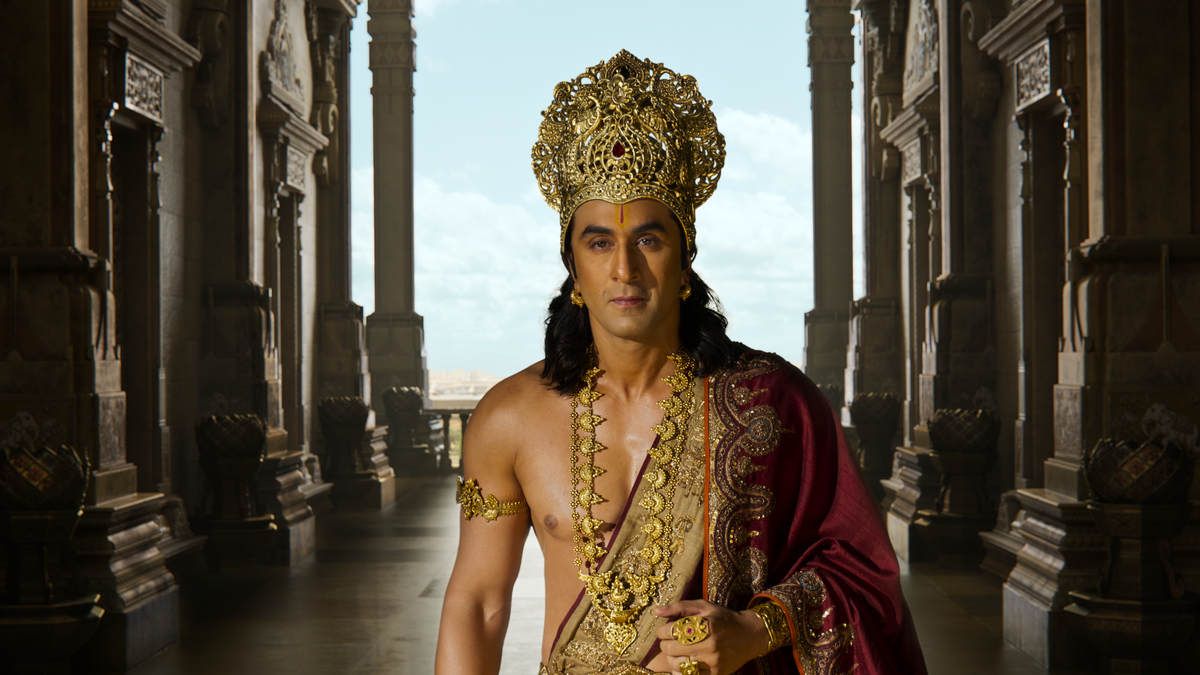
One of the first epics many of us encounter as children is the Ramayana, a tale of duty, sacrifice and the ideals of a son, brother and husband. Over generations, the epic has travelled through countless retellings, from books and oral traditions to animated adaptations and television.The latest adaptation of this epic, a magnum opus two-part film directed by Nitesh Tiwari, is being brought to the big screen with Ranbir Kapoor, Sai Pallavi, Yash and Rakul Preet Singh among its cast. But the magic of an immersive cinematic world lies in the details. And one crucial part of this, its jewellery, is a line specially crafted for the film that is now available for people to buy.Tribe Amrapali, the film’s official jewellery partner, has created approximately 4,500 pieces for the first part of Ramayana, each designed to reflect the identities of its characters and kingdoms. Under the creative direction of Tarang Arora, the Jaipur-based jewellery house spent nearly two years drawing on ancient ornamentation, temple art and traditional craftsmanship. Stills from the film | Photo Credit: Special Arrangement “The reference point was never to mimic a period. The idea was always to ask how we could showcase something so Indian that had not been showcased yet,” says Tarang, adding that for him and his team, the challenge lay in drawing from India’s rich jewellery-making traditions while creating a visual vocabulary for a world that exists somewhere between historical imagination and cinematic spectacle. Jewellery made for the film | Photo Credit: Special Arrangement The jewellery ranges from imposing chest plates, ornate armlets and hand braces to layered necklaces, chokers, anklets and elaborate head ornaments. Some pieces are crafted in gold, while others are gold-plated, with coloured stones, intricate engravings and textured surfaces lending them an aged, sculptural quality. From the delicate detailing of necklaces and headpieces to the bold, armour-like ornaments designed for Ravana, the pieces vary in scale, finish and form, reflecting the distinct visual identities of the characters who wear them. “I think the inspiration for all of this in our minds have come from Raja Ravi Varma’s paintings and art. Of course, you have mandirs. You have so many parts in our country which have historic relevance where our design team has worked very closely. Luckily, we also have the Amrapali Museum, which has the private collection of my dad and uncle’s jewellery but has over 4,800 pieces in its collection, all vintage. That helped us a lot,” he says. From these historical and artistic references, the team developed distinct design style languages for Ayodhya, Mithila and Lanka, taking into account not just the kingdoms and geographical locations, but also the characters’ individual journeys. Stills from the film | Photo Credit: Special Arrangement The challenge, Tarang explains, was to reconcile the grandeur audiences associate with mythological jewellery with the circumstances in which the characters appear. “For a large part of the story, Ram, Lakshman and Sita are in vanvaas, so the opulence wasn’t there as much,” he says, adding that the most complex character for whom designing was a challenge was Ravana. “When it comes to portraying Ravana, the pieces are very strong — chest plates, massive cuffs, armlets, and anklets, with a lot of inspiration from demons or asuras. He is the biggest bhakt of Lord Shiva and he is going to fight Lord Rama. To be able to combine that was quite a challenge for us,” says Tarang. Jewellery made for the film | Photo Credit: Special Arrangement The team also drew on traditional jewellery-making techniques to lend the pieces an aged, handcrafted quality. Repoussé, jadau and chitai were among the techniques used to make them look as though they belonged to another era. “We have the mindset that traditional jewellery in India is very polki-driven and diamond-driven, but we had to show it in a very different manner because those techniques could not have been used in that era,” he adds. “A lot of repoussé work has been done. We custom-cut stones because we had to make sure that the stones looked like they had not been cut today. The look should be vintage, antique, timeless, like our old pieces,” says Tarang. Jewellery made for the film | Photo Credit: Special Arrangement While the scale of Ramayana demanded experimentation and practical solutions, Tarang believes the human hand will continue to matter, even as artificial intelligence becomes more commonplace in design and production. “I think this is just the starting of that whole era, and the starting of that appreciation of our culture and craftsmanship, hopefully,” he says.The Ramayana collection is available to shop on Tribe Amrapalli’s website starting ₹1,200.
Inside the making of Ramayana’s elaborate jewellery inspired by India’s ancient craftsmanship
Full Article
Original Source
Read the full article at Thehindu →KhanList aggregates and links to publicly available news content. We do not host full articles from third-party sources. Always verify important information with original sources.